Skip to content
Search
  • Categories
    • Bath Bombs
    • Handmade Soap
    • Homemade Candles
    • Miscellaneous & Tips and Tricks
  • About Us

Category: Uncategorized

link to What Must Go on a Candle Warning Label? Fire Safety Icons, Warnings, and Placement

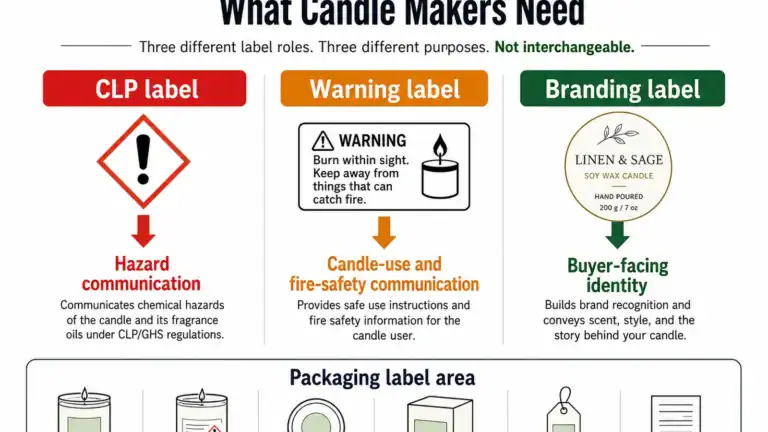
What Must Go on a Candle Warning Label? Fire Safety Icons, Warnings, and Placement

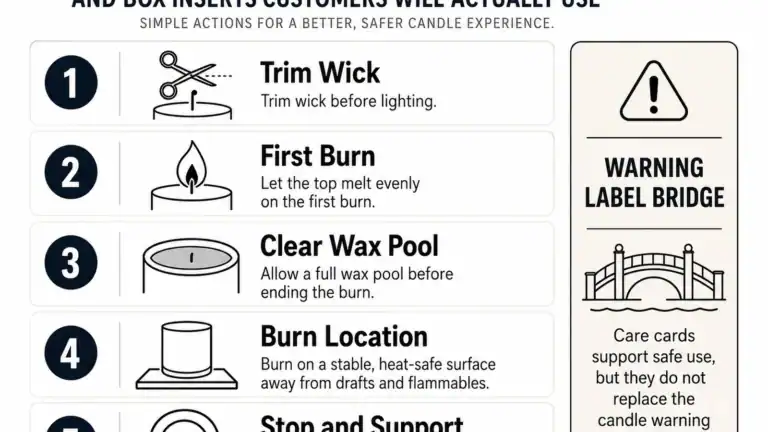
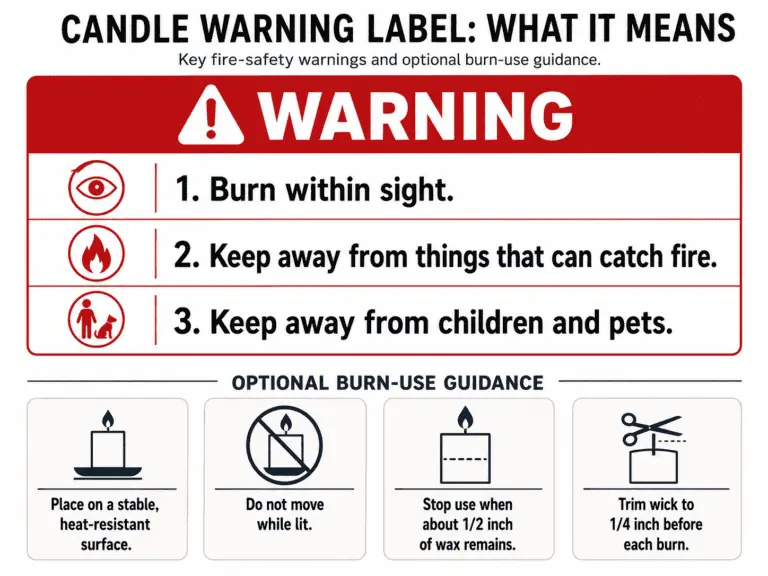
A candle warning label should include clear fire-safety warning text, supporting candle-use icons, readable formatting, and placement where the buyer can see it. A candle warning label is the...

Continue Reading
link to Wood Wick Booster vs Single-Ply: Which to Choose for Stronger Throw?

Wood Wick Booster vs Single-Ply: Which to Choose for Stronger Throw?

Choose a booster wood wick when the candle needs more heat or melt-pool support; choose single-ply when it already burns cleanly, then test both in the same candle system. A wood wick is the...

Continue Reading
link to Best Wicks for Soy Candles (CD vs ECO vs LX Start-Points)

Best Wicks for Soy Candles (CD vs ECO vs LX Start-Points)

The best wick for soy candles here means the best first-test family—CD, ECO, or LX—for your jar width, formula, and burn goals, not the final wick size. Wick families for pure soy container...

Continue Reading
link to Mushrooming Causes by Wick Series (CD, ECO, HTP)

Mushrooming Causes by Wick Series (CD, ECO, HTP)

Wick mushrooming happens when a CD, ECO, or HTP wick feeds more fuel than the flame can burn, leaving a carbon cap that often shrinks with better sizing, formula tweaks, and trimming. Use this...

Continue Reading
link to Wood Wicks for Candle Making: Complete Beginner’s Guide

Wood Wicks for Candle Making: Complete Beginner’s Guide

Wood wicks are flat wooden strips used in container candles to create a wider flame and crackle, but they require careful sizing, priming, and burn testing to keep soot and heat within safe...

Continue Reading
link to How to Fix Common Candle Wick Problems

How to Fix Common Candle Wick Problems

Wood-wick candle burn problems are wood-wick performance symptoms, such as tunneling, soot, weak flames, drowning, high flames, unstable crackling, or a wick that keeps going out. This page covers...

Continue Reading
« PREV Page 1 Page 2 Page 3 Page 4 NEXT »

About Us

Diyproducts101 is a website dedicated to helping people the best way to make homemade products at home. We talk about why and how you can avoid making mistakes when it comes to DIY and how to make beautiful handmade products at home. Our mission is to help anyone who wants to learn how do-it-yourself to save money and control what they use.

LEGAL INFORMATION

This site is a participant in the Amazon Services LLC Associates Program, an affiliate advertising program designed to provide a means for sites to earn advertising fees by advertising and linking to Amazon.com. We are compensated for referring traffic and business to Amazon and other companies linked to on this site.

Recent Posts

  • Pillar vs Votive vs Taper: Which Candle Type Is Best?
  • How to Choose the Right Type of Candle for Your Needs
  • Best Candle Types for Emergencies and Power Outages
  • What Are Gel Candles and How Are They Different From Wax Candles?
  • Cure Time by Wax Type (Chart)

Categories

  • General Info
  • Homemade Candles
  • Miscellaneous & Tips and Tricks
  • Uncategorized
  • Privacy Policy
  • About Us
  • Sitemap
© 2026 Copyright DIY products 101