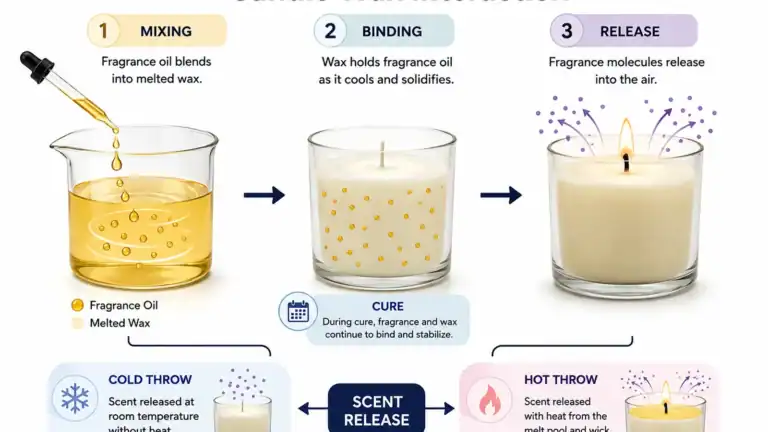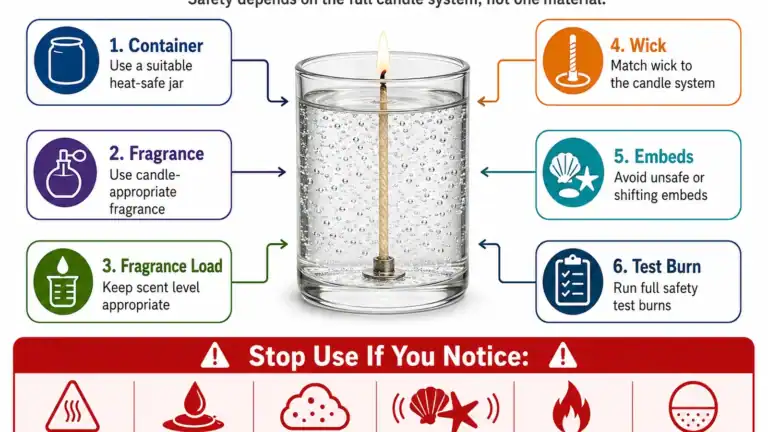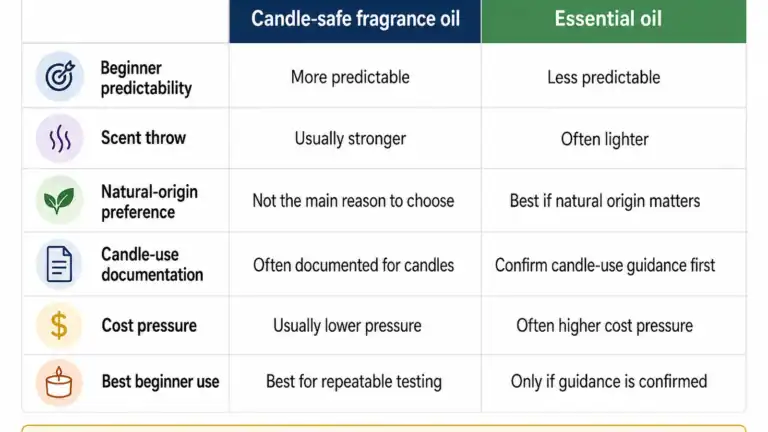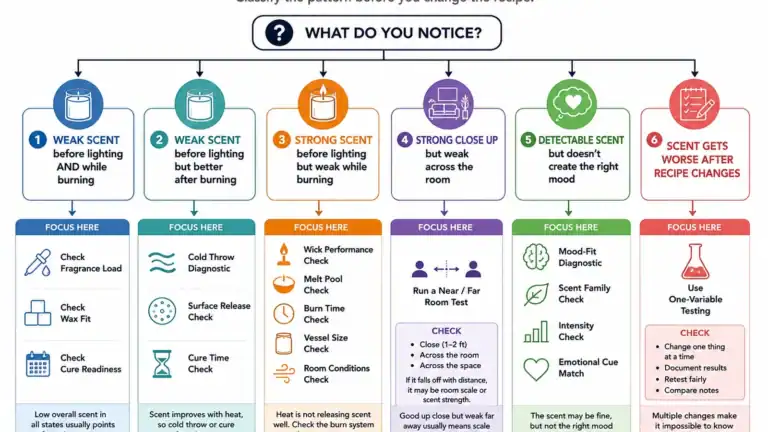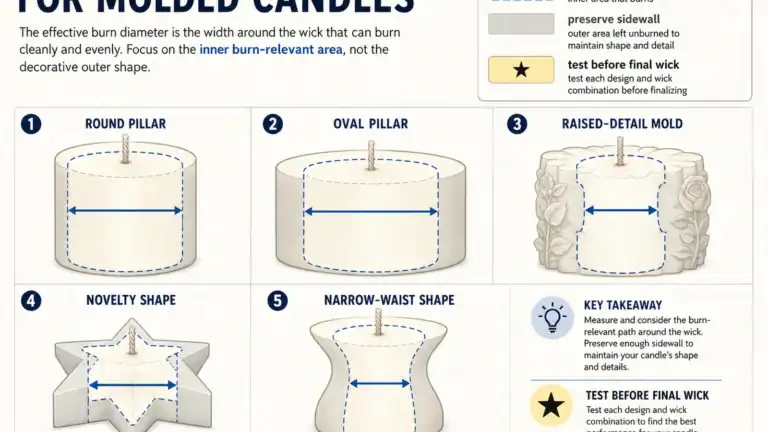
Jar geometry is the inside width, depth, wall profile, taper, and shape of a candle vessel where the wax actually burns. On this page, performance means melt coverage, wall heat behavior, flame...
Category: Homemade Candles
When Does a Candle Jar Need Two Wicks? (Diameter, Wax Type, and Hot Throw)
A candle jar usually moves from one wick to two when one flame is unlikely to cover the inner usable diameter well enough for even melt coverage and the scent goal you want. As a starting test...
How Much Wax Does a Candle Jar Hold? (Jar Size, Fill Weight, and Headspace Formula)
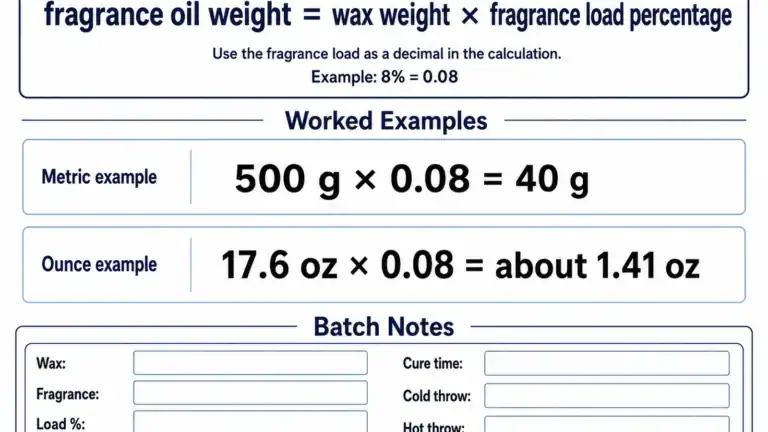
A candle jar holds the wax-only fill weight that fits to the planned fill line after headspace, not the nominal ounce label on the container. Estimate that fill weight from the jar’s usable...
Measure the jar from inner wall to inner wall at the level where the wax will actually burn, because that usable inside width is the starting input for wick sizing. For wick sizing, jar inner...
A candle jar fill line is the planned final wax stop-point inside the jar, and headspace is the empty space left above it on purpose. On this page, headspace means the empty space above the finished...
Why Candle Additives Cause Weak Scent Throw, Soot, or Poor Burn Performance
Why Candle Additives Cause Weak Scent Throw, Soot, or Poor Burn Performance Candle additives can weaken scent throw, raise soot, or hurt burn quality when the additive role, amount, wax fit, or...