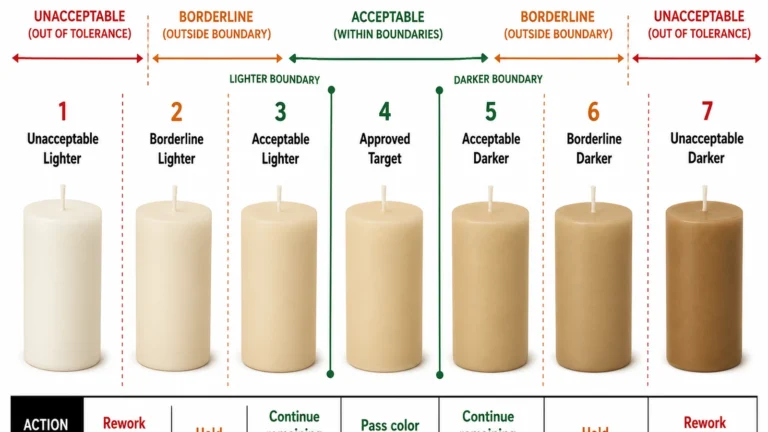
Candle Color Tolerance Standards for Handmade Product Lines
A candle color-tolerance standard defines acceptable shade variation for finished handmade candles and supports repeatable pass, hold, rework, or reject decisions. Here,…
Read guideMeasure and use liquid dye, chips, blocks, pigments and decorative color effects consistently.
Start with the main guide
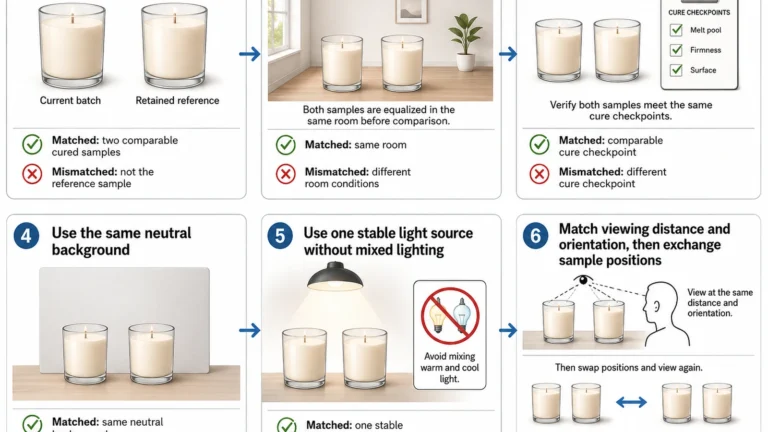
A candle color-tolerance standard defines acceptable shade variation for finished handmade candles and supports repeatable pass, hold, rework, or reject decisions. Here,…
Read guide
Batch-to-batch candle color drift is an unintended appearance difference that remains visible between comparably cured batches made to the same approved formula…
Read guide
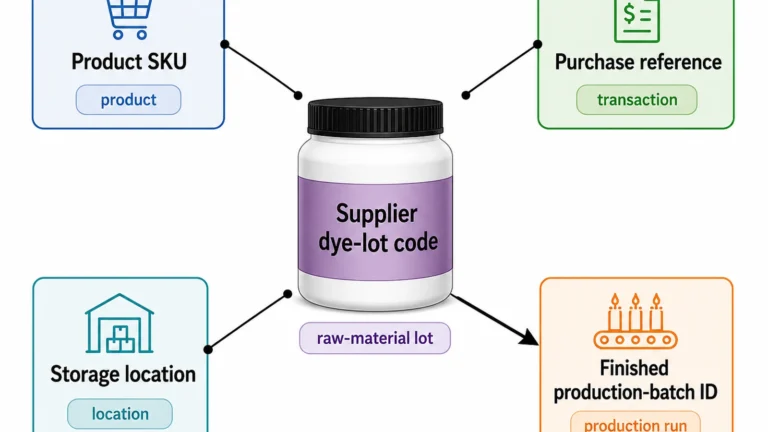
Before scaling candle production, record the supplier-assigned dye lot, exact quantity and unit, formula basis and version, finished-batch ID, wax and fragrance…
Read guide
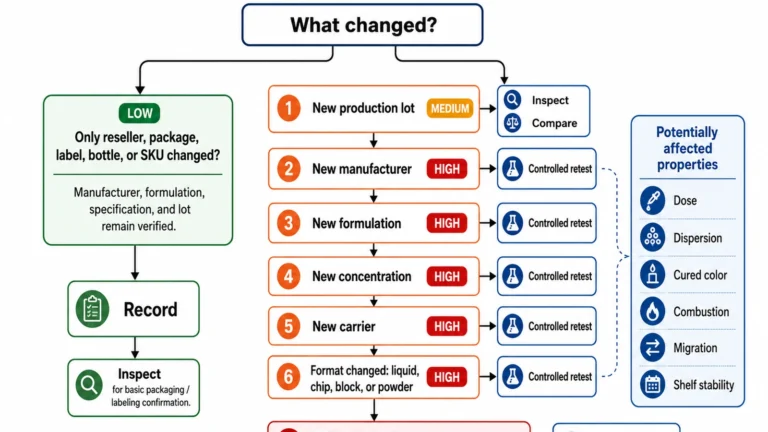
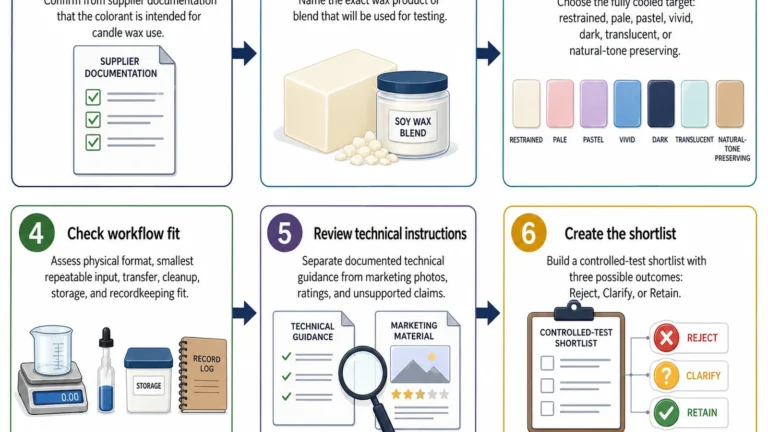
Retest a candle colorant when a supplier, lot, formulation, concentration, carrier, or format change could alter dose, dispersion, cured color, burn behavior,…
Read guide
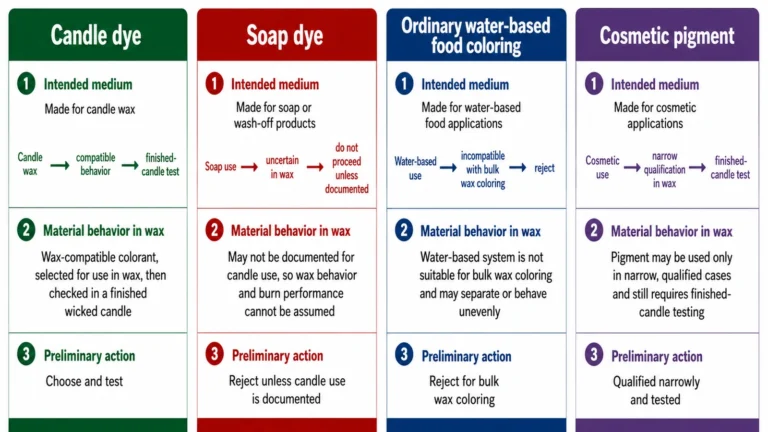
Candle-specific dye is the default choice for coloring wicked candle wax; reject ordinary food coloring and unverified soap dye, while cosmetic pigments…
Read guide
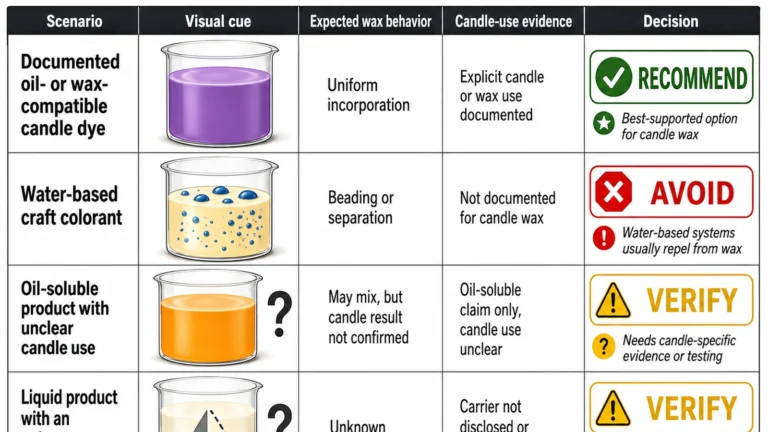
Oil-soluble colorants usually work better with candle wax than water-based dyes, but suitability still depends on clear documentation for candle use. A…
Read guideA candle color reference library is a physical-and-digital reference system that links approved cured wax samples to versioned records for controlled retrieval,…
Read guide
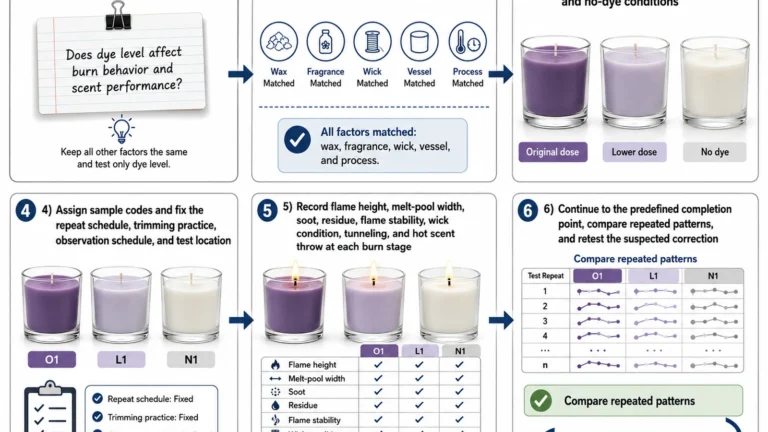
Candle dye can contribute to weak hot scent throw, soot, or unstable burning when its dose, dispersion, compatibility, or effect on the…
Read guide
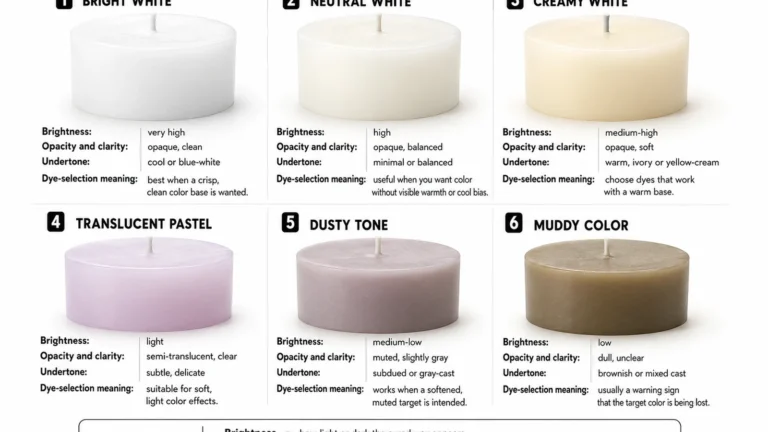
No candle dye format is universally best for white, pastel, or soft-tone candles; the best option gives controlled low-dose color in the…
Read guide
Candle dye is a wax-compatible colorant available in liquid, chip, flake, granule, block, and powder formats; choose the format by wax compatibility,…
Read guide
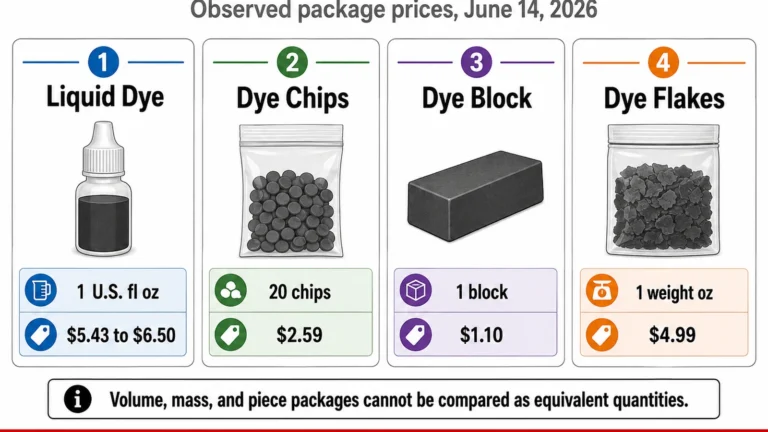
On June 14, 2026, observed package prices ranged from about $1.10 for one dye block to $6.50 for a 1-ounce liquid-dye bottle,…
Read guide
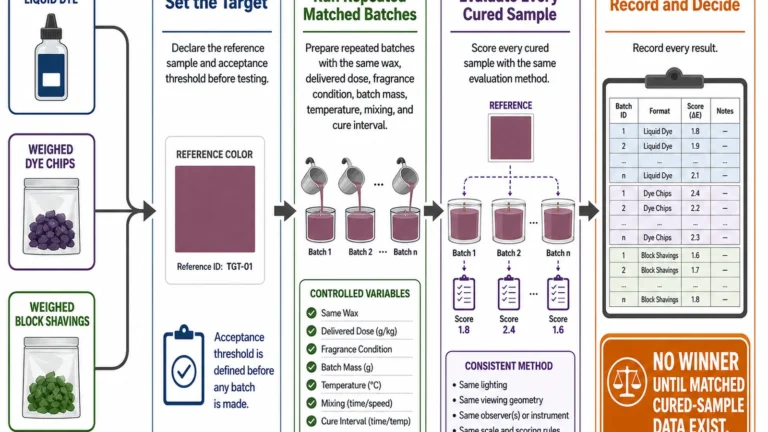
No dye format is universally most consistent. The best workflow delivers a verified dose, incorporates the dye completely, and reproduces the closest…
Read guide