

Leftover candle wax can be reused, stored, or discarded based on its source, cleanliness, scent condition, and intended household use.
Leftover candle wax is wax left from a burned candle, jar residue, test batch, trimming, or unused DIY candle-making scrap. Clean, known-source wax can usually be reused or stored, while dirty, unknown, contaminated, or unsafe-use wax should be avoided or discarded. This page gives household decision support, not a full wax melt recipe, candle-making tutorial, plumbing guide, cosmetic guide, pet-safety guide, or resale-compliance guide. Start by identifying what kind of leftover wax you have before choosing reuse, limited reuse, storage, or disposal.
Quick Answer: Best Options for Leftover Candle Wax
The best use for leftover candle wax means the lowest-risk household option; for clean, known, scented wax, that option is usually wax melts.
Use this order when deciding what to do:
| If the leftover wax is… | Best option |
|---|---|
| Clean, scented, and from one candle | Make wax melts or scent cubes |
| Clean but unscented | Save for small DIY candle projects or fire starters |
| Unused from candle making | Label and store for a later personal batch |
| Stuck in a jar | Remove it first, then reuse or discard |
| Lightly sooty | Separate the clean portion only if easy |
| Mixed but pleasant-smelling | Use for low-risk scent cubes |
| Dirty, wet, moldy, burnt, or unknown | Discard it |
| Poured near a sink or drain | Keep it out of plumbing and handle as a cleanup issue |
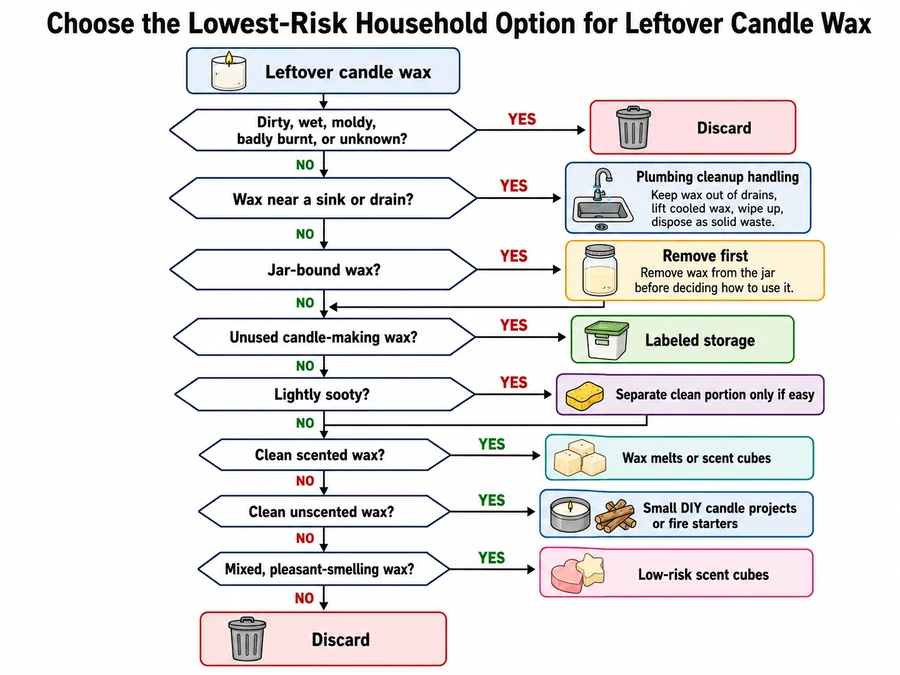
For most people, the safest rule is simple: reuse clean wax, store known wax, and throw away wax that depends on guessing. Leftover candle wax has the most value when it can be reused without heavy cleaning, overheating, or changing its purpose into food, skin, pet, or resale use.
What Counts as Leftover Candle Wax?
Leftover candle wax is the wax remaining after burning, jar use, trimming, testing, or a DIY candle-making project.
It can include hardened wax at the bottom of a candle jar, clean wax scraps from a poured candle, trimmed wax from a finished candle, or unused wax left after a batch. It does not include unknown chemical waste, spoiled oils, wax filled with debris, or wax used for food, skin, or pet-contact purposes.
Clean leftover candle wax from a known candle is usually the easiest to reuse. Wax with a known wax type, matching scent family, and no visible debris gives you more reuse options than wax that is burned, blackened, dusty, wet, or mixed with unknown materials.
A quick usability check should look at four things:
| Check | Reuse is usually reasonable when… | Disposal is safer when… |
|---|---|---|
| Source | You know which candle or batch it came from | The wax source is unknown |
| Cleanliness | The wax has no ash, dust, wick tabs, or burnt material | The wax contains debris, soot, metal, or dirt |
| Scent | The fragrance still smells pleasant and stable | The scent smells burnt, rancid, muddy, or too strong |
| Use | You plan a simple household reuse | You plan skin, food-contact, pet-contact, or resale use |
Leftover candle wax is best treated as a household material, not a cosmetic ingredient or food-safe coating. Even clean wax may contain fragrance oils, dyes, additives, or wick residue that make it unsuitable for uses outside candle or scent-related reuse.
Should You Reuse or Dispose of Leftover Candle Wax?
Reuse leftover candle wax when it is clean, known, and suited to a low-risk household use; dispose of it when it is dirty, unknown, contaminated, or unsafe to heat again.
The safest decision depends less on the amount of wax and more on its condition. A small piece of clean soy wax from a jar candle may be useful as a wax melt. A larger amount of smoky, dusty, or mixed wax may create poor scent, uneven melting, or handling risk.
| Leftover wax condition | Best next action | Why |
|---|---|---|
| Clean wax from one known candle | Reuse as a wax melt, scent cube, or small DIY project | The source and scent are predictable |
| Clean unused wax from candle making | Store or reuse in a future personal project | The wax has not been burned |
| Wax stuck in a jar | Remove first, then decide reuse or disposal | Jar-bound wax may hide wick tabs or soot |
| Lightly sooty wax | Trim or separate clean portions only if practical | Soot can affect smell and melting quality |
| Wax with wick tabs, matches, dust, or debris | Discard or separate only if debris can be fully removed | Foreign material should not be reheated |
| Mixed scents that still smell pleasant together | Use only for low-precision scent reuse | The final scent may be unpredictable |
| Mixed wax types from unknown candles | Avoid candle-making use; consider limited scent use or disposal | Different waxes melt and burn differently |
| Burnt, rancid, moldy, wet, or unknown wax | Dispose of it | Reuse value is low and risk is higher |
Do not pour leftover candle wax down a sink, toilet, or drain. Melted wax can cool inside pipes and create a blockage. Let unwanted wax harden, wrap it or place it in a bag, and put it in the trash unless local disposal guidance says otherwise.
For most households, the decision is simple: reuse clean known wax, store clean unused wax, and discard wax that would need guessing, heavy cleaning, or risky heating to become useful.
How to Remove Leftover Wax From a Candle Jar Safely
Remove leftover wax from a candle jar with low heat, cold release, or gentle scraping after the jar is cool and stable.
Do not heat a candle jar over an open flame, boil it hard, or put a metal-wicked jar in a microwave. Jar-bound leftover candle wax can hide wick tabs, soot, labels, glue, or metal parts, so removal should separate the wax from the container before reuse or disposal.
| Method | Best for | How it works | Avoid when |
|---|---|---|---|
| Freezer release | Firm wax in glass jars | Cold makes wax shrink so it may pop out | The jar is cracked or fragile |
| Warm water bath | Wax that clings to the sides | Gentle warmth softens the wax | Water could enter wax you plan to reuse |
| Spoon or scraper | Small wax pieces | A dull tool lifts hardened wax | The glass is thin or already damaged |
| Candle warmer | Softening the last layer | Mild heat loosens wax without flame | The jar has loose wick tabs or debris |
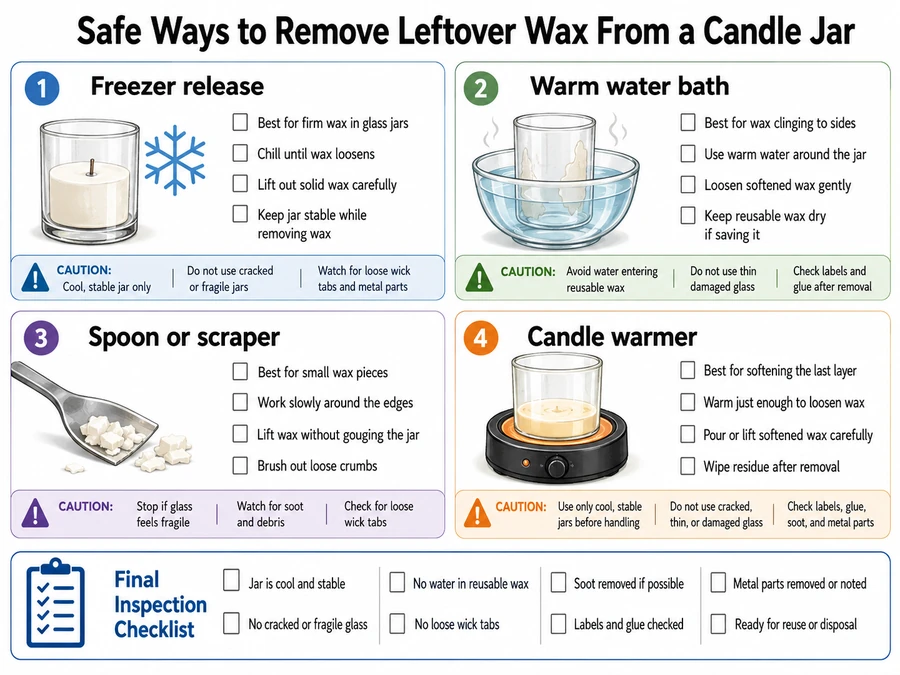
Let the jar cool before handling it. If the wax is still soft, wait until it hardens enough to lift cleanly. Once removed, check the wax for wick tabs, burnt wick pieces, soot, dust, match heads, glitter, or other debris.
If you want to reuse the jar, remove the wax first and clean the vessel separately. If you want to reuse the wax, keep water, soap, and cleaning residue away from it because those can affect melting, scent, and texture.
Simple Ways to Reuse Clean Leftover Candle Wax
Wax melts are usually the preferred reuse for clean scented leftover candle wax because they do not need a wick.
The best reuse option depends on whether the wax is scented, colored, mixed, or unscented. Treat reused candle wax as a household scent material, not as a body product, food-contact coating, or resale product.
| Reuse option | Works best with | Basic approach | Main caution |
|---|---|---|---|
| Wax melts | Clean scented wax | Melt gently and pour into a silicone mold | Use only in a wax warmer, not as a new candle unless tested |
| Scent cubes | Matching fragrance scraps | Group similar scents together | Mixed scents can smell muddy |
| Drawer sachets | Strong but pleasant scented wax | Wrap hardened wax so it does not touch fabric | Keep away from heat and delicate materials |
| Fire starters | Unscented or lightly scented wax | Pair wax with dry, burnable material | Use only in suitable fireplaces or outdoor fire setups |
| Craft sealing or decoration | Clean unscented wax | Use for small non-food craft tasks | Keep away from cookware, skin, and children’s items |
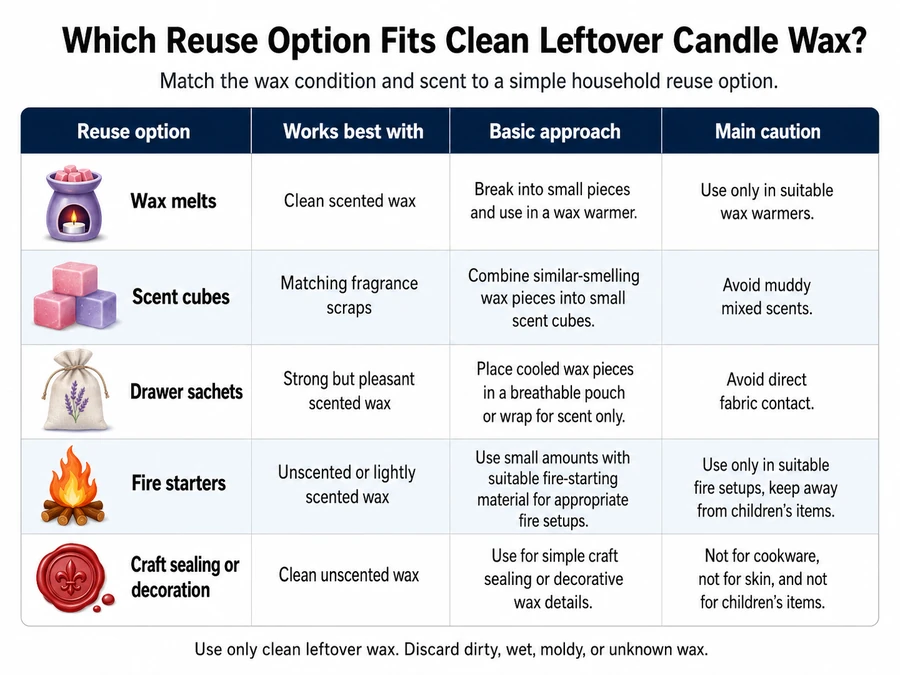
Wax melts are the most common reuse path because they do not need a wick. A candle wick changes how wax burns, so leftover wax from one candle should not automatically become a new candle without checking wax type, fragrance load, wick fit, and container safety.
Melt leftover wax slowly and only in a heat-safe setup. Stop if the wax smells burnt, smokes, spits, separates, or contains material that cannot be removed.
Can You Mix Different Leftover Candle Waxes?
You can mix leftover candle wax for simple scent reuse when the wax is clean, but mixed wax is less predictable than wax from one known candle.
Mixing creates two main problems: scent conflict and performance mismatch. Two floral scents may work together, while floral, smoky, bakery, and citrus scraps may smell harsh once warmed. Different wax types may melt at different rates, hold scent differently, or set with a rough texture.
| Mixed wax type | Better use | Risk |
|---|---|---|
| Same scent, same candle | Wax melts or scent cubes | Low unpredictability |
| Similar scent family | Wax melts | Scent may change when warmed |
| Different colors | Scent cubes or craft use | Color may turn brown or gray |
| Unknown wax types | Limited scent use or disposal | Uneven melting or poor texture |
| Dirty or sooty mixed wax | Disposal | Low reuse value |
For simple home reuse, label mixed wax by scent family and condition. For new candle making, avoid relying on random leftover blends because burn behavior depends on the wax, wick, container, fragrance, dye, and additives working together.
How to Store Leftover Wax for Later Reuse
Store leftover candle wax in a cool, dry, labeled container after separating it by scent, color, wax type, and cleanliness.
Good storage keeps clean wax useful and prevents guessing later. Use a bag, lidded container, silicone mold, or wax paper wrap. Label the wax with the scent, candle source, date, and whether it was burned or unused.
| Storage detail | Best practice | Why it matters |
|---|---|---|
| Scent | Keep similar scents together | Prevents unpleasant blends |
| Wax type | Label soy, paraffin, beeswax, or unknown wax when known | Helps future reuse decisions |
| Condition | Mark clean, lightly sooty, mixed, or unused | Reduces unsafe reheating |
| Container | Use a dry, sealed container | Keeps out dust and debris |
| Location | Store away from heat, flame, pets, and children | Prevents softening, spills, or exposure |
Do not store leftover candle wax near a stove, sunny window, heater, or open flame. Even hardened wax can soften, stain surfaces, or pick up debris when stored loosely.
If you cannot identify the wax later, treat it as unknown wax. Unknown wax can still have limited scent use if it is clean and pleasant, but it should not be used for precision candle making or any use involving skin, food, pets, or resale.
What to Do With Dirty, Sooty, or Debris-Filled Wax
Dirty, sooty, or debris-filled candle wax should usually be discarded unless the contamination is light, removable, and from a known candle.
Soot, wick pieces, dust, match fragments, glitter, herbs, dried flowers, and metal wick tabs can make wax a poor reuse candidate. The issue is not just appearance. Debris can smell bad when warmed, settle into molds, smoke, or create unsafe heating conditions.
| Wax condition | Can it be recovered? | Best next action |
|---|---|---|
| A few wick crumbs | Sometimes | Remove visible pieces before reuse |
| Light soot on the surface | Sometimes | Separate cleaner wax if practical |
| Wick tab or metal part inside | Only after full removal | Remove metal before any heating |
| Dust, ash, match heads, or dirt | Usually not worth reusing | Discard |
| Glitter, herbs, flowers, or unknown additives | Avoid reheating | Discard |
| Wet, moldy, rancid, or foul-smelling wax | No | Discard |
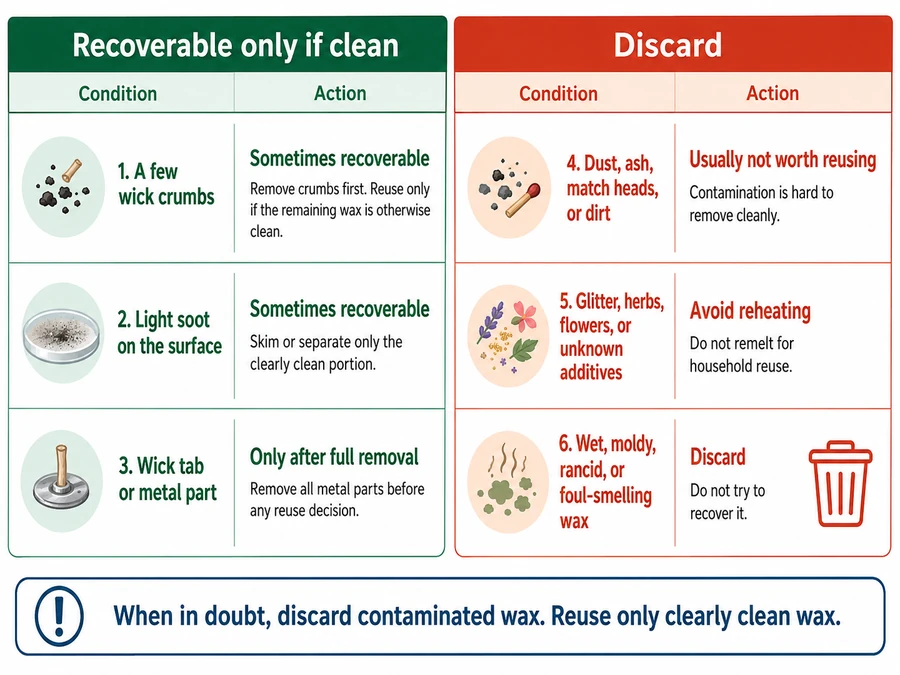
If you strain wax, use low heat and a heat-safe setup. Do not overheat wax to force debris through a filter. Stop if the wax smokes, spits, smells burnt, or separates.
When dirty wax needs heavy cleaning to become usable, disposal is usually the better choice. Reuse should save useful material, not turn a low-value wax scrap into a higher-risk household project.
What Not to Do With Leftover Candle Wax
Do not pour leftover candle wax down drains, overheat it, microwave unknown wax, use it on skin, or treat it as food-safe.
Leftover candle wax may contain fragrance oil, dye, soot, wick residue, adhesives, metal tabs, or additives. Those materials can make the wax unsuitable for uses that seem harmless but involve pipes, direct body contact, pets, food surfaces, or uncontrolled heat.
| Unsafe or poor use | Why to avoid it | Safer action |
|---|---|---|
| Pouring wax down a sink or toilet | Wax can harden inside pipes | Let it harden and place it in the trash |
| Microwaving wax with wick tabs | Metal can spark and glass can overheat | Use a controlled low-heat method |
| Heating wax over an open flame | Wax can overheat or ignite | Use indirect, gentle heat |
| Using wax on skin or lips | Candle wax is not cosmetic-tested | Avoid body-contact use |
| Coating food containers or cookware | Candle wax is not food-safe | Keep it away from food surfaces |
| Using fragranced wax around sensitive pets | Fragrance exposure may be a concern | Keep scented wax away from pets |
| Selling remelted wax products | Safety and performance are not verified | Keep reuse personal unless properly tested |
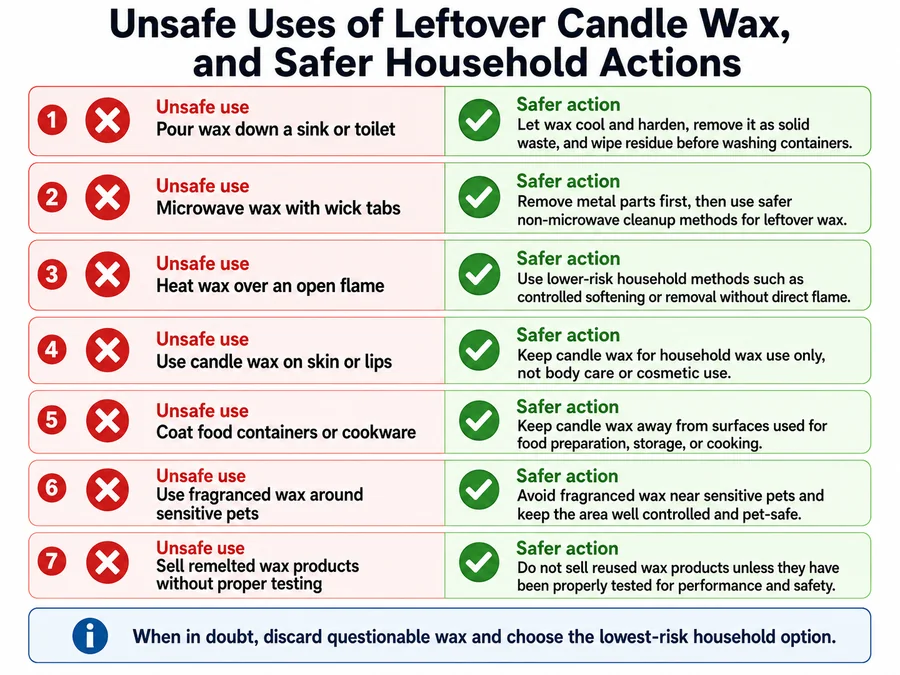
Leftover candle wax should stay in household candle or scent-related use unless you know exactly what it contains and why the intended use is safe. When the wax is unknown, dirty, strongly fragranced, or mixed with additives, disposal is often the cleanest answer.
FAQs About Leftover Candle Wax
Can I reuse leftover candle wax?
Yes, you can reuse leftover candle wax when it is clean, known, and free from debris.
The easiest reuse is usually wax melts because they do not need a wick. Avoid reusing wax that is dirty, wet, burnt-smelling, contaminated, or from an unknown source.
Can I make a new candle from leftover wax?
You can make a new candle only when you know the wax type, scent load, wick fit, and container safety.
Random leftover wax is better for wax melts than new candles. A candle needs the wax, wick, fragrance, dye, and container to work together safely.
Can I pour leftover wax down the sink?
No, leftover candle wax should not be poured down the sink, toilet, or drain.
Wax can harden inside pipes after it cools. Let unwanted wax harden, wrap it, and place it in the trash unless your local guidance says otherwise.
Can I melt leftover wax in the microwave?
Avoid microwaving leftover candle wax, especially if it came from a jar candle.
Leftover wax may contain metal wick tabs, foil labels, or debris. Use gentle indirect heat instead, and stop if the wax smokes, spits, or smells burnt.
What can I do with old scented candle wax?
Old scented candle wax can become wax melts, scent cubes, drawer fragrance, or small craft material when it still smells pleasant.
Do not use scented candle wax on skin, near food, or for pet-contact items. Fragrance oils and dyes are not the same as cosmetic or food-safe ingredients.
Should I throw away black or sooty candle wax?
Throw away black or heavily sooty candle wax when the soot is mixed through the wax or smells burnt.
A thin sooty surface can sometimes be separated from cleaner wax underneath. If the wax needs heavy filtering or smells smoky, disposal is the better choice.
Can different candle wax scraps be mixed together?
Different candle wax scraps can be mixed for simple wax melts if they are clean and smell good together.
Do not rely on random mixed wax for new candles. Different wax types can melt, harden, and burn differently.
How long can I keep leftover candle wax?
Leftover candle wax can be kept as long as it stays clean, dry, labeled, and pleasant-smelling.
Discard it if it becomes dusty, wet, rancid, moldy, sticky, or impossible to identify. Store it away from heat, flame, pets, and children.