
Let candle wax cool and harden, remove it if practical, throw the solid wax in the trash, and handle the jar separately for cleanup or recycling.
Used candles usually leave two cleanup jobs: the wax and the container. The safest approach is to let the wax harden, put the solid wax in the trash, and then decide what to do with the jar. This keeps sticky wax out of sinks and garbage disposals and makes cleanup easier. Once the wax is gone, you can decide whether the container should be cleaned, reused, recycled, or thrown away.
How to Dispose of Candle Wax Safely
The safest way to dispose of candle wax is to let it cool completely, remove it from the container if possible, and place the solid wax in the trash. Treat the jar as a separate cleanup decision rather than throwing everything away together. This reduces mess and helps prevent wax from ending up in places where it can cause problems, especially in plumbing.
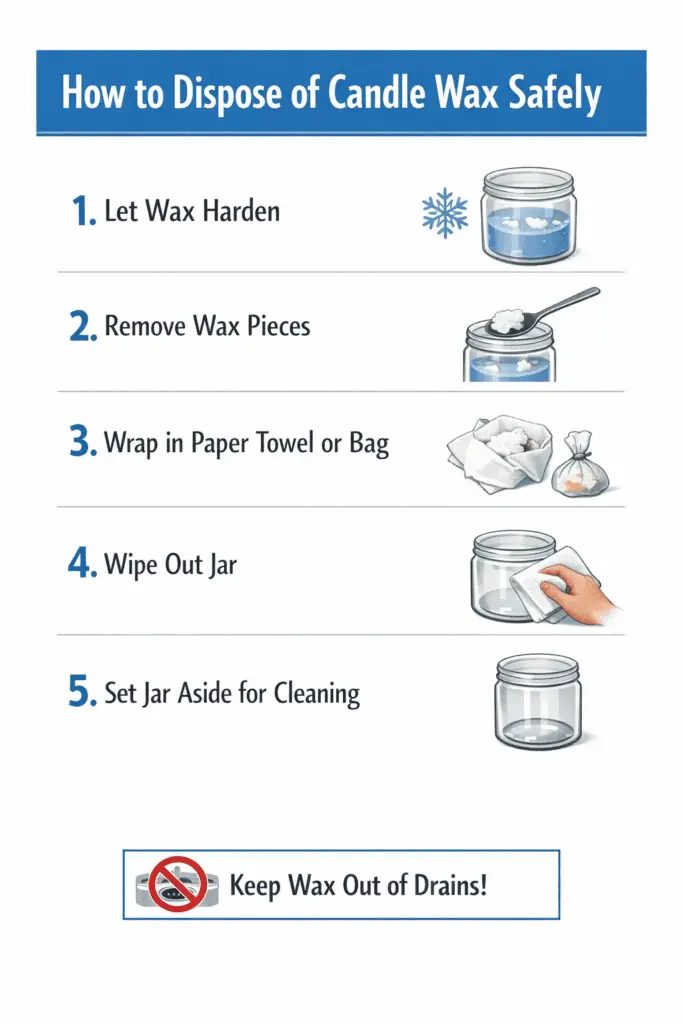
A simple method works well in most homes:
- Let the candle sit until the wax is fully firm.
- Lift or scrape out the larger pieces if they come away easily.
- Wrap loose wax pieces in paper towel or place them in a small bag before putting them in the trash.
- Wipe out loose crumbs so they do not smear inside the bin.
- Set the empty or partly empty container aside for separate cleaning or disposal.
Reuse Leftover Wax or Throw It Away?
Keep leftover wax only if it is clean, easy to identify, and something you will realistically reuse soon. Otherwise, throwing it away is usually the better choice.
Use this rule:
- Clean, same-scent wax in usable pieces: keep it only if you already know how you will use it.
- Mixed scents or unknown wax: usually throw it away, since the result is unpredictable.
- Dirty wax with soot, dust, wick bits, or metal tabs: throw it away.
- Tiny scraps with no clear purpose: throw them away unless you already keep and use small leftover wax pieces.
The goal is not to save every last bit of wax. The goal is to keep only what is still worth the space and effort.
Remove Wax From the Jar First
If wax is still stuck inside the jar, remove it before deciding whether the container should be reused, recycled, or thrown away. Once the wax is out, it becomes much easier to see the condition of the jar and whether it is worth keeping.
One of the easiest methods is the freezer method. Place the candle in the freezer for a short time, then check whether the wax has loosened enough to pop out with gentle pressure from a spoon handle or other dull tool. Do not force it. If the wax does not release easily, stop before damaging the container.
Another option is warm water. Add warm, not boiling, water to the jar to help loosen the wax. As the wax lifts, let it cool and solidify before disposing of it in the trash. Never pour waxy water into the sink.
Once most of the wax is out, wipe the inside of the jar with paper towel to remove the oily film and loosen the wick tab before washing the container.
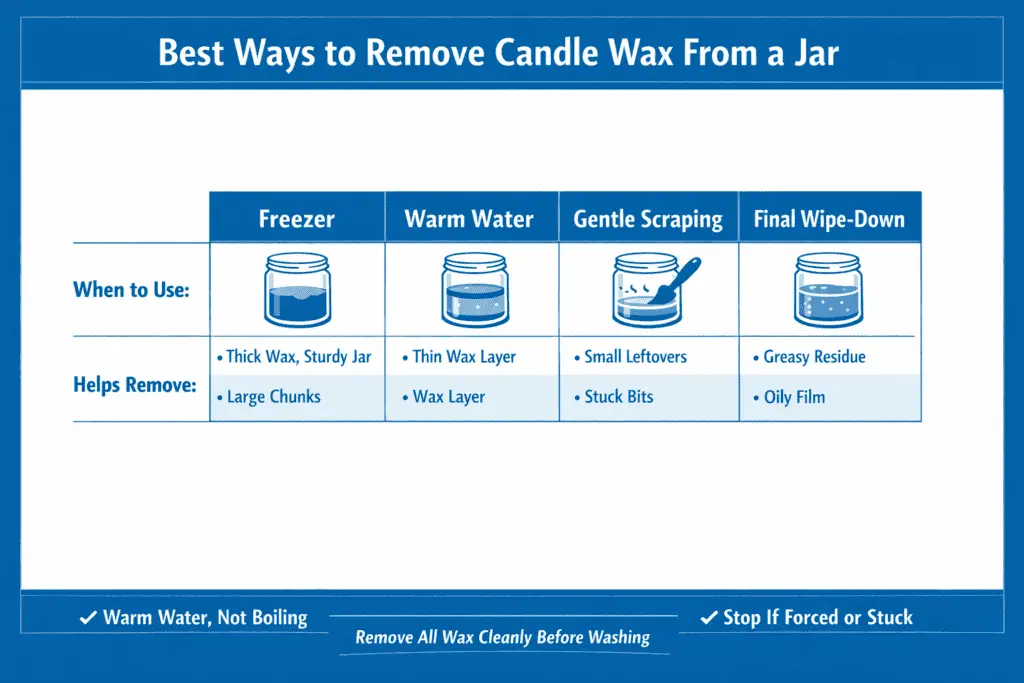
A simple way to choose the right method:
- Freezer: best for thick leftover wax in a sturdy glass jar.
- Warm water: useful when a thin layer of wax is stuck near the bottom.
- Gentle scraping: good for small leftovers after the main chunk has been removed.
- Final wipe-down: best for greasy film and loose residue.
If one method does not work, switch methods instead of pushing harder. The point is to remove the wax cleanly without cracking the jar or spreading residue everywhere.
What Not to Do With Candle Wax
Never pour candle wax into sinks, drains, or garbage disposals, even if it is still warm or liquid. Melted wax cools quickly, sticks to pipe walls, and can trap other debris. What looks harmless in the moment can turn into a plumbing problem later.
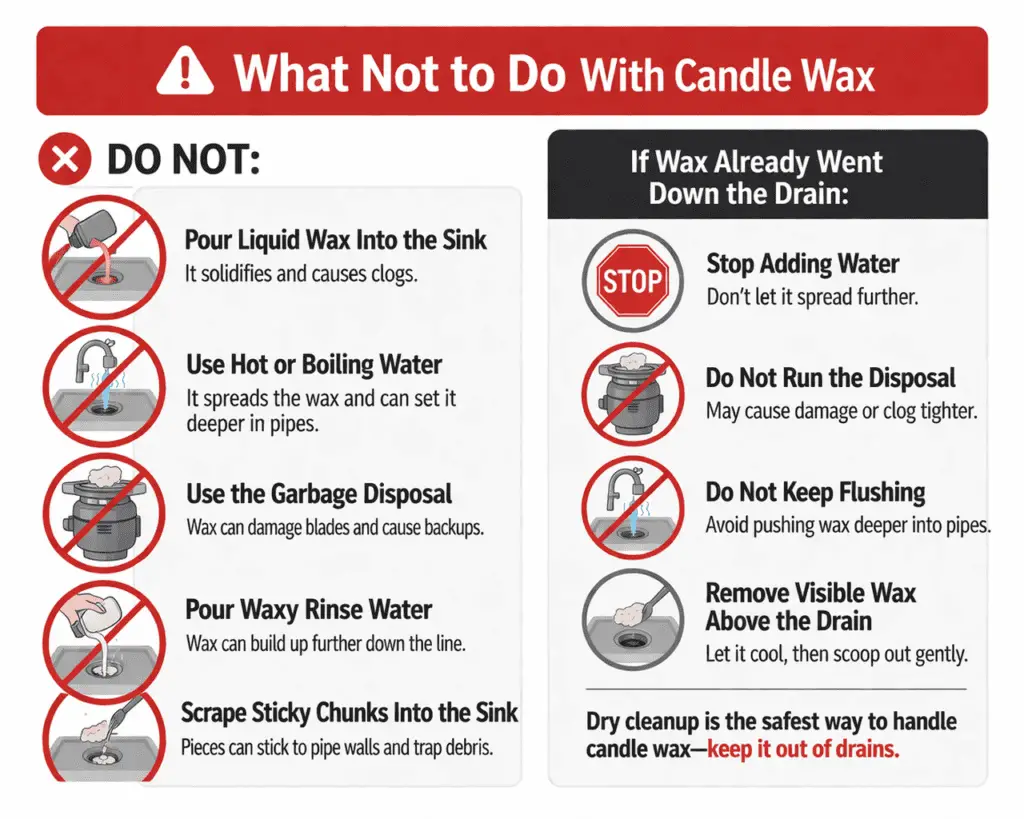
Avoid these common mistakes:
- Pouring liquid wax into the sink because it seems faster than waiting for it to harden.
- Running hot or boiling water afterward in hopes of flushing it away.
- Using the garbage disposal on waxy residue.
- Pouring waxy rinse water from jar cleaning into the drain.
- Scraping sticky chunks over the sink instead of over paper or a trash bin.
The safer habit is to keep wax cleanup dry for as long as possible. Let it harden, lift or scrape it out over a lined surface, wipe residue with paper towel, and throw the waste in the trash.
If wax has already gone down the drain:
- Stop adding more water.
- Do not run the garbage disposal.
- Do not keep flushing with hotter water.
- Focus only on removing what is visible above the drain.
Clean or Recycle the Empty Candle Jar
Once the wax is gone, clean the jar fully, then decide whether it should be reused, recycled, or thrown away. A jar may still have oily residue, soot, labels, adhesive, or a metal wick tab even after the wax has been removed. Reuse and recycling both become easier when you clean off as much of that leftover material as possible.
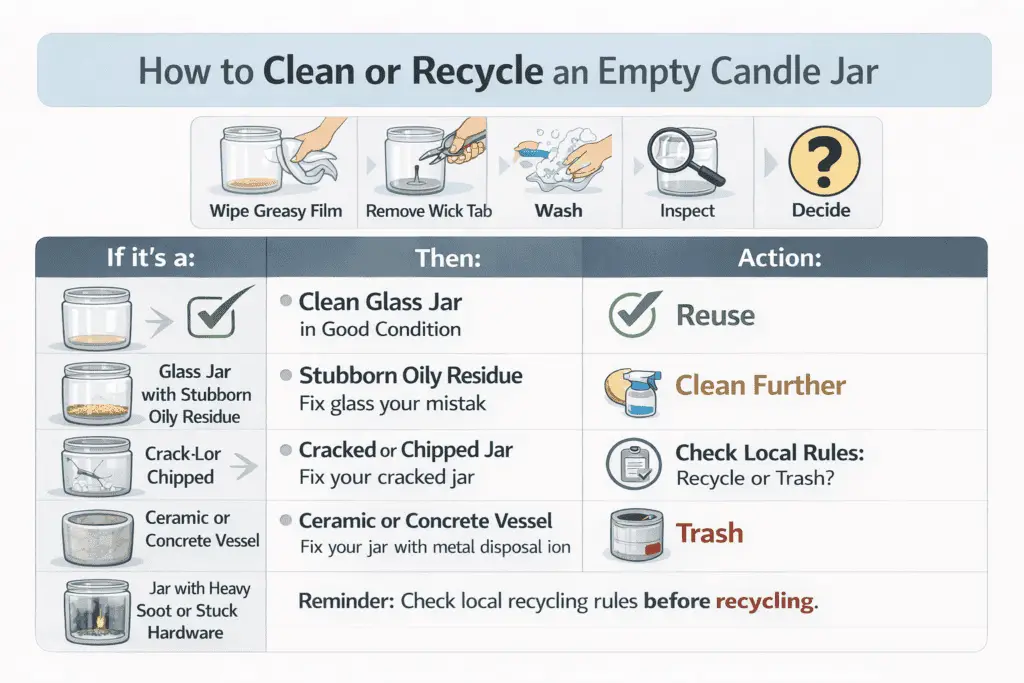
Work through the container in this order:
- Wipe out the greasy film with paper towel.
- Remove the wick tab if it lifts away cleanly.
- Wash the jar with warm soapy water once most of the wax residue is gone.
- Check for chips, cracks, or heat damage.
- Decide whether the clean container is worth keeping, accepted for recycling, or better off in the trash.
A few quick checks can help:
- Clean glass jar in good condition: best candidate for reuse or recycling.
- Glass jar with stubborn oily residue: clean it further before deciding.
- Cracked or chipped jar: usually not a good reuse option, and often not suitable for recycling.
- Ceramic, concrete, or mixed-material vessel: do not assume it belongs with regular glass recycling.
- Jar with heavy soot, stuck hardware, or strong odor: cleanup is not finished yet.
Check Local Recycling Rules Before You Recycle Candle Jars
A candle jar is only recyclable if your local recycling program accepts that material in that cleaned condition. One area may take clean glass containers, while another may reject jars with residue, mixed materials, or attached metal parts.
Before recycling, check these points:
- Confirm the material first, such as glass, ceramic, metal, or mixed material.
- Make sure the wax is removed and the jar is as clean as practical.
- Check whether lids, labels, or metal inserts need to be removed separately.
- Find out whether the item is accepted curbside, at drop-off, or not at all.
In many cases, a plain glass jar with little residue is the strongest recycling candidate. Decorative vessels, painted jars, ceramics, or mixed-material containers often follow different rules. If the answer is unclear, do not guess. Throwing the item away is better than contaminating recycling with something your local program does not accept.