

A candle that burns too hot or unevenly is showing unstable burn behavior during use. On this page, “too hot” means a tall flame, fast soot, overheating glass, or heat pushed into one side of the container, while “unevenly” means one-sided melt, tunneling, or thick wax hang-up. It does not mean normal wax warmth, wax pour temperature, or general formula heat. Stop the burn if the flame grows unusually tall, hugs the container wall, soots heavily, or the container shows heat stress, then correct wick length, drafts, and centering before you test deeper changes.
The goal here is to diagnose the active symptom family first, then stabilize the candle with one change at a time. For the main guide, see candle making. Follow the overheating path first when you see tall flame, soot, or rising container heat. Follow the uneven-burn path when the main problem is one-sided melt, tunneling, or rim hang-up. If first-burn memory, full wick sizing, or wide-jar setup becomes the main issue, treat that as a separate follow-up problem instead of changing wax, wick, and container together.
Diagnose a Candle That Burns Too Hot
Stop the burn, cool the candle fully, then check wick length, drafts, centering, and melt-pool behavior to identify whether the candle is running hot, burning unevenly, or both.
A hot candle is rarely caused by one thing alone. It is usually a pattern: tall flame, soot, fast melt, and a deep melt pool early in the session. Start by eliminating the most common false positives, like a long wick and drafts, then decide whether the wick is simply too large or the candle is over-fueled.
If heat and soot continue after trimming and removing drafts, fragrance load or additives can keep feeding the flame more aggressively. Treat that as a one-variable test branch, not a reason to change wick, jar, and formula at the same time.
Use the overheating checks first when flame height, soot, or jar heat are active. If the flame is otherwise stable and the main problem is a cool outer ring or tunnel, treat that as a separate uneven-burn path instead of forcing a hotter burn here.
Do this first before any longer retest: extinguish any candle with a very tall flame, heavy soot, or overheating glass, let it cool fully, trim the wick, move it out of drafts, and stop using any cracked, chipped, or visibly heat-stressed container.
For the broader placement, burn-habit, and hazard checks around hot glass and open flame, see the full guide to candle safety and compliance.
When Is a Candle “Too Hot” and When Should You Stop the Burn?
A candle is too hot here when the flame or container shows overheating signals, not just normal warmth from a healthy melt pool. Stop the burn if the flame repeatedly surges, leans into the jar wall, throws heavy soot, or the container shows cracking, chipping, or visible heat stress.
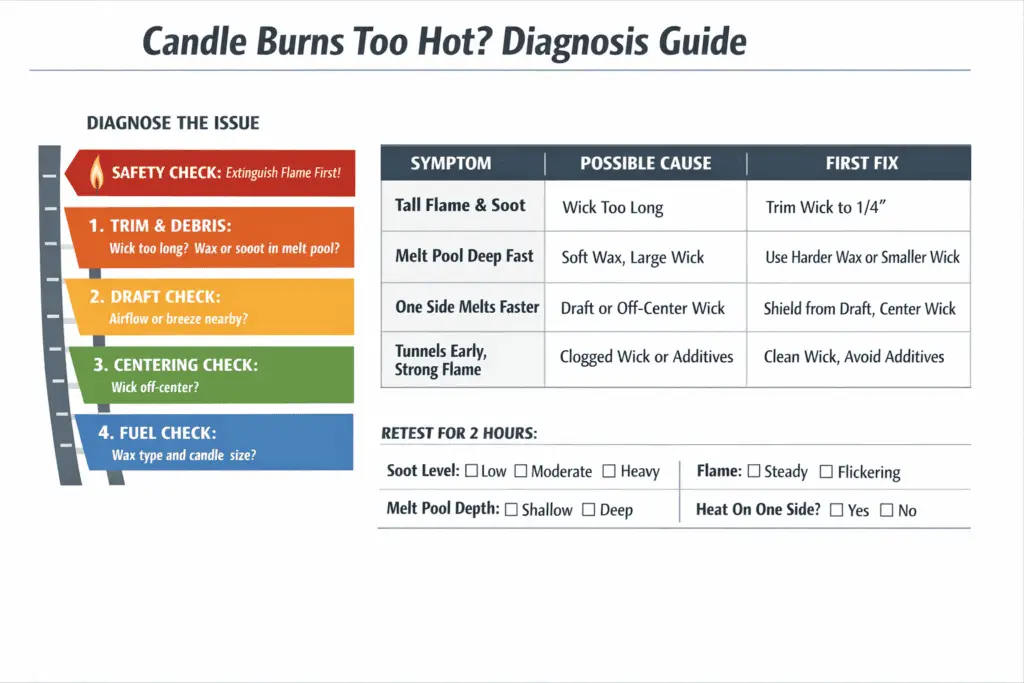
Fast diagnosis ladder
Do these in order:
- Safety stop check
If the flame is unusually tall, smoking heavily, or pushed into the jar wall, extinguish the candle and let it cool completely. - Trim and debris check
Trim the wick to 3 to 5 mm, about 1/8 to 3/16 inch, and remove wick crumbs so you do not add extra fuel. Many care labels use about 1/4 inch, around 6 mm, as a general trim point before each burn. If your candle runs hot or sooty, the slightly shorter trim here is a troubleshooting adjustment, not a universal rule. - Draft check
Move the candle away from windows, fans, and air vents. Drafts can cause high flames, soot, and one-sided overheating. - Centering check
Look straight down from the top and confirm the wick is centered. Even a small offset can create a hot wall on one side and tunneling on the other. - Fuel check
If soot and overheating continue after trimming and removing drafts, suspect over-wicking, meaning the wick is too large or too hot, or over-fueling, meaning the fragrance load or additives are changing fuel flow.
Symptom, likely cause, and first fix
| Symptom | Likely Cause | First Fix |
|---|---|---|
| Tall flame and soot quickly | Wick too large or wick too long | Trim, then test one wick size down |
| Melt pool gets deep fast | Too much heat for the jar | Shorten session, downsize wick, verify no drafts |
| One side melts faster | Off-center wick or draft | Re-center wick and relocate away from airflow |
| Tunnels early but flame looks strong | First burn ended too soon, or jar is too wide for one wick | Use a longer first burn, consider double-wicking in wide jars |
How to tell overwicking from draft or centering error
Overwicking usually shows up as a tall flame, fast soot, and a melt pool that gets deep even in still air. Draft or centering problems are more likely when one side runs hotter, the flame bends, or the hot spot changes when you move the candle or correct the wick position.
If trimming and moving the candle out of drafts changes the behavior quickly, suspect placement or centering first. If the candle still runs hot in still air with a centered wick, suspect wick size or fuel load next.
Repeatable 2-hour test
If you want notes that are actually useful, keep the test identical each time:
- Same room
- Same surface
- Still air
- Supervised session
Method note: The 120-minute window here is a working troubleshooting test for comparing one change at a time under the same conditions. It is not a general consumer burn rule and it should not be used to push a candle past safe behavior.
Burn for 120 minutes, then extinguish and log:
A stable result means the flame stays mostly upright, soot stays none or light, the melt pool remains even without a rapidly deepening center, and one side does not keep running hotter than the other.
- soot level
- flame stability
- melt-pool depth
- whether one side ran hotter
Do not move the candle while the wax is liquid.
For a more formal validation workflow, use this step-by-step guide for candle burn tests.
Once you know whether the candle is over-fed, the next step is choosing a wick change that cools the flame without creating tunneling.
Choose the Right Wick Size to Cool the Flame
Measure the inner diameter, pick a chart-based starting wick for your wax, then test one step smaller if heat or soot is high. On this page, the right wick size means the wick that calms this candle’s flame and soot pattern without creating a new tunneling problem. It does not mean the best wick in general, the strongest scent throw, or full wick-chart ownership for every setup.
Wick choice is fuel delivery. Too much delivery creates soot, high flames, and excessive container heat. Too little delivery encourages tunneling and wax hang-up. The goal is not the biggest melt pool possible. The goal is a steady flame and a melt pool that grows evenly without heavy soot.
If you need a starting range before you downsize, use this guide to how to size your candle wick correctly.
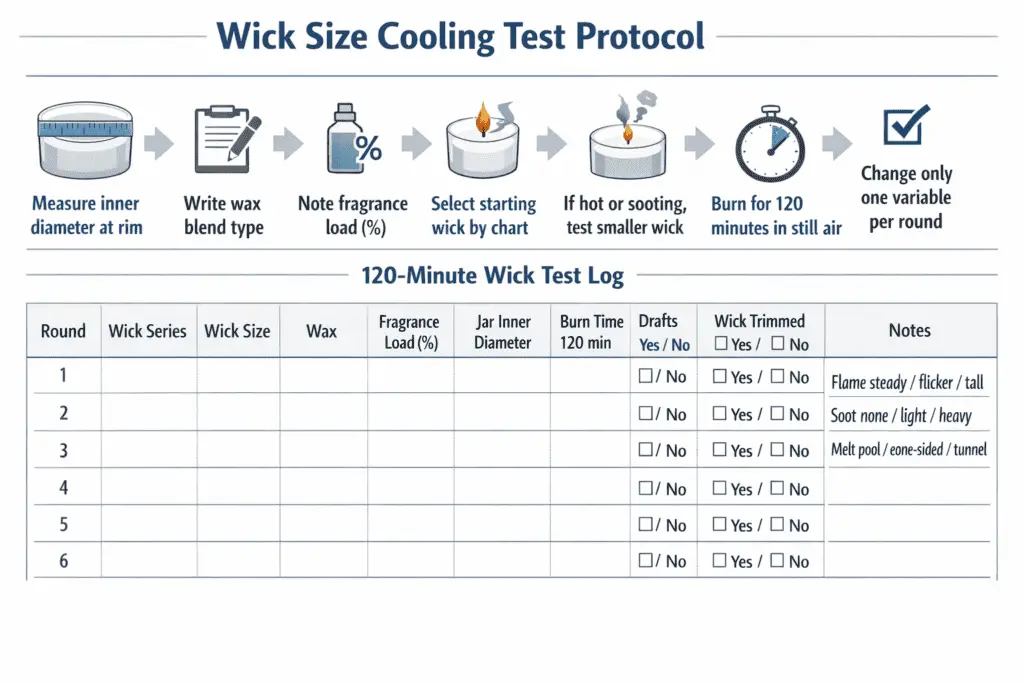
One-variable test protocol
Copy and reuse this:
- Round: __
- Wick series: __
- Wick size: __
- Wax: __
- Fragrance load: __%
- Jar inner diameter: __ cm (__ in)
- Burn time: 120 min
- Drafts: Yes / No
- Wick trimmed to 3 to 5 mm: Yes / No
- Notes: flame steady / flicker / tall, soot none / light / heavy, melt pool even / one-sided / tunnel
Drafts and wick lean can destroy wick sizing tests, so lock down placement and centering first.
Trim the Wick to 3 to 5 mm Before Lighting
Trim to 3 to 5 mm before each light to lower flame height, reduce soot, prevent mushrooming, and keep container heat from creeping upward.
A long wick behaves like an oversized wick. It produces a larger flame envelope and more carbon buildup. That carbon cap, often called mushrooming, burns like extra fuel and can cause smoke, soot, and sudden flare-ups.
For mushrooming, drowning, or repeat wick instability that trimming does not solve, use this detailed breakdown of common candle wick problems.
Trim routine
- Let the candle cool until the wax surface is firm.
- Cut the wick straight across to 3 to 5 mm, about 1/8 to 3/16 inch.
- Remove the trimmed piece and any black brittle cap so it does not fall into the melt pool.
- Re-check that the wick is upright and centered before relighting.
Many consumer guidelines suggest trimming to about 1/4 inch, around 6 mm. If your candle runs hot or sooty, trimming slightly shorter is often a practical troubleshooting adjustment before you jump to rewicking.
Quick mushrooming checklist
- Black cap appears quickly: trim shorter and shorten burn sessions
- Soot appears after a long session: stop earlier and trim before relighting
- Wick crumbs in wax: remove debris, because crumbs add extra fuel
If the candle still burns unevenly after trimming, treat wick position as the next likely culprit.
Re-Center and Stabilize a Drifting Wick
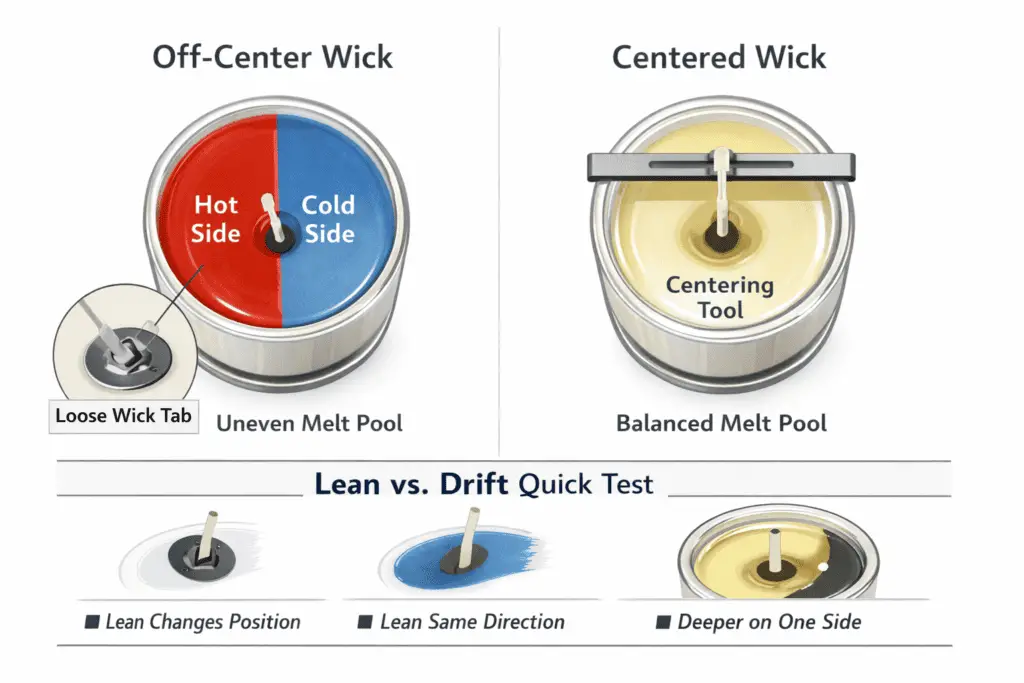
Center and secure the wick so the flame stays vertical, the melt pool stays balanced, and one side of the jar does not overheat or scorch.
A wick that sits even a few millimeters off-center will pull heat toward one wall. That creates a hot side and a cold side, which shows up as uneven melt, tunneling, or soot on one section of the glass.
If the wick keeps shifting between burns, this guide to why candle wicks lean goes deeper on likely causes and correction.
Lean vs drift quick test
- Lean that changes session to session: drafts or handling while wax is liquid
- Lean that always points the same direction: wick tab placement or cure-time centering issue
- Melt pool always deeper on one side: centering error first, drafts second
If the wick is centered but the flame still bends and the melt pool leans, airflow is usually the missing piece.
Control Airflow and Drafts to Prevent Uneven Burn
Remove drafts and level the surface so the flame stays upright and heat does not get pushed into one side of the container.
Drafts are one of the most common reasons a candle burns unevenly even with the right wick. Moving air pushes the flame sideways, concentrates heat on one wall, and leaves the opposite edge behind.
Draft-proof placement checklist
- Stable, heat-resistant, level surface
- Away from HVAC vents, fans, open windows, and curtains
- Not in a doorway path or next to a frequently opened door
- Clear space above and around the candle, with no shelf directly overhead
Quick draft test
- Light the candle where you normally burn it.
- Watch the flame for 60 seconds.
- If the flame bends noticeably or flickers in cycles, such as when HVAC turns on and off, relocate and retest before changing wick size.
Room temperature swings can change how quickly wax reaches the edges. Keep conditions consistent while diagnosing so you do not misread cold-room behavior as a wick failure.
If drafts and centering are controlled and you still get hang-up on wide jars, jar geometry may require a different wick configuration.
Match Vessel Diameter to Wick Series
Use a single wick for smaller round jars, but consider two smaller wicks in wide or square vessels instead of oversizing one wick to reach the edges.
Wide jars and corners are hard for one flame to heat evenly. The most common mistake is oversizing one wick until the center runs too hot, creating soot and container overheating, while the edges still lag.
If wide or square vessels still leave cool edges after trim, centering, and draft fixes, treat vessel fit as a separate setup problem instead of forcing a hotter single wick. Confirm the jar in your candle burn test and keep container hazard checks inside the full guide to candle safety and compliance.
Use a Foil Collar Only for Uneven Melt, Not to Cool an Overheating Candle
A foil collar can help a tunneling or rim-hang-up candle reach the outer wax, but it should not be used to push an overheating candle through a longer burn.
Foil traps and redirects heat. That can help a cool outer rim catch up when the main problem is uneven melt. It is the wrong fix for a candle that already has a tall flame, heavy soot, overheating glass, or wall-hugging flame.
When a short foil session is reasonable
- Confirm the candle is no longer overheating. The flame should be controlled, the glass should not be showing stress, and the main issue should be a cool outer rim or shallow tunnel.
- Extinguish the candle and let it cool completely.
- Trim the wick to 3 to 5 mm and remove debris from the wax surface.
- Form a loose foil collar around the rim to reflect heat toward the cooler outer wax. Do not let the foil touch the flame.
- Relight and monitor closely for a short session. Stop if the flame grows, the glass overheats, or soot returns quickly.
- Remove the collar once the melt evens out. If the candle only behaves with repeated foil sessions, the lasting fix is usually wick or vessel correction.
If tunneling is the main problem, use this step-by-step guide for preventing candle tunneling for the full rescue flow.
Stop rules
Do not try to rescue beyond these points:
- Flame repeatedly hits the container wall
- Heavy soot returns quickly after trimming
- Container shows heat stress, cracking, or damage
- Any behavior that feels unsafe to supervise
If controlled fixes do not stabilize the candle, rebuilding is the reliable solution.
Rewick and Repour to Salvage a Problem Candle
Rewick and repour when a candle remains unstable. Rebuilding removes drifted tabs, char contamination, and wrong wick choices that trimming cannot fix.
Only salvage the candle if the container is intact and the wax is not heavily contaminated with soot odor. If the jar is cracked, chipped, or heat-stressed, discard it instead of reusing it.
Discard vs salvage
- Discard the jar if it is cracked, chipped, visibly heat-stressed, or otherwise compromised.
- Salvage the candle if the jar is intact and the main issue is wick size or placement, not structural damage.
After rebuilding, or once the candle is stable, the first burn is what prevents many uneven-burn problems from coming back.
Run a Burn-In Test and Set the Memory Ring
A long enough first burn helps prevent later tunneling, but it is follow-up prevention after the candle is already stable. Use it only after you have corrected overheating, soot, draft, or centering problems.
If first-burn prevention is the main problem instead of current overheating or uneven burn, use this guide to candle tunneling causes, fixes, and prevention for the deeper route.