
Use a wick dipper to briefly submerge the wick in the melt pool, or cap the flame with a bell snuffer, to put out a candle with less smoke and soot than blowing it out.
Blowing out a candle can push hot vapors and soot into the air, which is why many candles leave a smoky plume or gray rim. A wick dipper or bell snuffer shuts the flame down more gently and helps the next burn start cleaner. This page is for anyone using jar candles, tins, or other common home candles and trying to choose the cleanest put-out method. Start with the quick dipper-versus-snuffer comparison, then use the step-by-step method that fits your candle best.
Dipper vs Snuffer for Smoke and Soot
A wick dipper is usually best when you can reach the wick easily, while a bell snuffer is simpler for deep jars, tight openings, or candles you do not want to touch.
For broader handling, placement, and fire-risk basics, use our full guide to candle safety alongside the shut-down steps below.
Use a dipper when you can reach the wick easily
- It is ideal for jars with a wide opening and a stable surface.
- The melt pool is already formed, so you can quench cleanly.
- The biggest advantage is stopping the last smoky plume right at the source.
Use a snuffer when you want hands-off control
- It is better for deep jars, tight openings, or candles placed in lanterns or crowded décor.
- It avoids touching wax and keeps your hand farther from the flame.
- The key is fit and technique. Match bell diameter to the jar opening so the bell covers fully without bumping the rim.
Quick comparison
| Feature | Wick Dipper | Bell Snuffer |
|---|---|---|
| Smoke at shutdown | Often lowest if dipped briefly | Low if capped and lifted straight |
| Rim soot risk | Lower when movement is gentle | Lower when bell fits and lift is vertical |
| Mess risk | Higher if you over-dip or drag the rim | Lower if the bell does not bump the jar |
| Best for | Wide openings, easy access | Deep jars, tight openings, lanterns |
A simple rule works well here. If you can reach the wick without tipping the candle, dip it. If you cannot, snuff it. Either way, slow movements beat force every time.
A bell snuffer is usually safer and cleaner than using a candle’s lid, and a lid works best only as a cover after the flame is already out.
How to Extinguish a Candle With a Dipper (Press-and-Lift)
Briefly dip the burning wick tip into the melt pool, lift it, and center it to put the flame out with minimal smoke.
The reason this works is simple. Liquid wax quenches the ember instead of pushing hot soot into the air.
Hook the wick and use a wick dipper to press only the glowing end just under the liquid wax. Then lift straight up and re-center an off-axis wick while the wax is still glossy. This quick dip-and-lift can help reduce rim soot because you are stopping combustion without a hard puff across the jar mouth.
If there is not enough melt pool to dip safely, wait a bit longer or switch to a bell snuffer instead of forcing the wick under wax.
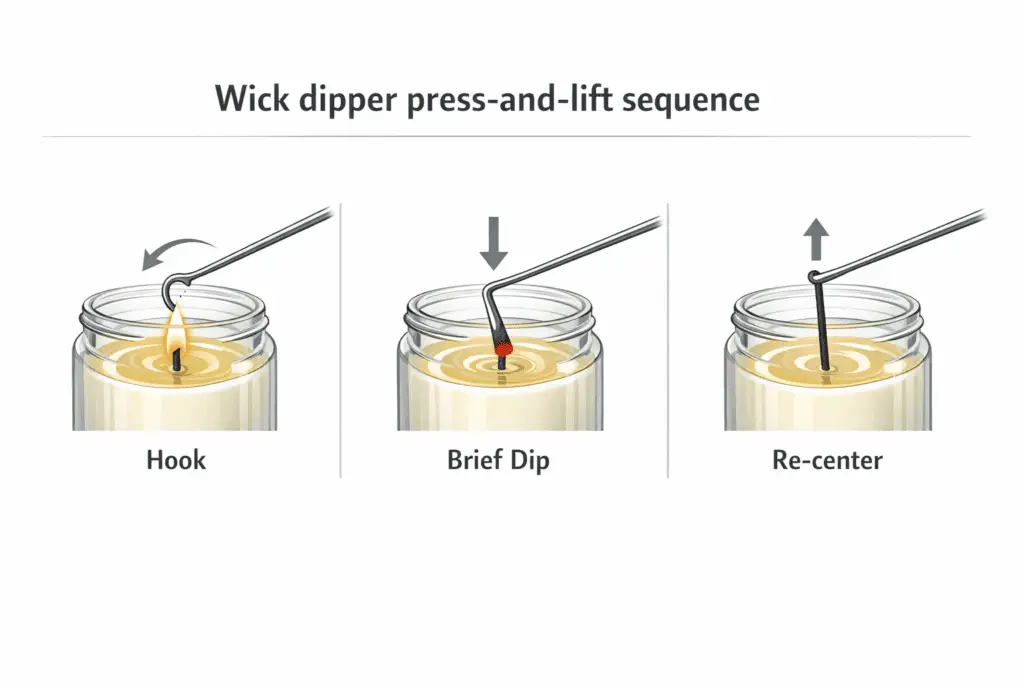
A clean press-and-lift sequence
- Let the flame steady for a moment so the melt pool stops rippling.
- Slide the dipper in near the wick, hook the tip, and dip only the glowing end.
- Lift straight up, then nudge the wick to the center before the wax skins over.
- Leave the candle uncovered for a moment if the room is still, so any remaining warm vapors can dissipate gently.
Small fixes when it does not go perfectly
- If the wick will not relight easily next time, you likely dipped too deep. Keep the dip shallow and brief.
- If you see a soot haze on the rim, slow down the motion and avoid dragging the tool against the jar mouth.
- If the wick leans after lifting, straighten it immediately while the wax is still soft.
Trim the wick short, re-center it while the wax is soft, and let the surface cool level for a clean relight.
What Is the Smokeless Snuff Method (Bell Snuffer)?
Lower a bell snuffer over the flame until it goes out, then lift straight up to smother the flame cleanly with little smoke.
For extinguishing without smoke in deep jars or tight spaces, a bell snuffer is the most hands-off way to cut oxygen without stirring the flame.
To choose a bell snuffer, pick one that fully covers the flame without touching the container rim, then cap the flame vertically and hold it in place until the flame and wick glow fade. If there is a black mushroom on the wick, trim it short before the next burn. Extra carbon is often what makes that last puff look smoky. With steady placement and a slow vertical lift, you can help keep the jar cleaner between burns.
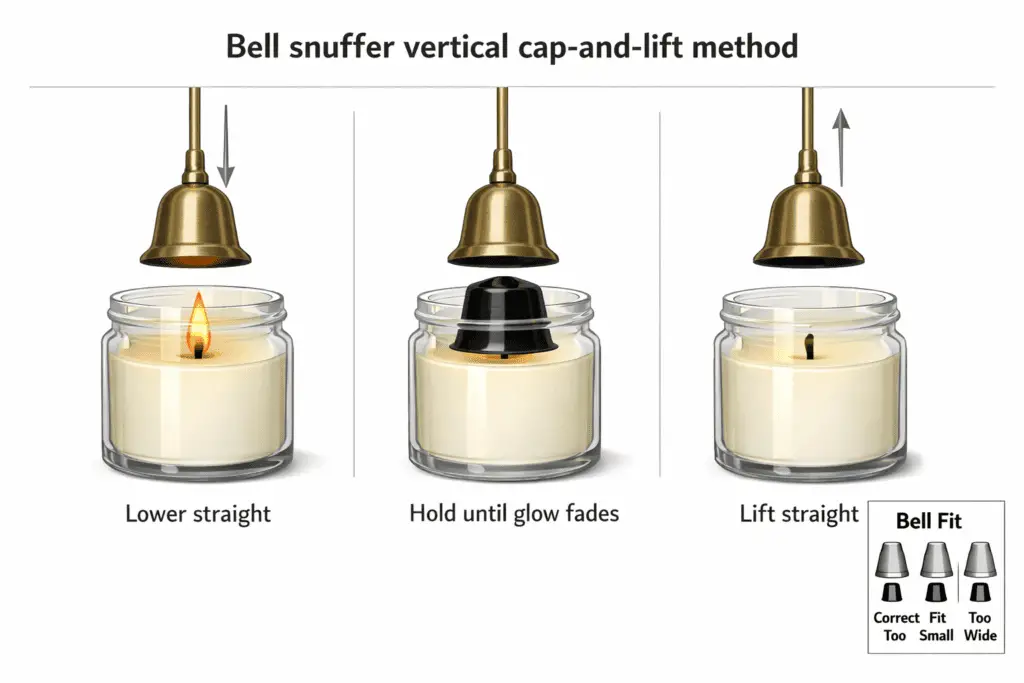
Technique details that prevent soot and splatter
- Lower and lift straight up. Tilting pulls hot vapor across the rim.
- Do not rush the lift. Wait until the flame is fully gone and the wick glow fades.
- Match bell size to the opening. A too-small bell leaks air, and a too-wide bell bumps the rim.
If you are shopping for one, measure the jar opening and choose a bell that clears it comfortably. If you already have a gray ring on the glass, let everything cool fully, then clean it gently instead of smearing soot into the wax.
Water is never a normal extinguishing method for burning wax.