
Choose the right candle by matching the form, such as jar, pillar, taper, tealight, or melt, plus the wax, wick, and scent strength to your room size, safety needs, and how long you plan to burn it.
A candle should fit the space you’re using, not just the scent you like. For the main guide, see candle making. The right pick burns steadily, smells right-sized, and feels low-stress to live with day to day. Small details, like container thickness or wick size, often matter more than a fancy label. Once you match the basics, you can shop by style without sacrificing performance.
Fast Chooser (30 Seconds)
Start with candle form first, then use room size, scent strength, and safety needs to narrow the best match.
If you want the broader overview first, start with our guide to candle types , then use this quick chooser to narrow the best fit for your room, routine, and safety needs.
- Want the safest everyday option with the least mess? Choose a container or jar candle in a stable, thick vessel.
- Want décor first and little or no scent? Choose tapers for dining or pillars for centerpieces, with proper holders.
- Want flameless fragrance? Choose wax melts with a warmer.
- Have kids, pets, or sensitivities? Start with unscented or a very light scent, and use the trial steps in the sensitivities section.
- Need outdoor help in a breezy spot? Choose a large container candle plus a wind-guard approach.
| Type | Best for | Scent fit | Burn habit | Main watch-out |
|---|---|---|---|---|
| Container or jar | Everyday use, lower mess, steady burn | Works well from light to strong | Best for regular medium or longer sessions | Thin glass or an oversized wick can overheat the vessel |
| Pillar | Centerpieces and long decorative burns | Usually low to moderate | Best when you can watch runoff | Needs a wide, heat-safe plate or tray |
| Taper | Dining tables and visual height | Usually unscented or low scent | Best for shorter, watched burns | Drafts and loose holders can cause drips and leaning |
| Votive | Flexible decorating and scent testing | Light to moderate | Good for short sessions | Must burn in a proper votive cup |
| Tealight | Accents, lanterns, and short burns | Usually light | Best for quick use | Still needs a heat-safe holder and surface |
| Wax melts | Fragrance without an open flame | Easy to scale up or down | Flexible because you control the warmer time | The warmer is still a heat source and needs a stable spot |
How to Choose by Form Factor (Container, Pillar, Taper, Votive, Tealight, Melts)
Choose candle form by where it will sit and what you need, containers for everyday safety, pillars for centerpieces, tapers for dining, tealights for accents, and melts for flameless scent.
Form factor is often what people mean when they say “type of candle,” because it changes safety, mess, and how the candle behaves.
Container or Jar Candles
Best for: everyday use, lower mess, steady burn
Watch for: thin glass, narrow bases, and oversized wicks that overheat the vessel
Pillars
Best for: centerpieces, low-to-moderate scent, long sessions on a plate or tray
Watch for: drip and runoff, so you need a wide, heat-safe dish
Tapers
Best for: dining tables, visual height, low scent or unscented use
Watch for: holder fit, because drafts make them drip and lean
Votives
Best for: flexible decorating and testing scents
Watch for: they should be burned in a proper votive cup to avoid wax flooding
Tealights
Best for: short burns, accents, lanterns
Watch for: overheating surfaces, so always use a heat-safe holder
Wax Melts
Best for: fragrance without an open flame
Watch for: the warmer is still a heat source, so keep it stable and away from clutter
If you are unsure, start with a medium-size container candle or melts. Those two formats usually give the cleanest set-it-down-and-enjoy-it experience.
If you are deciding between table and décor formats, see pillar vs votive vs taper. If you want fragrance without a flame, compare wax melts vs candles before buying.
How to Choose by Room Size and Ventilation
Match scent strength and candle diameter to your room size, and avoid strong-throw candles in small, low-ventilation spaces.
A small bedroom or office can feel overwhelmed fast, especially with perfume-style blends. A large open-plan area needs either a larger diameter candle, a multi-wick candle, or a cleaner scent profile that reads well at a distance. Ventilation matters because airflow carries fragrance away and can also push the flame into a hotter, smokier burn.
Use this quick fit check:
- Small room (bathroom, small bedroom): single wick, lighter or clean scent families like linen, citrus, or soft floral
- Medium room (living room): standard jar candle or mid-size pillar with moderate scent
- Large room (open plan): wide jar or multi-wick, with scents that still smell pleasant at higher intensity, such as woods, resins, fresh blends, or restrained gourmands
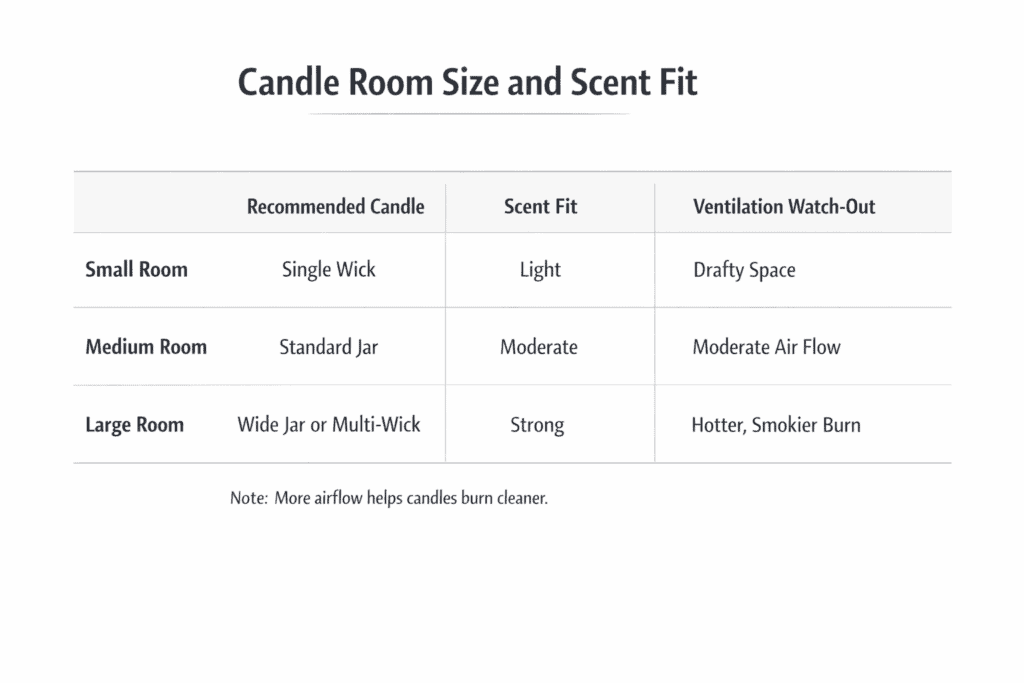
If a candle smells great cold but disappears when lit, the space may be too large or too drafty. If it gives you a headache in 10 minutes, the space is likely too small or not ventilated enough for that fragrance strength.
How to Choose by Purpose (Aromatherapy, Décor, Emergency)
Pick by your primary goal, fragrance experience, visual styling, or reliable light, and let that goal decide scent level, form, and burn behavior.
For fragrance mood-setting, a stable container candle or melts give the most predictable results. For décor, tapers and pillars create the cleanest silhouettes, but they require holders and attention to drip control. For emergency or utility, prioritize burn stability and safe placement over fragrance complexity.
Purpose-Driven Picks
- Aromatherapy-style atmosphere: light-to-moderate scent, steady burn, minimal soot, or consider melts if you want fragrance without flame
- Décor and table setting: unscented tapers or low-scent pillars, so food and conversation stay in focus
- Emergency or backup lighting: unscented, wide-base container candle, with matches or a lighter and a snuffer nearby
A candle can do more than one job, but mixed goals often create trade-offs. A strong-scent luxury jar can be lovely for ambiance, but it is not the best all-night utility option.
How to Choose by Wax Type (Soy, Beeswax, Paraffin, Coconut, Blends)
Choose wax by the outcome you care about most, such as clean burn, strong scent, appearance, or value, because each wax has predictable strengths and trade-offs.
Wax selection gets easier when you use simple if-X-choose-Y rules instead of vibes:
- Want strong hot throw in most rooms? Paraffin or a well-formulated blend often performs best.
- Want a softer, slower vibe and do not mind natural variation? Soy or soy blends can feel gentler.
- Want naturally honeyed notes and a firmer burn? Beeswax can be excellent, especially unscented.
- Want a creamy look and good scent performance? Coconut blends often aim for both throw and appearance.
If wax choice is your main sticking point, see how to choose the best candle wax for a deeper breakdown by performance and trade-off.
How to Choose by Scent Strength and Scent Throw
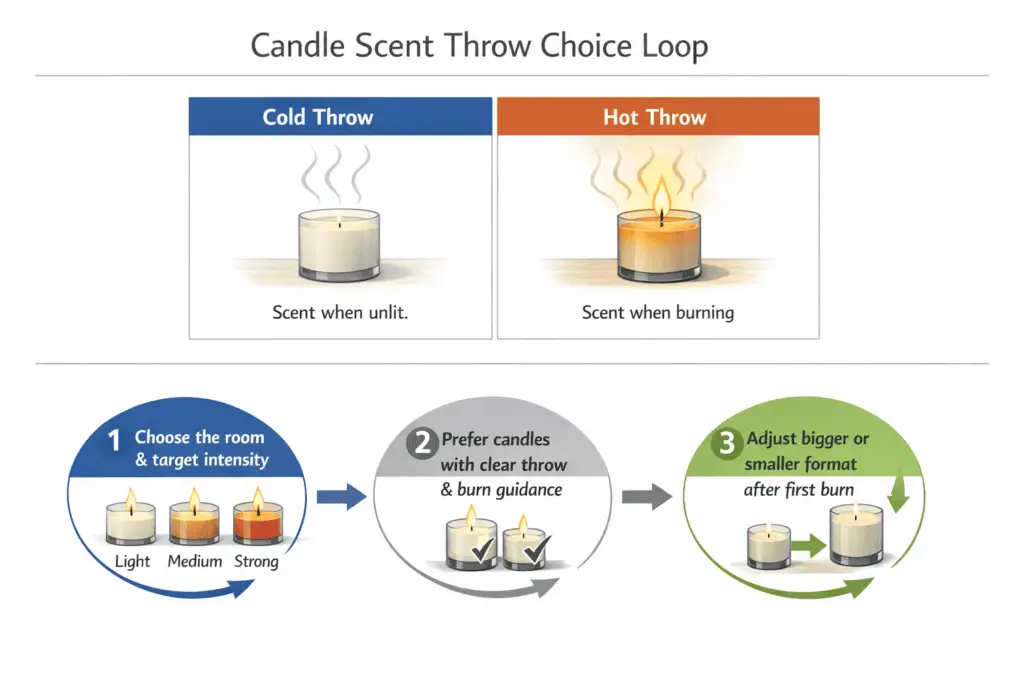
Treat scent strength like volume control. Choose light for small rooms, medium for most living spaces, and strong only for large or well-ventilated areas.
Cold throw is how a candle smells unlit. Hot throw is how it smells while burning. Hot throw depends on wax, wick, fragrance load, and airflow, so two vanilla candles can behave very differently.
A Reliable Selection Loop
- Choose the room and decide your target intensity, light, medium, or strong.
- Prefer candles that describe throw clearly and list burn instructions.
- After the first burn, adjust by changing the format, bigger or smaller, before blaming the scent itself.
For deeper scent decisions, see how to choose the right candle fragrance. If the main choice is whether to burn fragrance at all, compare scented vs unscented candles by use case.
How to Choose by Wick Material and Wick Size
Wick size should match vessel diameter and wax type. A correct wick creates a full melt pool without a high flame, soot, or drowning.
Wicks control fuel flow. Too small causes tunneling and weak throw. Too large causes overheating, soot, and mushrooming.
What to Look For
- Single wick vs multi-wick: multi-wick often suits wide jars, while single wick suits narrower jars
- Cotton vs wood: cotton tends to be forgiving, while wood can run hotter and needs careful sizing
- Centered wick: off-center placement often creates uneven melt pools
If wick behavior is the deciding factor, read how to choose the right candle wick before buying a wider jar or a wood-wick candle.
How to Choose for Safety, Sensitivities, and Cleaner Burns
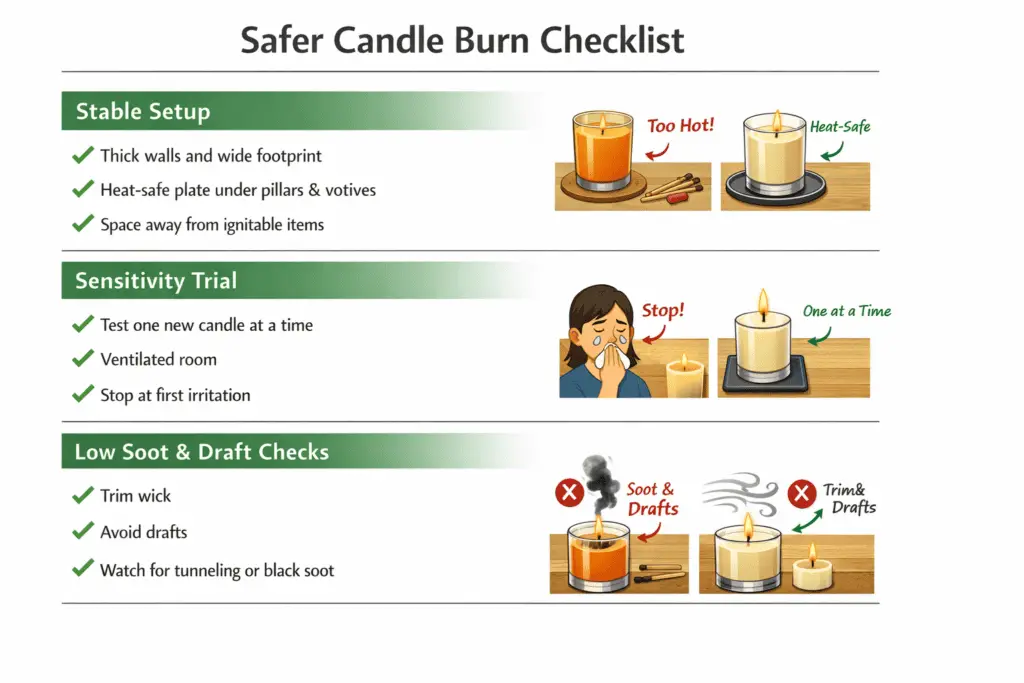
Safety comes from stability, heat management, and predictable behavior. Choose wide bases, heat-safe holders, and burn practices that prevent tipping, overheating, and unattended flames.
A stable candle setup matters more than the wax story. Even a good candle becomes a fire risk when placed on an unstable surface or burned too long.
High-Safety Picks and Habits
- Choose containers with thick walls and a wide footprint
- Use a dedicated heat-safe plate under pillars and votives
- Keep burning candles spaced apart and away from anything that can ignite
- Stop burning if the container feels excessively hot or if the flame grows unusually large
For a deeper breakdown of safer setups, see how to choose fire-safe containers and wicks.
For Households with Kids, Pets, or Sensitivities
If you have sensitivities, start with unscented or very light scent, avoid smoky burns, and test one candle at a time in short sessions with ventilation.
- Test only one new candle at a time
- Burn in a ventilated room
- Stop at the first sign of irritation, such as headache, throat scratch, or watery eyes
- Keep pets and kids away from both flame and pooled wax
For Low Soot and Drafts
A clean-burning candle has a steady, modest flame, minimal smoke, and no black soot on the jar. Soot usually comes from wick size, drafts, or over-fragranced burns.
- Flame is tall and flickery: move away from drafts and trim the wick
- Jar turns black near the top: trim the wick, reduce burn time, and avoid airflow that pushes the flame sideways
- Candle tunnels: the first burn was too short, the wick is too small, or the candle diameter is too wide for the wick
- Outdoors or near drafts: use larger container candles and wind protection, because airflow makes flames flicker, increases soot, and can prevent an even melt pool
For extinguishing, a snuffer or dipping the wick reduces smoke. Blowing can spread hot wax and create a smoky burst.
How to Choose by Aesthetic Style (Color, Shape, Label)
Choose style after you lock in performance basics. Pick a form factor that fits the space, then match color and vessel shape to your décor without sacrificing stability or heat safety.
Aesthetic choices become easier when you have a safe template. For many homes, that template is a medium container candle in a stable jar, plus a few accent pieces like tapers or tealights for occasions.
Style Checks That Also Protect Performance
- Avoid very narrow bases on tall candles in high-traffic areas
- Prefer labels that do not wrap too close to the flame zone
- If the candle is a gift, choose universally pleasant scent families or go unscented
A beautiful candle is still frustrating if it soots the jar or tunnels immediately. Form and wick sizing usually decide that outcome more than the label design.
For Gifts and Occasions
For gifts, choose universally liked scents or go unscented, and pick a stable, easy-to-use form like a medium container candle. If gifting is the main job, see best candle types for gifting and holiday occasions.