
Burn candles only when an adult can supervise, keep them out of reach on stable heat-safe surfaces, and prefer low-smoke options with good ventilation.
Kids and pets are fast, curious, and unpredictable around warm light and interesting smells. Candle safety is mostly about controlling three things: access, movement, and airflow. When you plan for climbing, wagging tails, and sudden drafts, most common accidents become avoidable. The goal is a calm, repeatable routine that works on normal weekdays and chaotic holiday nights.
Where to place candles so kids and pets can’t reach
Put candles high on an unclimbable surface or inside an enclosed lantern, centered away from edges, and burn only while you can watch the room.
Start with family candle safety basics: anything within climbing range is eventually reachable, especially when kids drag stools or pets jump to investigate.
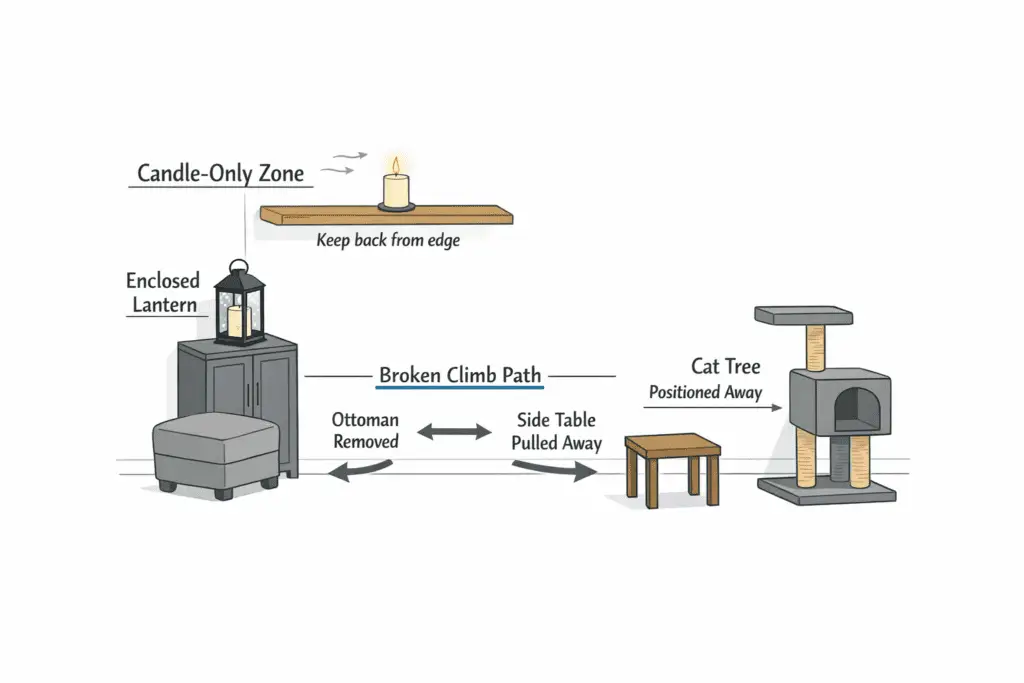
Choose one or two “candle-only” zones in your home that stay calm during play and have no nearby furniture that acts like a ladder. A shelf is only “out of reach” if the path to it is broken. Move ottomans, side tables, pet steps, and cat trees away from the candle’s approach route, and keep the candle well back from the edge so a tail swipe can’t knock it off.
This simple placement routine helps keep the setup repeatable:
- Pick a high, stable spot that does not wobble when you press on it.
- Keep the candle at least a hand’s width back from the surface edge.
- Remove dangling items nearby (curtains, cords, decorations) that can drift toward heat.
- Before lighting, trim wicks to control flame height so the flame starts smaller and steadier.
- If the flame leans or flickers hard, reduce drafts near flames by moving the candle away from open windows, fans, and HVAC airflow.
These quick checks prevent surprises:
- If you can reach it while standing, assume a toddler can reach it with a chair.
- If a cat can jump to the surface, treat the entire surface as reachable unless the candle is enclosed.
Use sturdy holders and stable, heat-safe surfaces
Use a wide, heavy holder on a flat, heat-safe surface so the candle can’t tip, slide, or scorch furniture when bumped.
Using family candle safety basics here means your candle setup should be safe even when someone bumps the table or a pet brushes past. The most common “almost accidents” come from wobbling holders, narrow ledges, and heat-sensitive finishes.
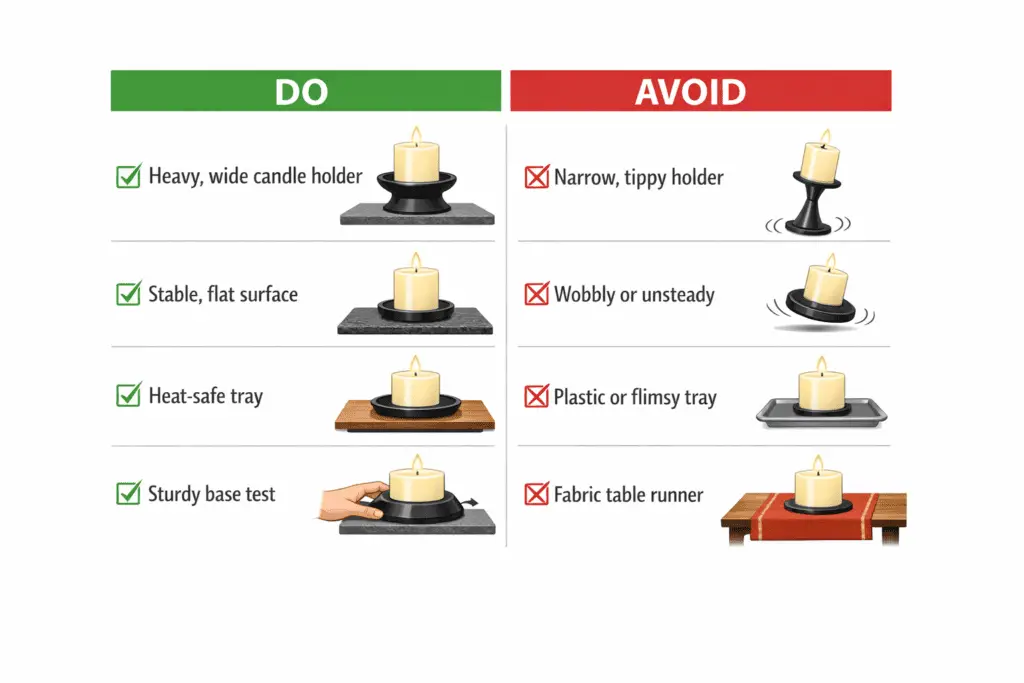
Choose holders with a broad base and enough weight that a light nudge does not shift them. Put them on stone, ceramic, or metal—not fabric runners, plastic trays, or uneven wood seams.
This 30-second stability checklist catches common problems:
- Set the holder down and press gently from two sides; it should not rock.
- Put a heat-safe plate or tray underneath if the surface finish is delicate.
- Center the candle away from edges and away from anything that can fall toward it.
- For glass choice and wick pairing, see how to choose fire-safe containers and wicks before you reuse or buy a new container.
- If smoke shows up or the flame leans, reposition away from vents before you assume the candle is faulty.
Keep flames away from tails, whiskers, toys, and play zones
Keep a clear buffer around the flame so moving tails, sleeves, curtains, toys, and cords can’t cross into the heat and fire zone.
Treat placement clearances like a house rule, not a guess. A safe setup in a quiet moment can become unsafe when kids start running, dogs weave between legs, or a door opens and creates a cross-breeze.
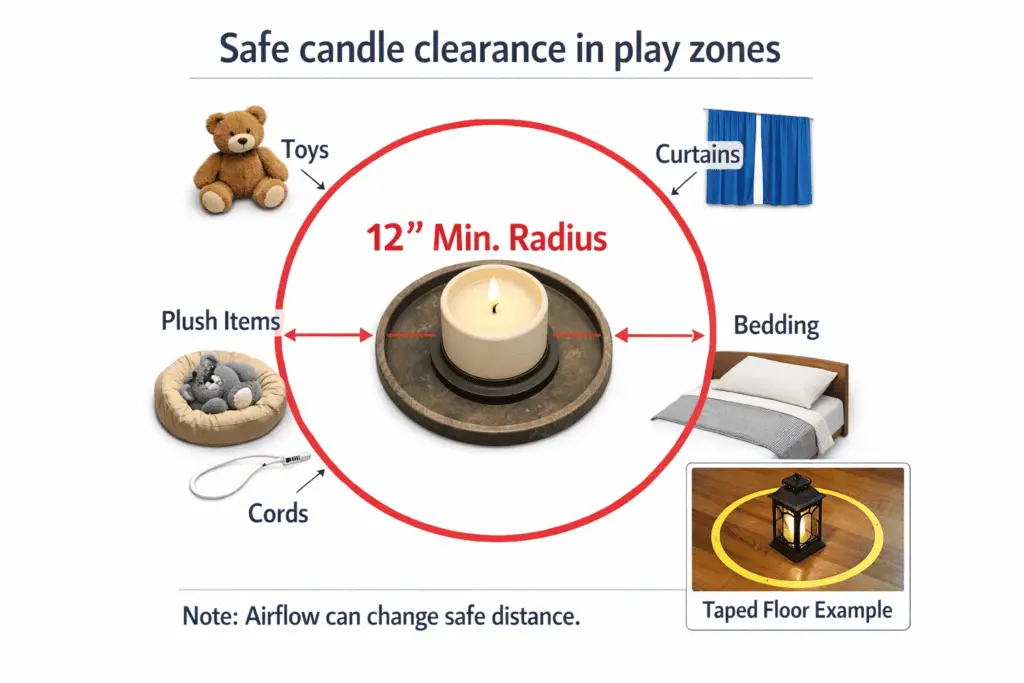
Keep candles at least 12 inches from curtains, bedding, paper, plush toys, and other things that can burn, then widen that buffer in play zones and party layouts.
That 12-inch buffer matches common candle fire-safety guidance for things that can burn.
A fast way to make distance automatic is to mark a safe radius:
- On a table: use a tray or placemat as the “boundary” and keep the candle centered on it.
- On the floor (if you’re using a lantern on a low surface): use painter’s tape to mark a circle that signals “do not cross.”
- Re-check after you open windows or turn on fans, because airflow changes what “safe” looks like.
If the flame leans, smokes, or flickers hard, move away from vents and other draft sources before you adjust anything else.
Choose safer candle formats and fuels for family homes
Prefer wide-base container candles with a lid or an enclosure over open pillars and tall tapers in rooms where kids and pets move.
When you choose safer candle formats, aim for designs that stay stable and contain wax if something bumps the candle. For this page, safer fuels mean lower-smoke burns that are easier to manage in busy rooms.
Containers are generally more forgiving than pillars because wax stays in the vessel, and the flame is less exposed to sideways contact. Open pillars can still work, but they demand stricter clearance, sturdier holders, and calmer rooms.
This quick comparison shows the typical household risk:
- Container with lid: more stable, wax contained, easier to cover.
- Enclosed lantern: best wind and contact protection, especially in busy rooms.
- Pillar/taper: higher tip risk, exposed wax, more draft-sensitive.
Tea lights and other low, open candles are a poor default in kid- and pet-active rooms because they stay low, exposed, and easy to knock or touch.
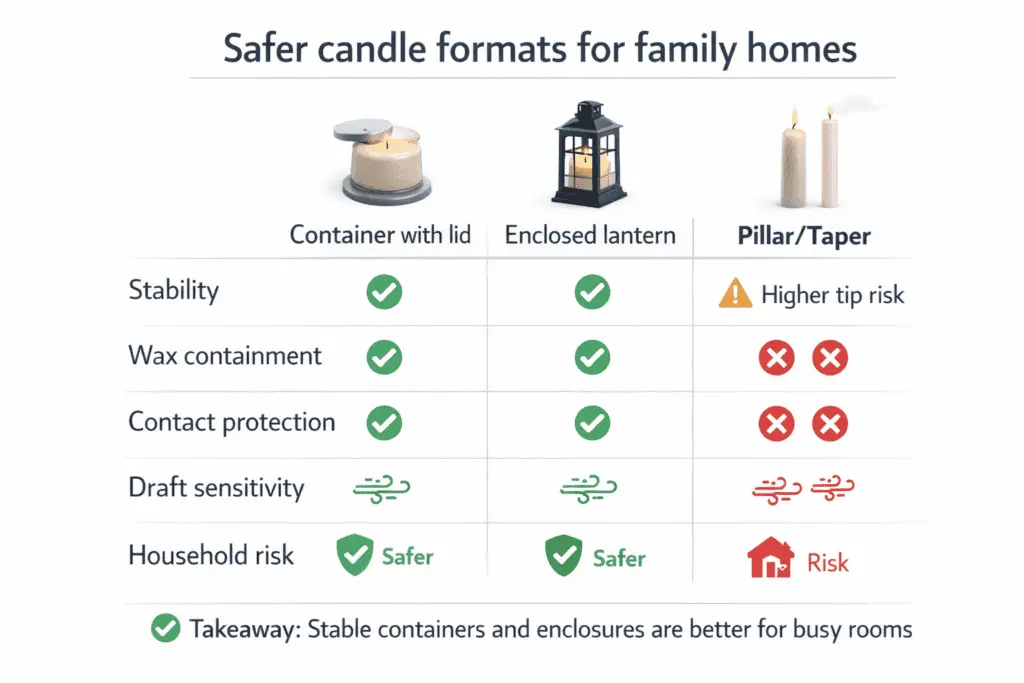
This comparison shows why enclosed or wide-base formats are the safer default in busy family rooms.
For this page, the key takeaway is simpler: choose a flat, stable container or enclosure that keeps wax contained and makes accidental bumps less likely in busy rooms.
Ventilate well and pick pet-safe scents wisely
Direct answer: Keep scented burns short, ventilate small rooms, and remember that fragrance sensitivity varies from one person or pet to another. For deeper guidance, see candle safety for pets, children, and sensitive users and how to ventilate and use candles safely in small spaces.
On this page, the safe-use test is simple: if smoke builds up, the room feels stuffy, or anyone starts coughing, sneezing, or acting irritated, stop the burn and air the room out.
Keep the decision here practical: shorter burns, calmer rooms, and milder scents are easier to manage in family homes. Detailed ingredient or species-specific scent questions belong in the deeper guides linked above.
Control the flame: trim wicks, avoid drafts, snuff correctly
Keep the flame small and steady by trimming wicks, avoiding drafts, and snuffing without splatter.
For this page, the household rule is simple: short wick, calm air, gentle extinguish, and no lit candles when the room is busy or unsupervised.
A simple minimum routine works well: trim before lighting, move the candle if the flame leans or flickers hard, and snuff it before you leave the room or the room gets busy.
For the full step-by-step method, see how to extinguish a candle safely.
Create house rules and supervision routines that stick
Burn candles only when an adult is in the same room, awake, and paying attention, and snuff the flame before leaving—even briefly.
Write down house rules for flames so everyone in the home follows the same standard, including no candles in bedrooms or other sleeping areas.
The hardest part of candle safety isn’t knowing what to do; it’s doing it consistently when life gets busy. Timers help because attention drifts during chores, doorbells, and phone calls.
This short set of rules prevents most incidents:
- Burn only when an adult is present and alert.
- No candles during rough play, chasing games, or pet zoomies.
- Never move a candle while lit or while wax is liquid.
- Keep the candle in a designated “candle zone” that stays clear.
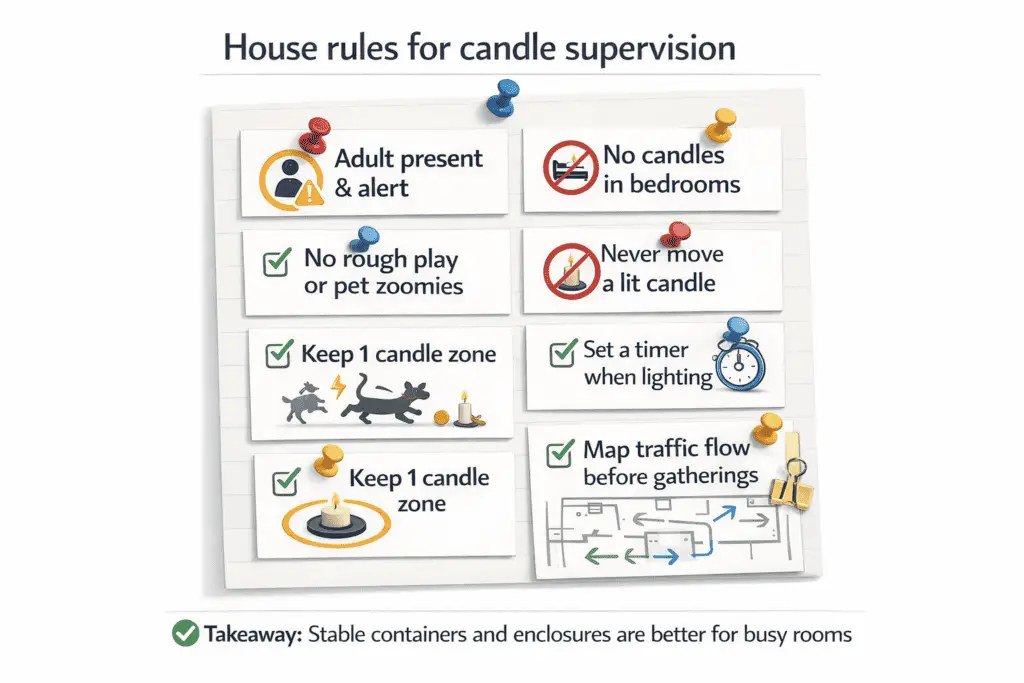
Make “set a timer” automatic: use timers to prevent forgetfulness the moment you light the candle. Before gatherings, map traffic flow around flames so candles aren’t placed where people will brush past with coats, bags, plates, or swinging sleeves.
Secure matches, lighters, and cooling wax after use
Store ignition tools in a latched, high place and cool candles on a dedicated heat-safe spot so kids and pets can’t relight, spill, or touch hot containers.
Bring everything back to family candle safety basics by treating the post-burn window as part of candle use.
Hot glass and soft wax can still burn skin or spill onto fabric even after the flame is out. Create a simple “candle station” with a cooling pad (stone, ceramic, or metal tray) and a storage spot for tools.
This practical setup works in most homes:
- Put matches, lighters, and wick tools in a latched cabinet.
- Let candles cool completely where they burned, not on a path or edge surface.
- Store container candles upright and covered so scents don’t attract curious noses.
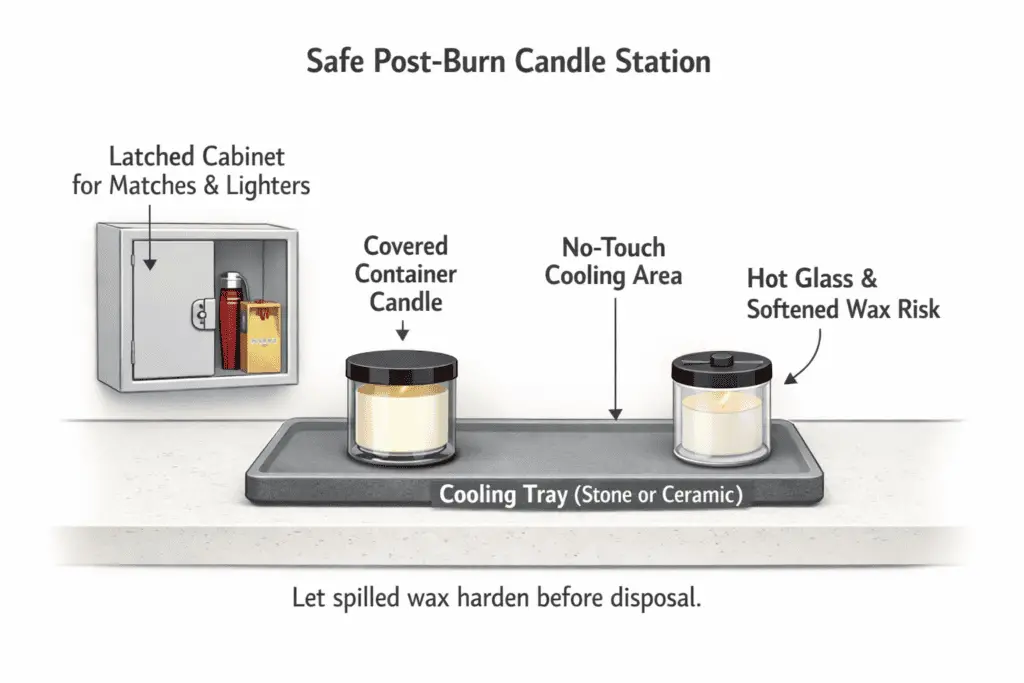
Let spilled wax harden before you throw it away, and seal scraps so they can’t smear or be licked. Keep matches and lighters latched up high, and let jars cool fully before you cover or store them.
Holiday and party setups: extra precautions when guests visit
Use fewer candles, place them away from crowd paths and décor, and assign one person to watch open flames during gatherings.
A party changes the room. Doors open, coats pile up, kids run, pets get excited, and surfaces become crowded.
Doing a quick party layout planning check before guests arrive prevents “decor creep” that moves paper and greenery too close to heat. Choose stable containers or lanterns, keep them off coffee tables, and avoid the edges of buffets where sleeves and plates pass constantly.
These fast party rules lower the risk during gatherings:
- One supervised candle zone per room, maximum.
- No open flames in entryways, hallways, or near coat piles.
- Snuff candles early if the room becomes crowded or chaotic.
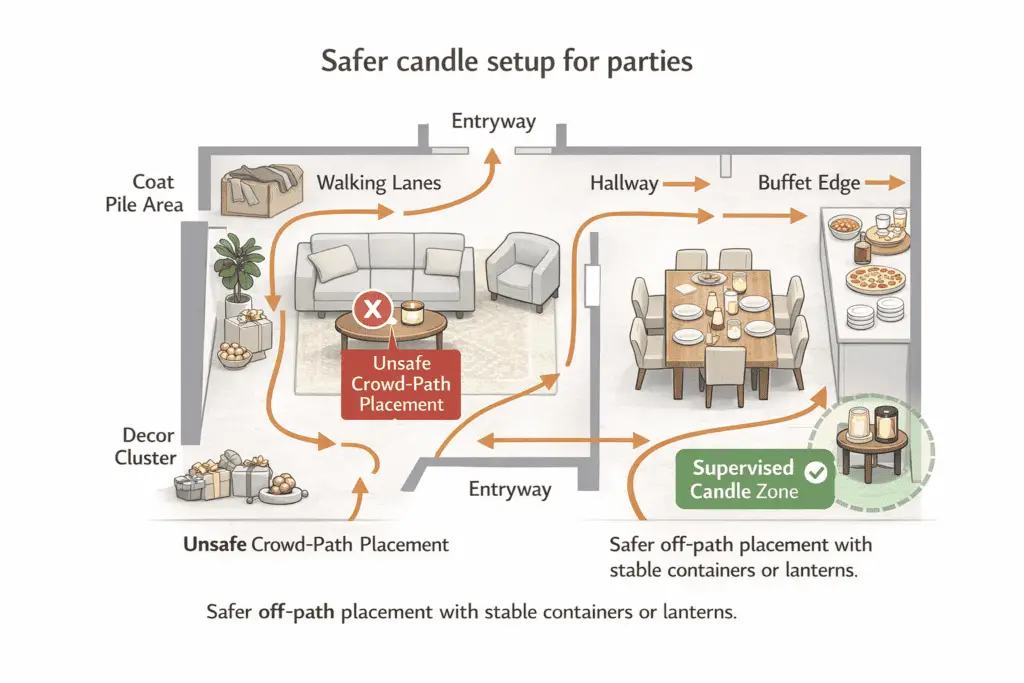
If you keep any real candles lit, rely on container candle safety formats and re-check traffic flow around flames after guests arrive, because the walking lanes often change.
Alternatives to open flame (LED candles, warmers, diffusers)
Direct answer: Use LEDs for light and consider warmers or diffusers for scent when you can’t supervise an open flame in kid- and pet-active spaces. Start with flameless options & safety so you remove the biggest hazard: exposed fire.
LEDs are the simplest for bedrooms, hallways, and play spaces. Warmers and diffusers can add fragrance, but they still need smart placement so cords, liquids, and hot surfaces stay out of reach.
LED candles are the safest default when close supervision is weak.
These options fit most homes:
- LED candles: best “always safe” ambiance, especially at night.
- Wax warmers: keep high, cord-managed, and on a stable surface.
- Diffusers: treat like a scent device, not décor; place out of reach and run shorter sessions.
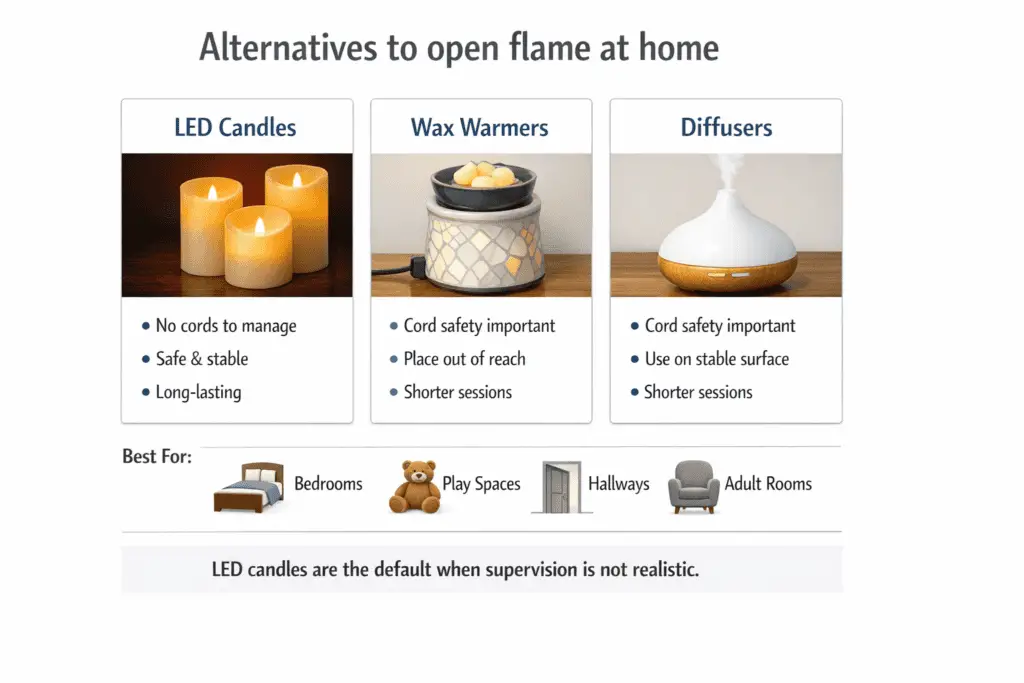
When close supervision is not realistic, default to LED candles instead of a real flame. Save real candles for calm, adult-supervised rooms where placement, airflow, and storage stay controlled.
Emergency readiness: minor burns, wax spills, and small fires
Direct answer: Stabilize the hazard first (snuff and secure), cool minor burns with running water, and clean wax spills only after they fully harden. Keep a simple plan for emergency actions for candles so you don’t improvise under stress.
Most candle problems are small but fast: a tipped jar, a splash of hot wax, or a brief flare that needs oxygen cut off. Have a snuffer or lid nearby whenever you burn a candle, and keep the candle area uncluttered so you can act quickly.
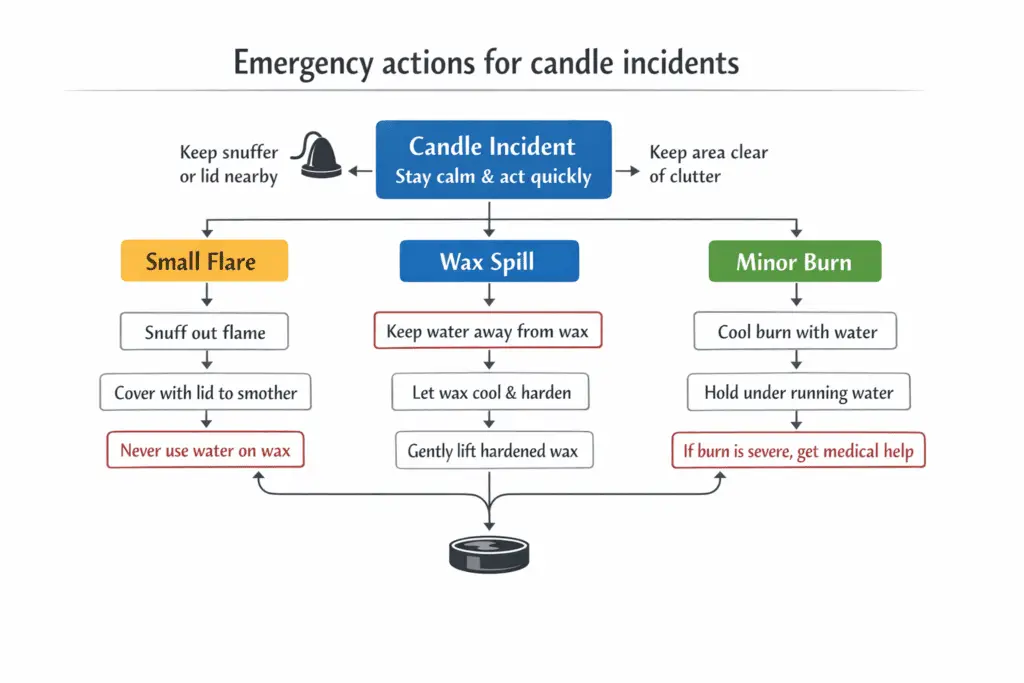
This response sequence keeps the first actions simple during a small candle incident.
These first actions cover the most common small candle incidents:
- Small flare: cover to smother if it is safe to do so, and keep water away from wax.
- Wax spill: let it harden before you lift it, instead of smearing hot wax into fabric or across a surface.
- Minor burn: cool it under running water and get medical help if the injury seems more than minor.
After any incident, reset the area before using candles again: clear clutter, store tools out of reach, and switch to flameless options if the room no longer feels easy to supervise.
Quick answers about candle safety around kids and pets
Are real candles safe around kids and pets if you supervise them?
Yes, but only when an adult can supervise the room, the candle stays out of reach on a stable heat-safe surface, and the flame is snuffed the moment supervision stops.
Are flameless candles safer around kids and pets?
Yes. LED candles remove the open-flame risk, which makes them the safer choice for bedrooms, play spaces, and any room you cannot supervise closely.
How far should a candle be from curtains, toys, and bedding?
Keep candles at least 12 inches from curtains, bedding, paper, plush toys, and anything else that can burn, then widen that buffer in busy rooms.
Should you burn candles in bedrooms or while anyone is sleeping?
No. Do not burn candles in bedrooms or other sleeping areas, and always snuff them before anyone leaves the room or goes to sleep.
What should you do if you cannot watch the room the whole time?
Do not light a real candle. Use an LED candle instead, or wait until an adult can stay in the room and supervise the burn from start to finish.