May 2, 2026
Wick Size Chart by Jar Diameter & Wax Type
A wick size chart is a starter matrix that matches a candle container’s inside diameter and wax family to wick series and…
Read guide
Choose, size, center, trim and test cotton, paper-core and wooden wicks for different waxes and vessels.
Start with the main guideA wick size chart is a starter matrix that matches a candle container’s inside diameter and wax family to wick series and…
Read guide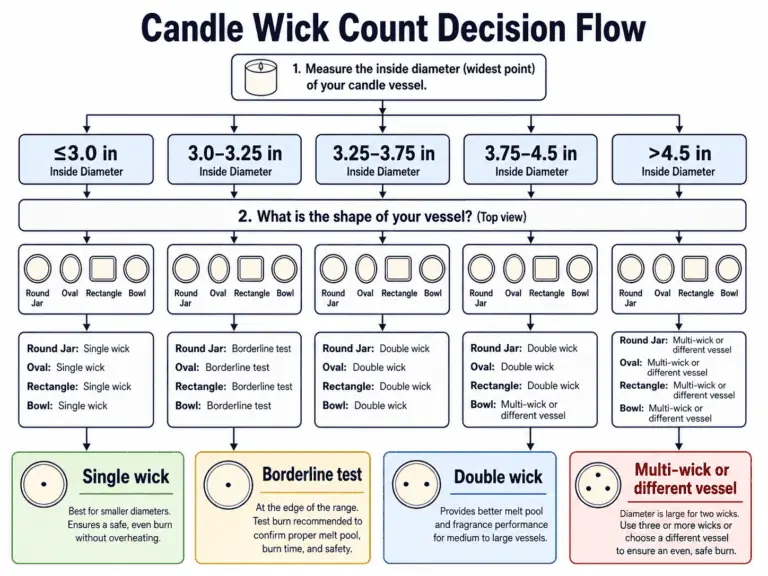
Double wicking uses two smaller wicks in one container so wide jars burn evenly, but it demands careful spacing, lower-heat sizing, and…
Read guide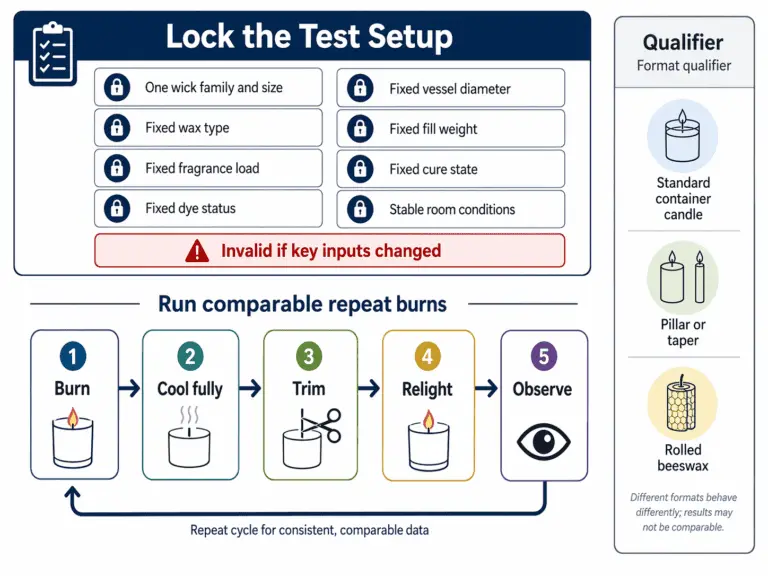
A candle wick burn test validates one chosen wick family and size in one fixed candle setup across repeated controlled burns, because…
Read guideA candle jar usually moves from one wick to two when one flame is unlikely to cover the inner usable diameter well…
Read guide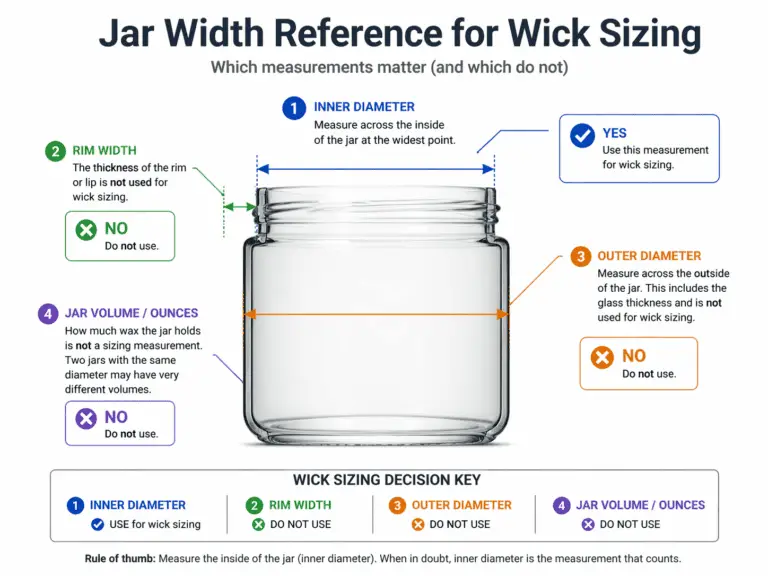
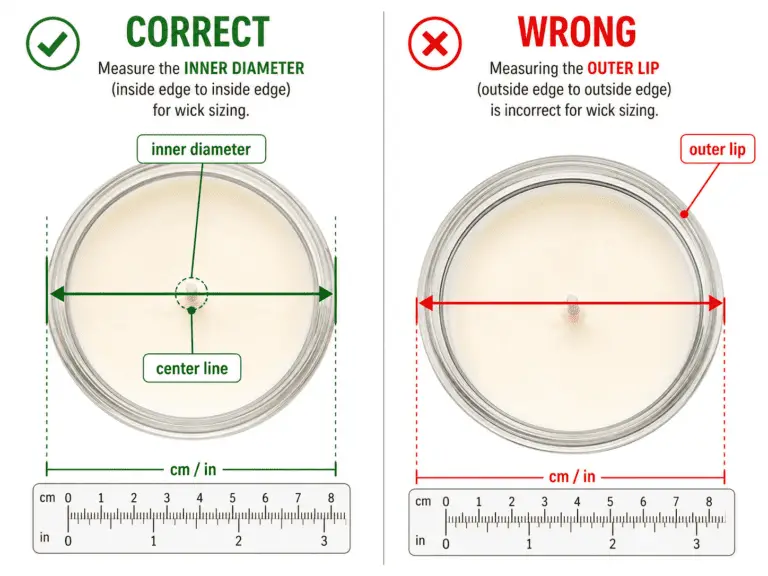
Measure the jar from inner wall to inner wall at the level where the wax will actually burn, because that usable inside…
Read guide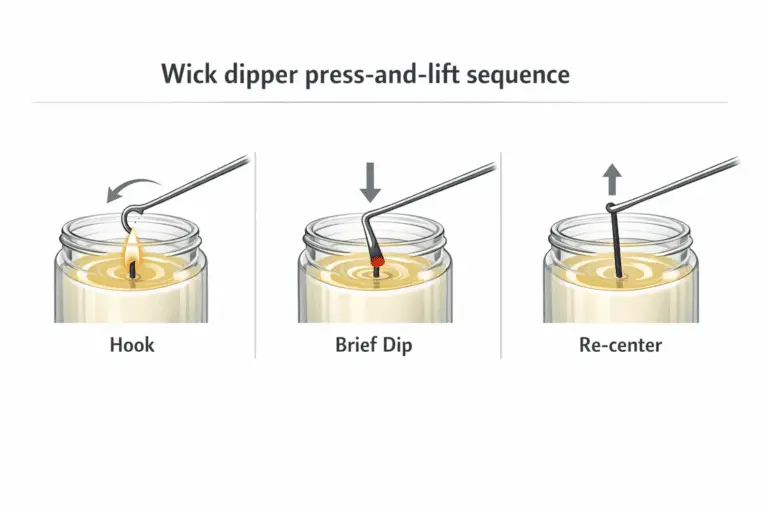
Use a wick dipper to briefly submerge the wick in the melt pool, or cap the flame with a bell snuffer, to…
Read guide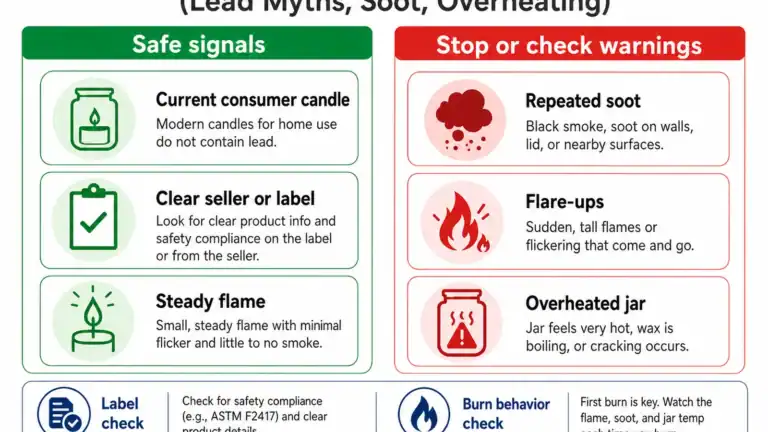
Modern consumer candle wicks are generally safe when they are sold as current consumer products and the candle burns in a stable,…
Read guide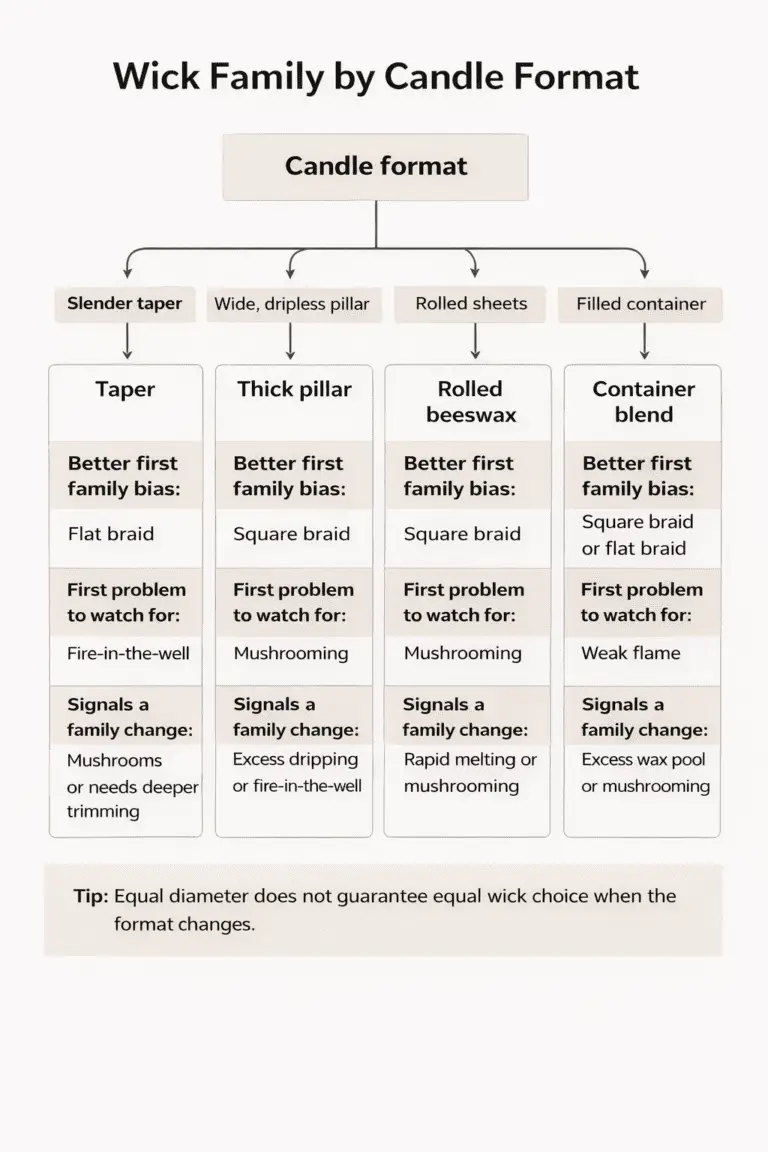
For this page, the best wick for a beeswax candle means the better first wick-family starting point for the candle format: square…
Read guide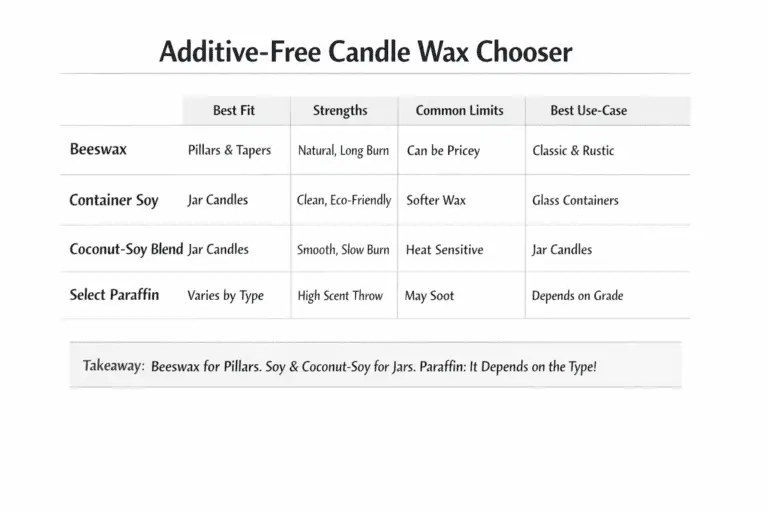
You can make candles without additives by matching the wax to your jar or mold, choosing a safe wick size, and managing…
Read guide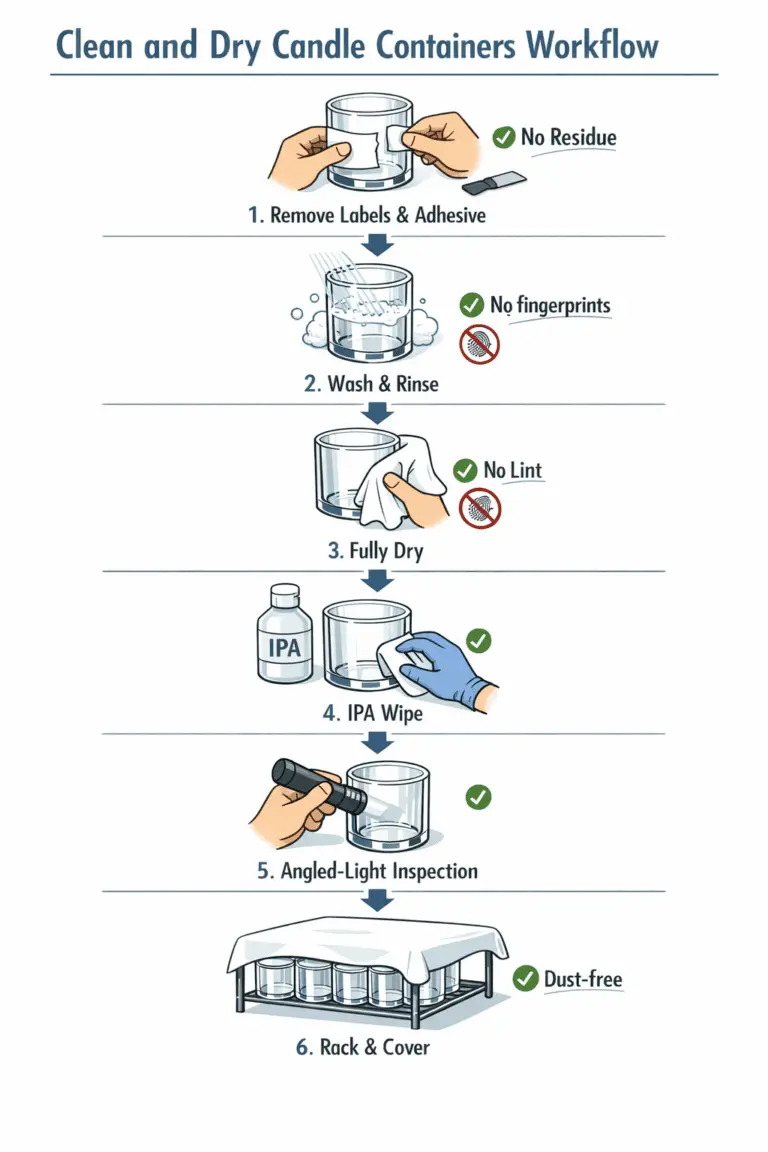
Prepare candle containers by cleaning and drying them, anchoring and centering the wick, warming the vessel gently, and pouring to a consistent…
Read guide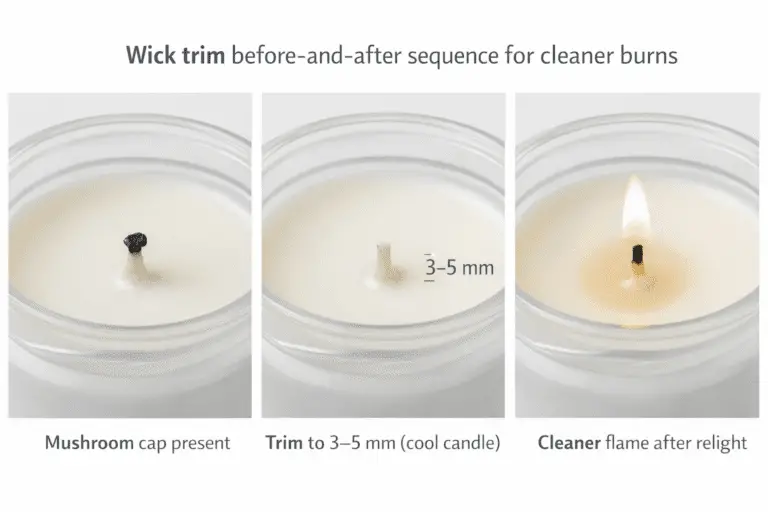
Prevent mushrooming in cotton wicks by trimming to about 1/4 inch (6 mm), using the smallest wick that still burns steadily, and…
Read guide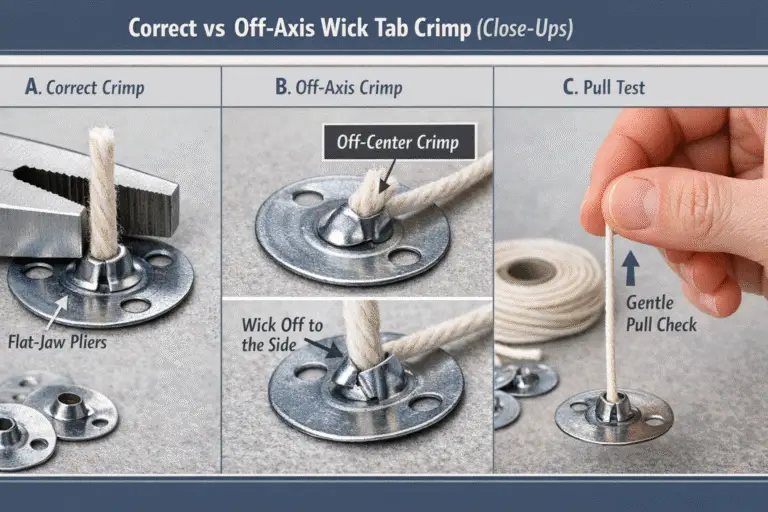
To pre-tab, prime, and trim candle wicks, crimp the wick into a tab, add a light wax coating only when you need…
Read guide