
Jun 27, 2026
Why Is My Candle Flame Too High? Causes and Fixes
A candle flame gets too high when the wick, airflow, fuel load, or jar heat feeds more flame than the candle can…
Read guide
Choose, size, center, trim and test cotton, paper-core and wooden wicks for different waxes and vessels.
Start with the main guideA candle flame gets too high when the wick, airflow, fuel load, or jar heat feeds more flame than the candle can…
Read guide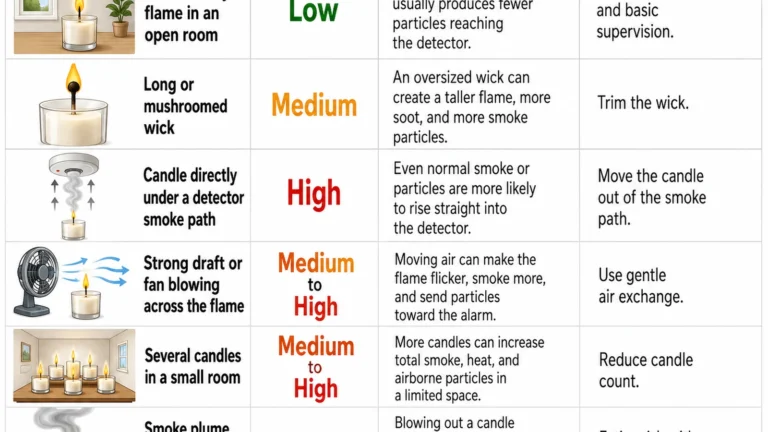
Yes, candles can set off a residential smoke/fire alarm when smoke, soot, or airborne particles reach the detector. On this page, “fire…
Read guide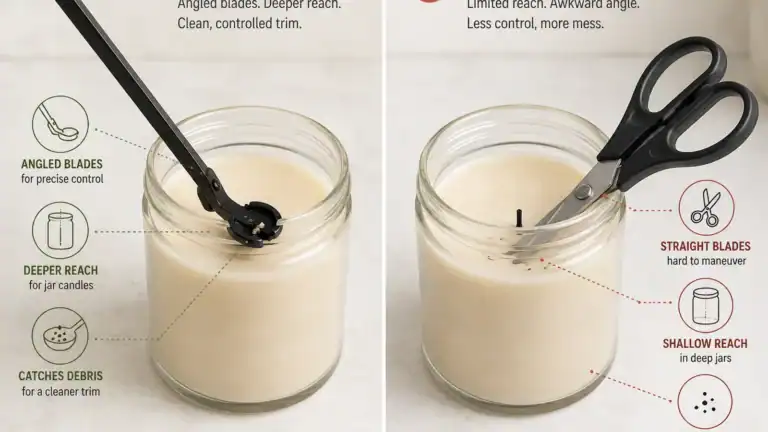
The best candle maintenance tools are a wick trimmer, candle snuffer, wick dipper, candle lid cover, and candle care kit, with a…
Read guide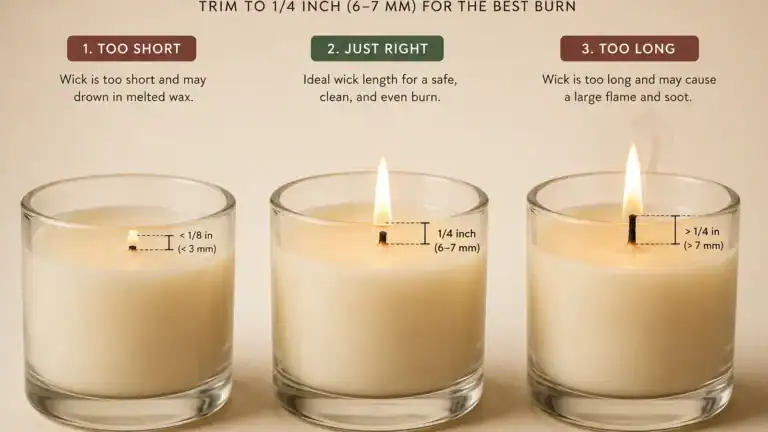
Trim most candle wicks to about ¼ inch, or 6–7 mm, before lighting and after the wax has cooled between burns. This…
Read guide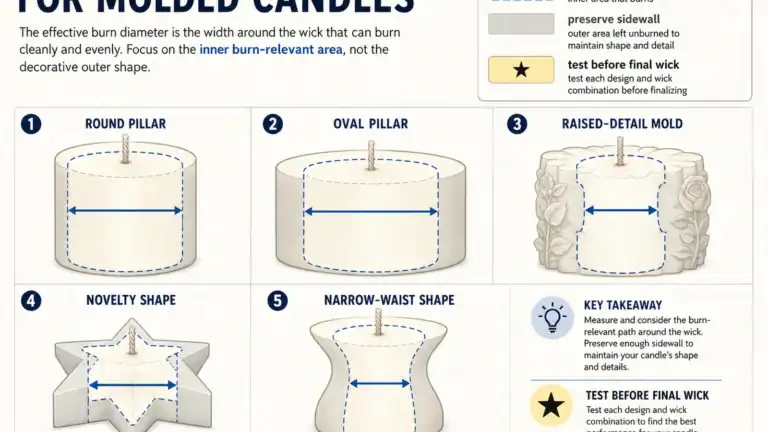
Choose a starting wick size for a molded candle by using its effective burn diameter, wax type, shape, and wick family, then…
Read guide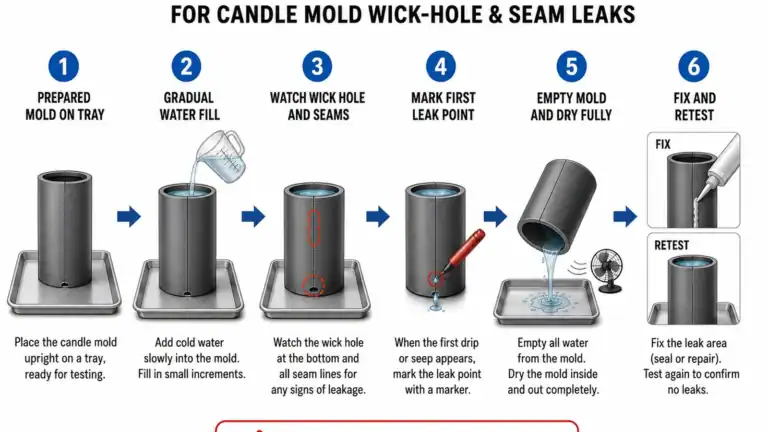
Prevent candle mold leaks by finding the first leak path, sealing wick holes or seams, testing the mold, stabilizing it, and stopping…
Read guide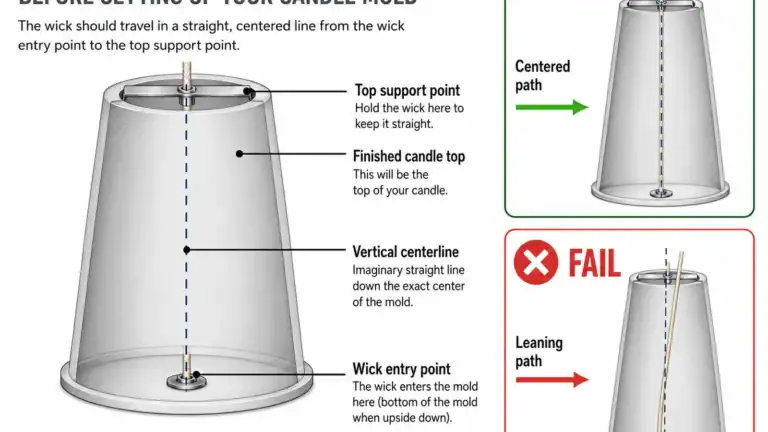
Proper mold wicking means identifying the wick path, choosing a wick pin or threaded setup, centering and tensioning the wick, sealing the…
Read guide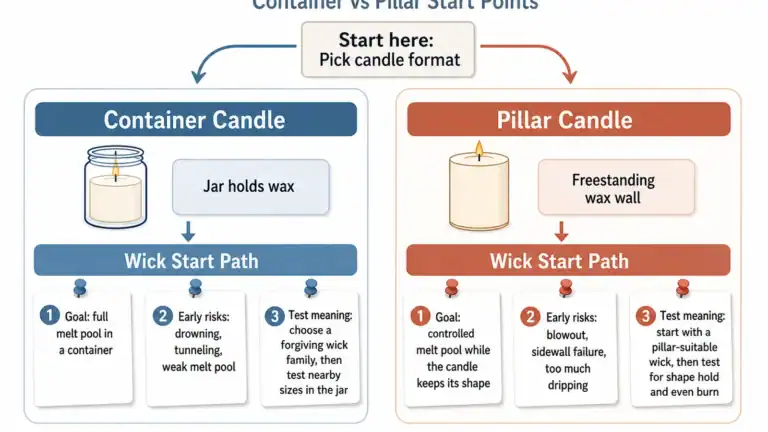
The best candle wick for beginners is a forgiving, format-safe wick that is easy to test in the candle type being made,…
Read guideThe best wick for pure soy container candles here means the best first-test wick family—CD, ECO, or LX—for your jar width, formula,…
Read guide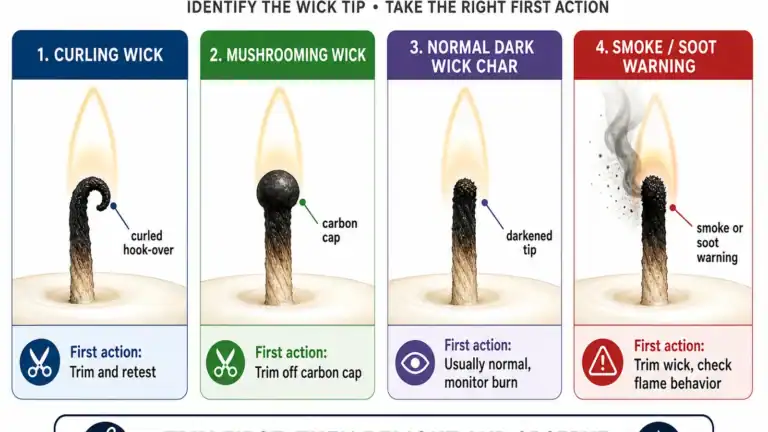
A candle wick curls when it bends or hooks over; it mushrooms when carbon buildup forms a cap, so trim first and…
Read guide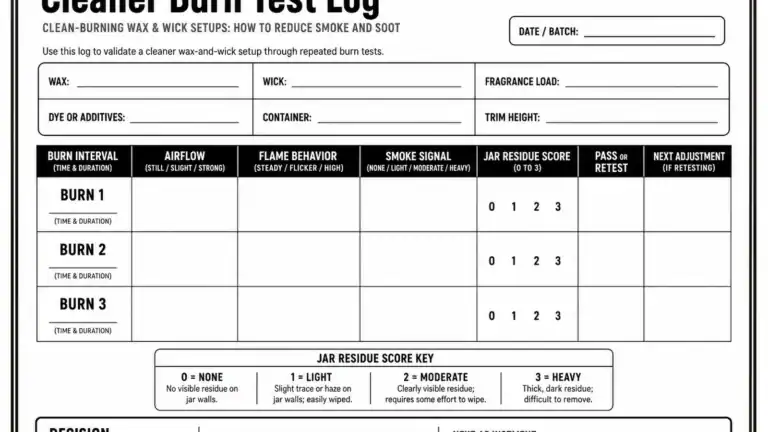
A clean-burning wax-and-wick setup reduces visible smoke and soot by matching the full candle setup, not by choosing wax alone. A candle…
Read guide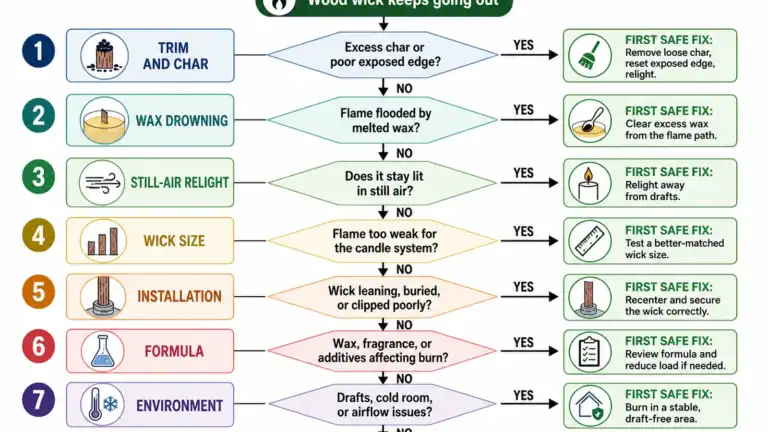
A wood wick usually goes out when its exposed edge is trimmed wrong, covered by melted wax, mismatched to the candle, disrupted…
Read guide