

A candle wick keeps going out when melted wax cannot feed the flame because the wick is too short, buried, flooded, mismatched, draft-hit, obstructed, formulation-affected, or too low to burn safely.
A candle wick is the fuel-delivery strand that draws melted wax upward so the flame can keep burning. Here, “keeps going out” means the flame repeatedly dies after lighting or relighting, not normal flicker, soot alone, weak scent, or every tunneling problem. The fastest fix is to identify whether the wick lacks exposure, is drowned by wax, is losing heat to moving air, or cannot match the candle’s wax and container. Stop trying to force a relight when the wax is very low or the container feels unsafe to handle.
Fast Diagnosis
Fast diagnosis matches a wick that keeps going out to the first visible failure point: exposure, wax cover, flooding, airflow, compatibility, obstruction, additives, or low wax.
A candle wick is the fuel-delivery strand that draws melted wax upward so the flame can keep burning. “Keeps going out” means the flame repeatedly dies after lighting or relighting, not ordinary flicker, soot alone, weak scent throw, or every tunneling problem. Start by checking the visible wick, the wax around it, and the room airflow before assuming the candle has a deeper design problem.
Here, “safe” refers to candle handling and burn conditions, not toxicology, labeling, legal compliance, or fire-code requirements. A safe first fix means the candle is cool enough to handle, the container is intact, the wax is not hot enough to spill, and the repair does not require digging near the base or forcing a relight.
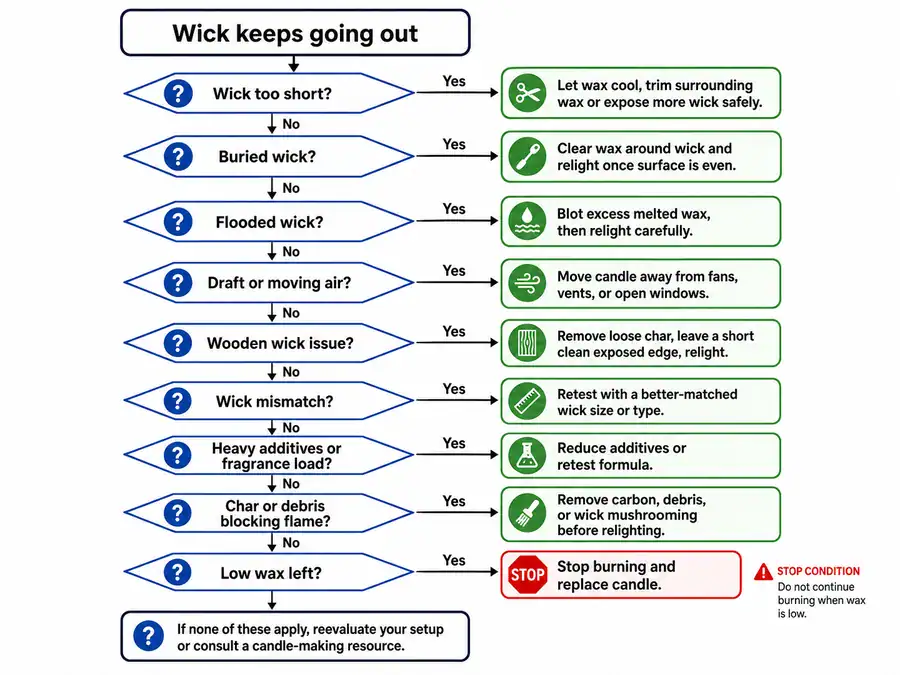
Use this quick check to separate similar symptoms before choosing a fix.
| Visible clue | Most likely cause | First safe fix | Check next if it repeats |
|---|---|---|---|
| Wick is cut almost flush with wax | Wick too short or overtrimmed | Expose a small amount of wick if safe | wick trimming guide or wick replacement guide |
| Wick tip is hidden under hard wax | Buried wick | Gently uncover the wick if safe | candle tunneling page or wax pool troubleshooting page |
| Wick is visible but surrounded by deep liquid wax | Flooded wick | Let wax cool or remove a small safe amount | wax pool troubleshooting page or wick sizing guide |
| Flame leans, flickers hard, then dies | Draft or moving air | Move the candle to a safe, still location | candle safety guide |
| Wooden wick lights, crackles, then dies | Wood wick subtype or wax contact issue | Cool, trim loose char, and keep the wick exposed | wood wick troubleshooting page |
| Weak flame continues after basic fixes | Wick too small or mismatched | Diagnose wick and candle compatibility | wick sizing guide or wick testing guide |
| Homemade candle fails after fragrance, dye, or wax changes | Additive or formulation interference | Treat it as an advanced candle-making issue | fragrance load guide or candle-making formulation guide |
| Black cap or debris blocks the wick tip | Char buildup or mushrooming | Cool, trim buildup, and remove loose debris safely | candle soot guide |
| Candle is near the bottom | Low-wax safety limit | Stop burning instead of forcing a relight | candle disposal / jar recycling guide |
Some causes have a safe first-line fix, such as moving the candle, clearing a small wax obstruction, or correcting an overtrimmed wick. Other causes belong in a deeper diagnosis because wick size, wax type, container width, and additives can change how the flame behaves. Do not keep digging into hot wax or forcing relights when the candle is near the bottom, the container overheats, or the wick cannot be safely reached.
Check Whether the Wick Is Too Short or Overtrimmed
If the wick is cut too short, the flame may go out because there is not enough exposed wick to pull melted wax upward and keep burning.
Usable wick exposure means the part of the candle wick that sits above the wax and can hold a flame. When trimming removes too much of that exposed wick, the flame becomes tiny, struggles to relight, or dies soon after lighting. This is different from a buried wick, where wax covers the wick tip, and different from a flooded wick, where liquid wax overwhelms the flame zone.
For routine burning, use about 1/4 inch of wick above the wax as a trim target. For a rescued short wick, aim only for a conservative 1/8-1/4 inch of exposure, and stop if exposing it requires digging into hot, deep, or bottom-level wax.
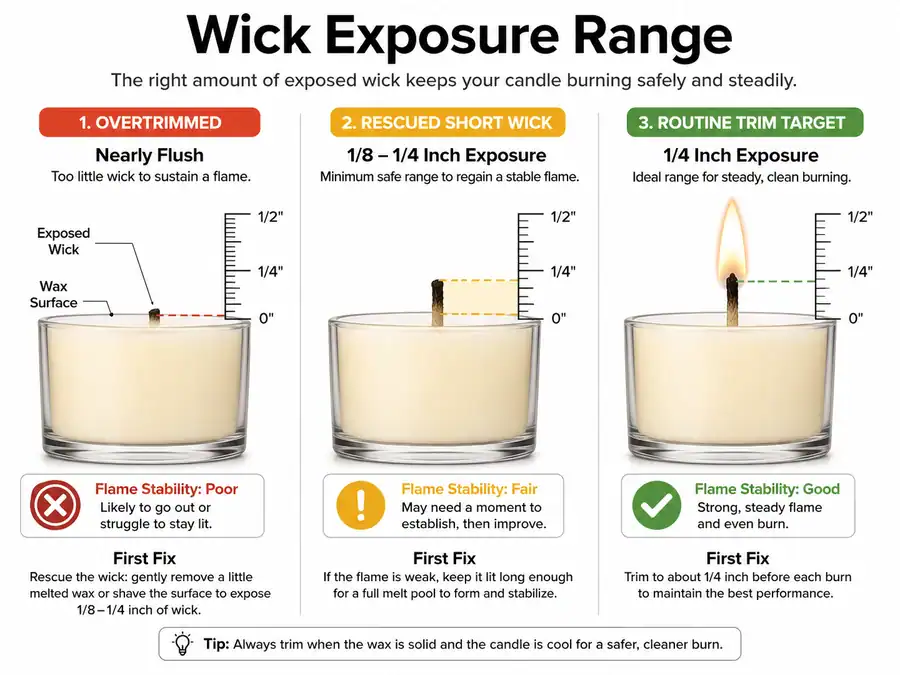
Use this quick comparison before removing wax.
| Symptom | Likely issue | What it means | First safe move |
|---|---|---|---|
| Wick is visible but almost flush with wax | Too short or overtrimmed | Not enough exposed wick feeds the flame | Let wax cool, then expose only a small amount if safe |
| Wick tip is hidden under hardened wax | Buried wick | Wax blocks the part that needs to burn | Uncover the top gently when the candle is cool enough |
| Wick is visible inside a deep liquid pool | Flooded wick | Melted wax surrounds and drowns the flame zone | Let wax firm up or remove a small safe amount |
Trimming can make a candle go out when the wick was already short and needed more exposure, not less. If the wick is only slightly low, you may be able to relight it after carefully clearing a small ring of cooled wax around the tip. Stop if the wick frays badly, breaks apart, disappears under wax again, or sits too close to the bottom of the candle.
To prevent the problem, trim conservatively and avoid cutting the wick down to the wax surface. A steady flame needs enough wick to draw fuel, but not so much that it smokes or mushrooms. If the wick is exposed but still produces a weak flame or keeps dying, move to the wick sizing guide or wick replacement guide rather than repeatedly digging into the candle.
Uncover a Wick That Is Buried Under Wax
A buried wick is a wick whose usable burning tip is partly or fully covered by wax, so the flame cannot access enough wick to stay lit.
A buried wick is not the same as an overtrimmed wick. With an overtrimmed wick, the wick is too low because it was cut short; with a buried wick, hardened or melted wax is blocking the part that needs to burn.
The check is direct: look for a hidden wick tip, wax sitting above the wick, a flame that lights briefly and dies, or an uneven wax surface around the center. If the candle is cool enough to handle, uncover only a small amount of wax near the wick rather than digging deeply into the jar. Stop if the container is hot, the wax is liquid enough to spill, the wick breaks, or the wick sits close to the bottom.
| Mistake | Visible symptom | Likely cause | Safer next step |
|---|---|---|---|
| Treating a buried wick like a bad wick | Wick tip disappears under wax | Wax covers the usable burning tip | Let the candle cool, then clear only enough wax to expose the tip |
| Digging hard into the wax | Wick frays, bends, or breaks | Too much force near the wick base | Stop and let the wax soften before trying again |
| Relighting while wax keeps covering the wick | Flame dies after a brief burn | The wax shape may be pulling wax back over the wick | Check candle tunneling page or wax pool troubleshooting page |
| Pouring hot wax from a full container | Hot wax shifts, spills, or exposes too much wick | Unsafe wax handling | Stop and follow candle safety guide before trying another rescue |
| Fixing the wick but the same wax wall returns | Wick is exposed, then covered again later | Tunneling or wax-pool imbalance may be the deeper cause | Diagnose the wax pattern instead of scraping more wax |
This check uses three visible inputs: whether the wick tip can be seen, whether wax sits above the wick, and whether the container can be handled safely. It works because a flame needs both exposed wick and controlled wax flow; too much wax above the burning tip blocks the flame before it can stabilize.
If the wax keeps forming a tunnel or repeatedly covers the wick after rescue, treat it as a tunneling or wax-pool problem rather than only a buried-wick problem.
Fix a Wick Flooded by Too Much Melted Wax
A flooded wick is a visible wick surrounded by enough melted wax that the flame is drowned or cannot stay stable.
Flooding is different from a buried wick because the wick can still be seen. It is also different from a normal melt pool, where melted wax forms around the wick but does not overwhelm the flame.
Follow a conservative rescue path:
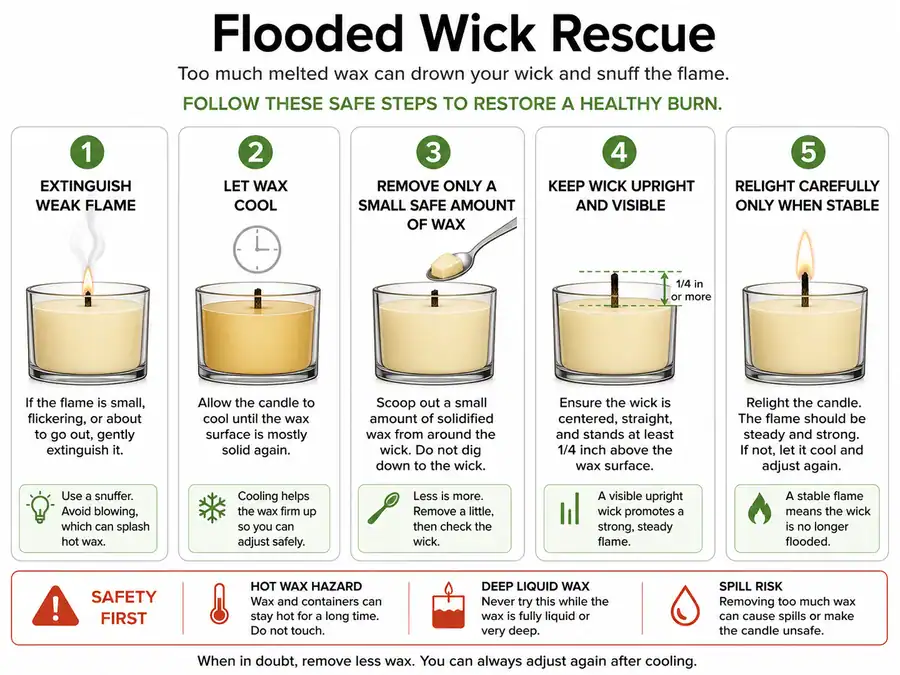
- Extinguish the candle if the flame is weak, shrinking, or unstable.
- Let the wax cool until the container and surface are safe to handle.
- Remove only a small safe amount of excess wax if the wick is still surrounded too deeply.
- Keep the wick upright and visible.
- Relight carefully only when the wick has enough space to burn.
| Situation | What it means | Safer action |
|---|---|---|
| Melted wax forms evenly but the flame stays steady | Normal melt pool | Leave it alone |
| Wick is visible but the flame shrinks after wax melts | Flooded wick | Cool the candle, then reduce excess wax only if safe |
| Liquid wax is hot, deep, or easy to spill | Burn risk | Stop handling the candle |
| Flooding repeats after rescue | Deeper wax or wick issue | Check wax pool troubleshooting page, wick sizing guide, or candle tunneling page |
Too much melted wax can put out a wick because liquid wax can drown the flame zone faster than the wick can vaporize fuel. Do not pour out hot candle wax as a routine fix; hot wax can spill, expose too much wick, or damage the candle’s burn pattern. A small correction may help once, but repeated flooding usually means the candle is not burning in balance.
If flooding returns after the wick is exposed and the candle is placed correctly, check wick sizing or wax-pool behavior instead of repeatedly removing wax.
Move the Candle Away from Drafts Before Changing the Wick
A candle wick can keep going out if a draft or moving air disrupts the small flame zone around the wick.
The flame zone is the small area around the wick tip where wax vapor burns. When moving air passes through that area, the flame can lean, shrink, flicker hard, or lose enough heat to die. This is an external placement problem, so rule it out before assuming the wick, wax, or candle design is wrong.
Use this placement check before trimming again:
- Move the candle away from open windows, fans, HVAC vents, doorways, and high-traffic surfaces.
- Place it on a flat, heat-safe surface where the flame can burn without leaning sharply.
- Watch whether the flame still dies after the room air is calm.
- Do not place the candle inside a cabinet, tight corner, or unsafe enclosed space to block air.
- If the candle still goes out, return to wick exposure, wax flooding, or trim checks.
Airflow differs from wick failure because the flame usually moves before it goes out. A too-short wick may stay tiny even in still air, while a draft-hit flame often bends toward one side, flutters, and then dies. If moving the candle fixes the problem, keep using basic placement habits from a candle safety guide and candle care guide instead of changing the wick.
If calm placement does not help, check the wick again. A wick that has been cut too low, hidden by wax, or surrounded by melted wax may need a wick trimming guide rather than another airflow adjustment.
Tell Whether the Wick Is Too Small for the Candle
A wick can be the wrong size for a candle when it cannot produce enough heat or fuel flow for the wax, container, additives, and candle diameter.
Wick size means functional fit, not just the wick’s physical length. A wick may be visible and unburied but still too weak for the candle system, especially if the wax is hard, the container is wide, or the candle has fragrance, dye, or other additives. This diagnosis comes after simple checks for overtrimming, buried wax, flooding, airflow, and low-wax safety.
| Symptom | More likely cause | What separates it from a too-small wick |
|---|---|---|
| Wick is nearly flush with the wax | Too-short wick | The problem is missing wick exposure |
| Wick tip is hidden under wax | Buried wick | Wax physically blocks the burning tip |
| Wick is visible in deep liquid wax | Flooded wick | Too much melted wax surrounds the flame |
| Wick is visible, placed correctly, and still burns weakly | Underpowered or mismatched wick | The flame cannot keep enough heat and fuel flow |
| Homemade candle fails after changes to wax, scent, or color | Wax-wick mismatch or additive issue | The full candle system may be out of balance |
A wrong-size wick can make a candle go out because the flame cannot heat enough wax, draw fuel consistently, or maintain a clean burn pattern. In a finished store-bought candle, that usually means the practical fix is limited: rule out candle-care causes first, then stop forcing the candle if the weak flame keeps returning. In a handmade candle, exact selection belongs in a wick sizing guide, wick testing guide, wick types guide, wax type guide, fragrance load guide, or candle-making formulation guide.
Check Whether the Wick Was Poorly Primed
A poorly primed wick may keep going out because the wick is not coated or structured well enough to light and pull melted wax consistently.
A primed wick is wick material coated with wax so it lights more easily and begins drawing melted wax. Poor priming is usually a secondary diagnosis after the wick is exposed, not flooded, and protected from drafts. Signs include a dry-looking wick, raw fibers, uneven coating, fast fraying, or repeated ignition failure even when the wick is visible.
Do not treat “bad wick” as a brand judgment. Treat it as an observable fuel-transfer failure: the wick cannot light, stay lit, or keep drawing wax after basic candle-care problems are ruled out. If the wick is exposed, not flooded, and still fails repeatedly, compare wick type and priming in a wick materials or wick sizing guide rather than assuming every candle-care fix will work; a beginner candle-making materials guide can help when the problem starts with raw supplies.
Consider Wax, Fragrance, Dye, or Additives After Basic Checks
Wax type, fragrance load, dye, or additives can make a candle wick keep going out when they prevent the wick from sustaining efficient fuel flow and combustion.
This is an advanced diagnosis for handmade or modified candles, not the first explanation for a normal store-bought candle. Check wick height, buried wax, flooding, airflow, and low-wax safety before blaming fragrance oil, dye, or wax blend. A candle burns as a system: wick, wax, container, fragrance, dye, and additives all change how much heat and fuel reach the flame.
Use a small failure log when the same candle design keeps failing.
| Change made | What happened after lighting | What it may point to |
|---|---|---|
| More fragrance oil was added | Flame shrank or died after melting began | Fragrance load may be interfering with burn behavior |
| A different wax was used | Flame became weak across repeated burns | Wax type may need a different wick |
| More dye was added | Wick clogged, sputtered, or burned unevenly | Dye or additive level may be affecting fuel flow |
| Same recipe worked in a smaller jar | Larger candle keeps going out | Container diameter may need a different wick choice |
A common maker question is: “My homemade candle has the right-looking wick, but it keeps going out after I added fragrance oil – is the wax or fragrance load choking the flame?” The likely answer is that the wick may look correct but still be underpowered for the changed wax blend, scent load, dye level, or container size. If a homemade or modified candle keeps going out after basic wick and wax-pool checks, move to a fragrance-load, wax-type, wick-testing, or formulation guide instead of changing variables at random.
Trim Char Buildup, Mushrooming, or Debris
Char buildup, mushrooming, or debris can make a candle wick keep going out when it blocks or distorts the flame zone around the wick.
Mushrooming is carbonized buildup at the wick tip. A dark wick is not always a problem by itself; the warning sign is buildup that changes the flame, blocks the wick, drops crumbs into the wax, or makes relighting fail.
Use these visual clues before trimming.
| Wick clue | What it may mean | First safe fix | Check next if it repeats |
|---|---|---|---|
| Wick tip is dark but flame stays steady | Normal darkening | Leave it alone until the next safe trim | candle care guide |
| Black cap forms on the wick tip | Mushrooming or char buildup | Extinguish, cool, then trim the cap safely | how to trim a candle wick |
| Wick curls into the wax | Wick shape is disrupting the flame | Cool, trim only the unstable part, and relight carefully | candle safety guide |
| Crumbly debris falls into melted wax | Debris may obstruct fuel flow | Remove loose debris only when safe | candle soot guide |
| Flame dies after relighting with buildup still attached | Obstructed flame zone | Stop relighting until the wick is cleaned and trimmed | Candle care or wick trimming help |
The safe sequence is direct: extinguish the candle, let the wick and wax cool enough to handle, trim away the unstable buildup, remove loose debris if it can be reached safely, then relight. Do not trim while the wick is burning or while the wax is too hot to handle. Prevention is mostly routine care: trim before future burns, avoid very long burns that create heavy buildup, and keep loose wick pieces out of the melt pool.
If the main problem is smoke, residue, or black marks on the jar rather than a flame that keeps going out, route the reader to the candle soot guide.
Stop Relighting When the Candle Is Too Low
When a candle is very low, the safest fix for a wick that keeps going out may be to stop burning the candle instead of forcing it to relight.
A low-wax candle is near the end of use when the wick sits close to the container base or too little wax remains around it. In this situation, the wick may go out because the candle is no longer in a good burn condition, not because the wick needs another rescue.
Use this stop-condition checklist before trying again.
- Stop when about 1/2 inch of wax remains in a container candle.
- Stop if the wick is close to the glass, tin, or container base.
- Stop if the container feels unusually hot after repeated relighting.
- Stop if the jar is cracked, chipped, or damaged.
- Stop if the wick keeps dying only near the bottom of the candle.
- Stop if fixing the wick would require digging near the base.
Not every wick that goes out should be fixed. Digging into the base, forcing repeated relights, or trying to burn every last bit of wax can turn a small wick problem into an unsafe use problem. Once the candle reaches this stop point, use candle safety guide and candle care guide guidance for safe discontinuation rather than another wick rescue.
If the candle is too low to burn safely, stop troubleshooting the wick and move to candle disposal guide or candle jar recycling guidance after the candle is fully out and cool.
What to Check Next
Check the wick in order: exposure, wax covering, flooding, airflow, wick compatibility, priming, additives, debris, and low-wax safety before choosing a fix or moving to a deeper guide.
Use the visible symptom first. If the wick is too short, review how to trim a candle wick so the next burn does not start with too little exposed wick. If wax keeps covering the tip, move to how to fix candle tunneling or candle wax pool problems instead of digging deeper into the candle.
If the wick is visible, clear, and still weak, the problem may be candle fit rather than candle care. Use a candle wick size guide or candle wick testing guide when the candle’s wax, container, or diameter may need a different wick choice. For handmade candles that fail after scent or dye changes, use a candle fragrance load guide rather than adding more rescue steps to the same candle.
If the flame goes out with heavy black buildup, check a candle soot guide only after separating smoke-only symptoms from buildup that blocks the flame. If the candle is near the bottom, the next step is not another repair; follow a candle safety guide and stop burning the candle when relighting would require digging near the base, overheating the container, or forcing a wick that will not stay lit.
Why does my candle wick go out as soon as I light it?
A candle wick usually goes out as soon as you light it because the wick lacks usable exposure, is covered by wax, or is drowned before the flame stabilizes. Check wick height and wax cover first, then move to airflow or wick-fit checks only if the wick is visible and clear.
Can I scrape wax away from a candle wick?
You can remove a small amount of cooled wax around a buried wick only when the candle is stable, cool enough to handle, and not near the container base. Do not scrape hot wax, deep wax, or bottom-level wax to force a relight.
Can a mismatched wick make a candle keep going out?
A mismatched wick can make a candle keep going out when it cannot produce enough heat for the candle’s wax, additives, container, or diameter. Treat that as wick compatibility and route to sizing or testing guidance instead of repeatedly rescuing the same burn.