
Candle wick types include flat cotton, square cotton, cored wicks, and wooden wicks, each suited to different waxes, container shapes, and burn goals.
Wick family is the first filter, not the final answer. It shows how the wick is built and what kind of candle it usually suits. Series names such as ECO, LX, HTP, and CD help fine-tune performance within a family. This guide explains the main wick families so you can choose a starting point before sizing and testing.
Candle Wick Types at a Glance
Candle wick types are best understood as wick families, which are broad construction groups that help you identify how a wick behaves before you fine-tune size. Flat cotton, square cotton, cored, and wooden wicks cover most options sold for container and pillar candles. Series names such as ECO, LX, HTP, and CD sit inside those families rather than replacing them.
For the broader hub on family selection, sizing, and next-step testing, see candle wick types and sizing.
| Wick family | Construction | Usually suited to | Common trade-off |
| Flat cotton | Flat braided cotton | Container candles, tapers, many everyday blends | Can struggle in harder waxes or wider jars if undersized |
| Square cotton | Square braided or knitted cotton | Beeswax, pillars, and some larger candles | Can burn too aggressively if oversized |
| Cored wick | Cotton around a paper or metal core | Containers that need a straighter upright wick | Needs careful sizing for heat, soot, and melt-pool depth |
| Wooden wick | Flat or layered wood strip | Wide jars, low bowls, and crackling candles | More sensitive to wax blend, trim, and width |
| Specialty series | Family-specific versions such as ECO, LX, HTP, or CD | Fine-tuning within cotton or cored categories | Code names are not interchangeable across families |
Cotton Wicks: Flat vs Square
Cotton wicks are the main starting family for most candle makers, but cotton still splits into flat-braided and square-braided constructions. Flat braided cotton is the usual baseline for container candles, while square braided cotton is more often tested in beeswax, pillars, and candles that need a stronger pull.
Flat-braided cotton wicks curl into the hottest part of the flame and usually self-trim fairly well, which makes them easier to test in many jars. Square-braided cotton wicks are fuller and more resistant to clogging, which is why they are often used in denser waxes or larger candle formats.
Cotton families are not interchangeable with supplier series. Some cotton-based options are coreless, while others sit inside cored or specialty series, so the practical order is family first, then series, then size.
| Cotton wick construction | Usually start here for | Why | Main caution |
| Flat braided cotton | Container candles, many soy/paraffin jars, tapers | Predictable flame shape and easier first-round testing | Can tunnel in wider jars or harder-burning blends if undersized |
| Square braided cotton | Beeswax candles, pillars, and some larger molds | Stronger pull and better resistance to clogging | Can burn too aggressively if oversized |
Why Use Wooden Candle Wicks?
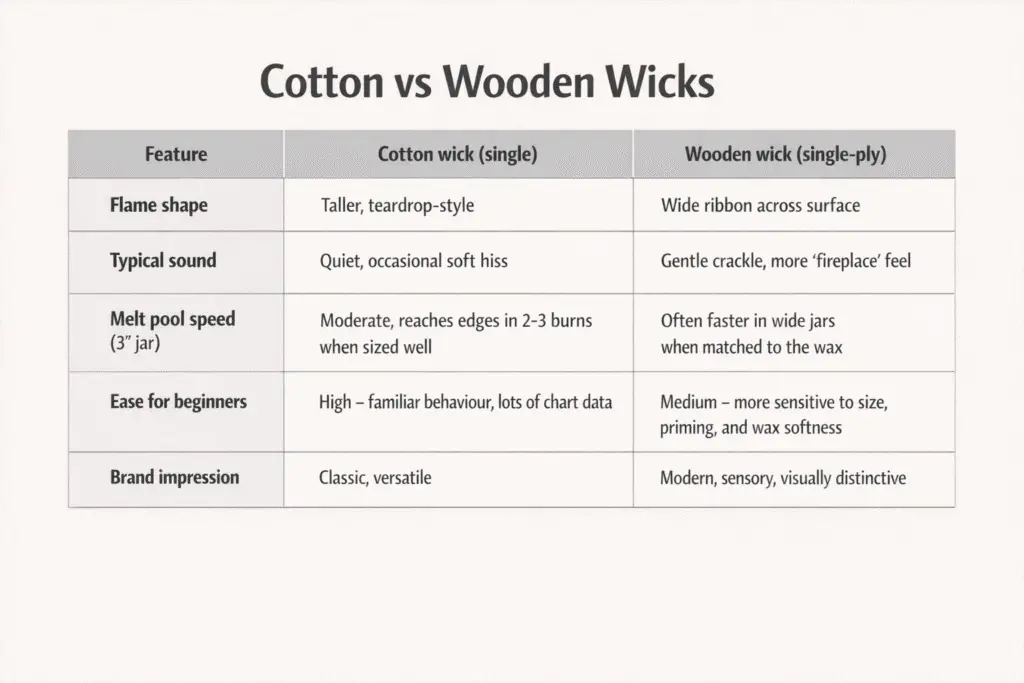
Wooden wicks are thin strips of treated wood that pull wax across a flat surface and burn with a broad flame. They are usually chosen for wide jars, a visible ribbon-like flame, and the soft crackle that some candle lines use as a design feature.
Wooden wicks are not a universal upgrade over cotton. Cotton is usually easier to size and relight across many waxes, while wooden wicks make more sense when the vessel is wide and the brand wants the sound and look that wood can add. They also need shorter trimming and closer testing because width, wax viscosity, and fragrance load affect them quickly.
For a direct material-level comparison, see wood wicks vs cotton wicks.
Cored Wicks: Paper-Core vs Zinc-Core
Cored wicks are cotton-based wicks built around a center material such as paper or zinc to help the wick stay upright. The core changes stiffness and flame behavior inside the broader cored category, but it does not turn the wick into a separate fuel system.
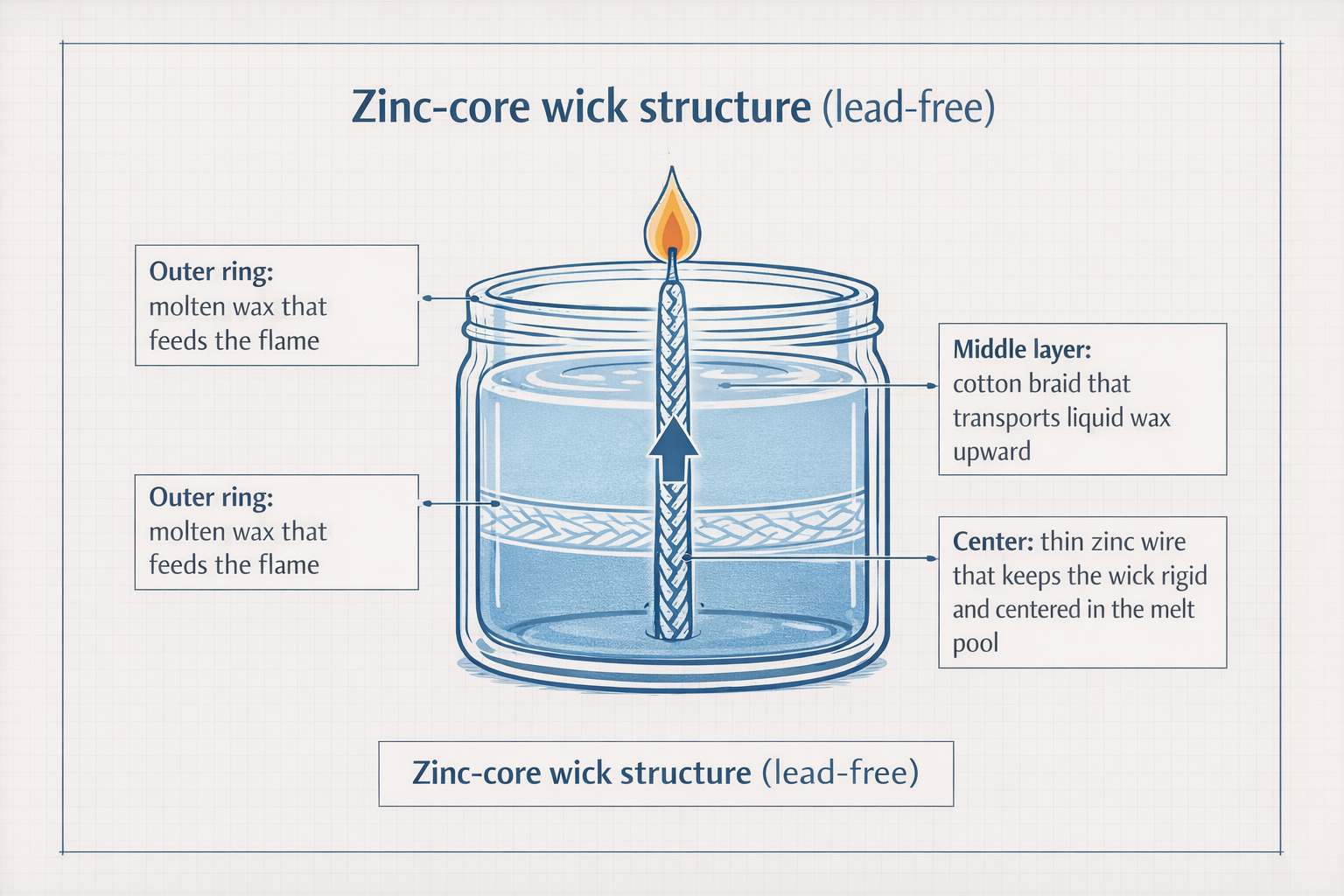
Paper-core wicks are often chosen when a maker wants more structure without using a metal core. Zinc-core wicks are usually chosen when a firmer, straighter wick helps in containers or softer wax systems. In both cases, the practical goal is better wick posture and steadier fuel delivery in the intended vessel.
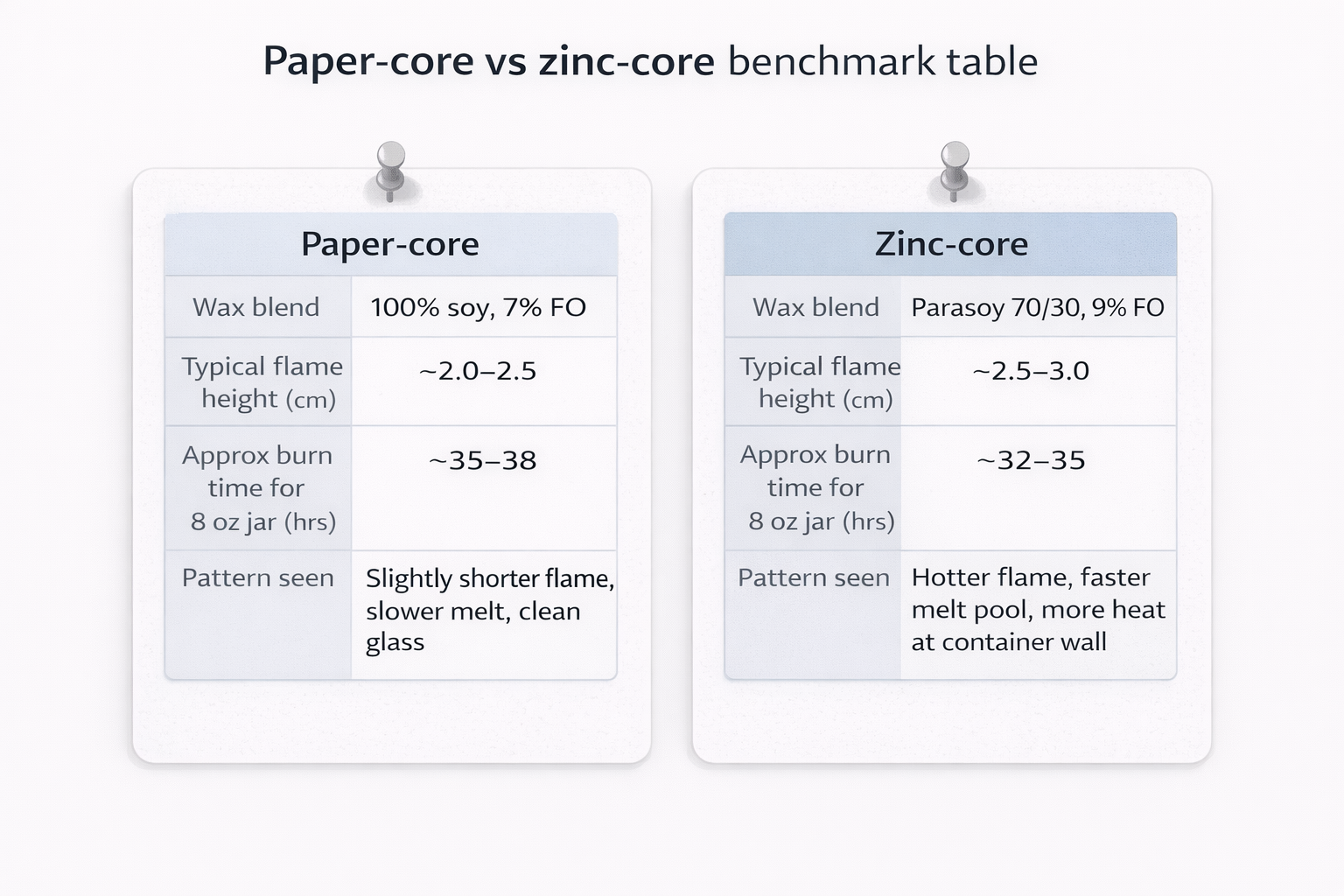
Paper-core vs zinc-core
| Cored wick type | Main advantage | Best starting use case | Main caution |
| Paper-core | Adds structure without metal | Containers where a metal-free story matters | Still needs careful sizing for heat and soot |
| Zinc-core | Strong upright rigidity | Containers, votives, and blends that need more support | Can run too hot if oversized |
Modern zinc-core wicks are distinct from banned lead-core products, but they still need full burn testing in the intended vessel. General candle fire-safety standards such as ASTM F2417 are part of the broader safety context, while wick support, vessel heat, and melt-pool depth still need to be verified in real burn tests.
Where ECO, LX, HTP, and CD Fit
ECO, LX, HTP, and CD are usually supplier series names inside broader wick families, not separate wick materials. Family tells you how the wick is built, while the series helps narrow performance within that family for a given wax, vessel, or burn pattern.
That distinction matters because series numbers are not interchangeable across families. A CD size and an ECO size do not work like one universal scale, so this page treats them as refinement labels inside a broader family choice.
| Name | What it usually refers to | Broad family fit | How to use it on this page |
| ECO | Supplier wick series | Cotton-based, usually coreless or flat-style family | Treat it as a cotton-family refinement, not a separate material |
| LX | Supplier wick series | Flat braided cotton family | Compare it after you already know cotton is your starting family |
| HTP | Supplier wick series | Cotton-based, usually flat or coreless family | Use it for series-level testing, not family-level classification |
| CD | Supplier wick series | Cotton-based family with paper filament construction | Use it to narrow options inside cotton-family testing |
| Paper-core / zinc-core | Construction category, not just a label | Cored wick family | Treat it as a true family-level distinction |
For a series-level comparison, see CD vs ECO candle wicks after you decide that a cotton-based family is the right starting point.
How to Choose Your Starting Wick Family
Choose your starting wick family by matching the wick construction to the candle format first, then use size and burn testing to confirm it. Final performance still depends on jar diameter, wax blend, fragrance load, dye, burn length, and trimming habits.
Use this step to choose the right wick family before you compare sizes. The family should match the candle format, then size and burn testing decide whether that starting point stays or changes.
| If your candle is mainly… | Best starting family | Why this is the right first test |
| A standard container candle | Flat cotton or another cotton-based coreless family | Usually the easiest baseline with broad size availability |
| A beeswax candle or pillar | Square cotton | Better fit for denser waxes and stronger burn needs |
| A container that needs a stiffer upright wick | Paper-core or zinc-core | Better wick posture in deeper melt pools |
| A wide shallow jar or a crackling design candle | Wooden wick or a multi-wick cotton setup | Better surface coverage and a more design-forward burn profile |
After you choose the family, learn how to properly size your candle wick. Jar diameter, wax blend, fragrance load, dye, and burn length still decide whether you keep that starting point, move up or down a size, or test a different series.
A simple decision order keeps testing practical and keeps this page focused on classification.
- Choose the wick family that matches the candle style.
- Pick a starting size with a wick size estimator or supplier chart.
- Run repeated burn tests in the final formula.
- Adjust size or series if the candle tunnels, drowns, or shows wick-series mushrooming, and use this guide to fix common candle wick problems.
That order keeps this page focused on classification and moves detailed sizing or troubleshooting to dedicated guides. It also prevents series names from doing too much work before the wick family itself is clear.
FAQ about Candle Wick Types
These short answers address the most common follow-up questions about candle wick types at the family level, including series names, sizing, safety, and signs of a poor match. They keep the topic focused on classification without turning this page into a full sizing or troubleshooting guide.
Are ECO, LX, HTP, and CD different wick materials?
No. They are supplier series names used to fine-tune burn behavior within broader wick families, usually cotton or cotton-based constructions.
Are wooden wicks better than cotton wicks?
No single wick family is better in every candle. Wooden wicks are usually chosen for crackle and a wide flame, while cotton wicks remain the easier all-purpose starting point for most jars.
What does a cored wick mean?
A cored wick uses a center material such as paper or metal to help the wick stay upright while burning. The outer cotton still carries the wax to the flame.
Why are candle wicks sold in so many sizes?
Wick size changes with jar diameter, wax blend, fragrance load, dye, and burn goals. Type tells you the family, while size controls how much fuel reaches the flame in that specific candle.
What usually tells you that the wick family or size is wrong?
Common signs are tunneling, repeated drowning, heavy mushrooming, visible soot, or a jar that runs too hot during normal burn sessions. Those signs tell you to review wick size, wick series, or both.