
Make better candles with clearer choices and repeatable tests.
Choose wax, size wicks, calculate fragrance, control temperature and troubleshoot the finished burn with practical guides built for real makers.
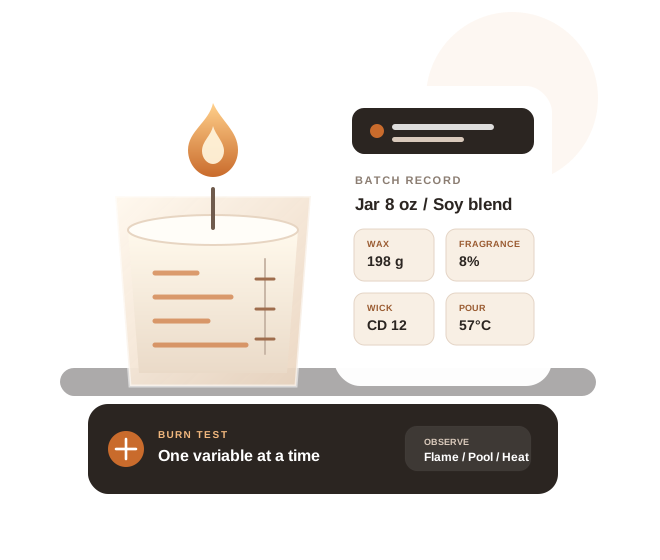
Build the candle in the right order
Keep the first formula simple, change one variable at a time and use the deeper guide only when you reach that decision.
Complete workflow
See the full path from materials and temperatures to curing, burn testing and safety.
Open guide 02Choose the wax
Compare soy, paraffin, beeswax, coconut and blends by format, throw, cost and heat tolerance.
Open guide 03Choose the wick
Use jar diameter, wax, fragrance load and controlled burn tests instead of guessing.
Open guide 04Set the fragrance
Calculate fragrance by weight, follow supplier limits and judge the result after a full cure.
Open guideFind the exact part of the formula you need to improve
Each route keeps one technical question in focus so you can diagnose the variable instead of changing everything at once.
Wax
Select the right wax family and understand how it changes finish, throw, hardness and heat tolerance.
79 guidesWicks
Size cotton and wooden wicks, understand series differences and correct common burn problems.
53 guidesFragrance
Work with load percentages, cure time, oil compatibility and hot-throw testing.
48 guidesColor
Measure liquid dye, chips and blocks consistently and prevent specks, fading or bleeding.
41 guidesContainers
Choose heat-safe jars, measure usable capacity and qualify each vessel through testing.
45 guidesMolds
Choose mold materials, wick shapes correctly and prevent leaks, cracks and release problems.
26 guidesTesting & safety
Run repeatable burn tests, record flame and melt-pool behavior and check container heat.
41 guidesTroubleshooting
Diagnose tunneling, soot, mushrooming, weak throw, wet spots and uneven burns.
49 guidesDo the batch math before you melt the wax
Use the calculators as planning tools, then verify the formula against the wax, fragrance and wick supplier guidance.
See every candle calculatorLatest candle-making guides
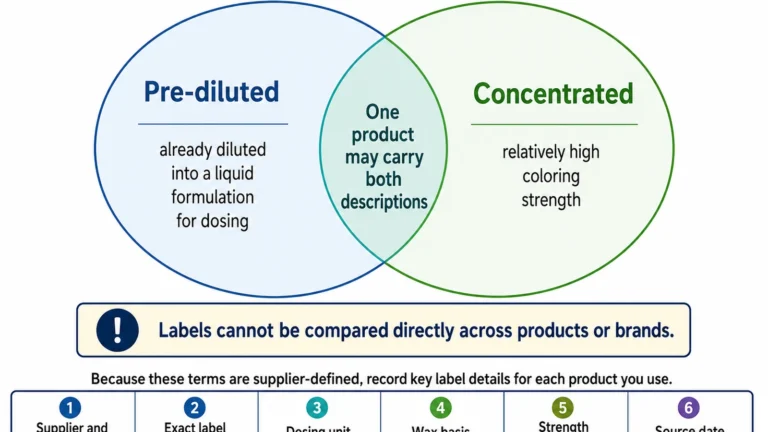
Pre-Diluted vs Concentrated Liquid Candle Dye: Measurement and Consistency
Neither pre-diluted nor concentrated liquid candle dye is inherently more consistent; the better choice is the named product you can measure repeatably…
Read guide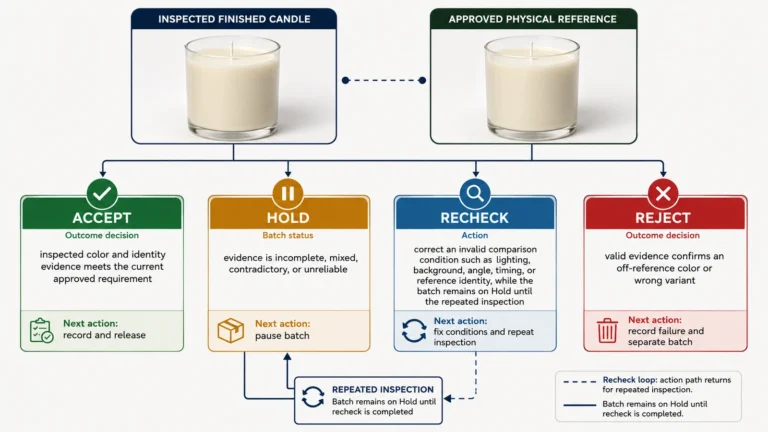
Candle Color QC Checklist Before Selling or Shipping
Finished-candle color QC compares completed candles with an approved physical reference, peer units, identity records, and customer-facing representations under repeatable conditions to…
Read guide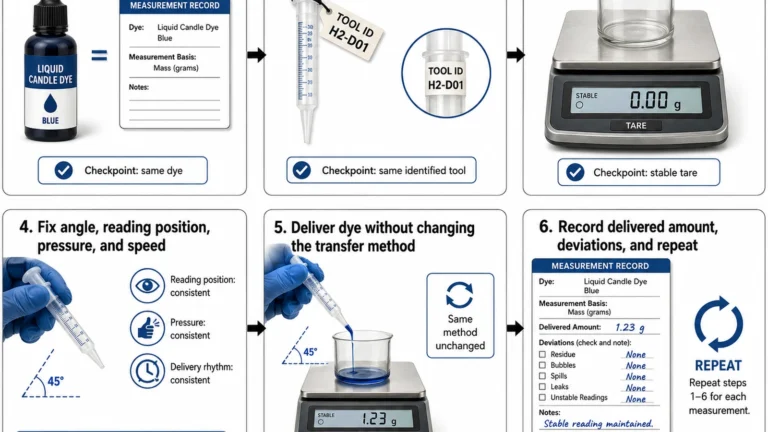
Liquid Candle Dye Droppers and Measurement Accuracy
Measure liquid candle dye accurately and repeatably by choosing drops, graduated volume, or mass to match the dose, then controlling the tool,…
Read guide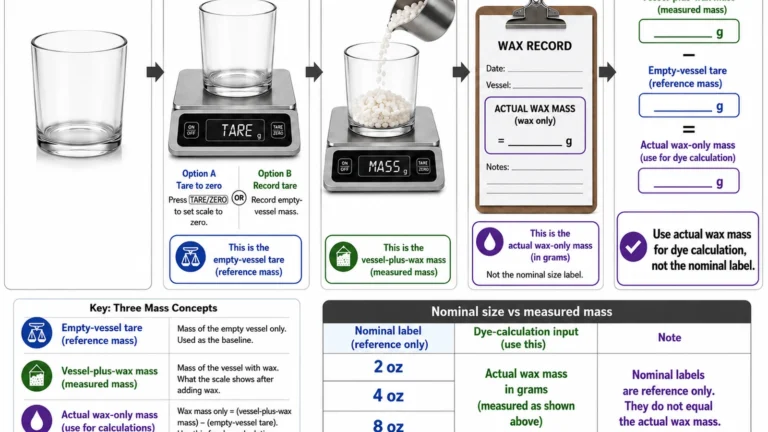
Micro-Scale Candle Dye Measurement for 2 oz, 4 oz, and 8 oz Test Candles
Micro-scale candle dye measurement calculates the dye for 2 oz, 4 oz, and 8 oz test candles from actual wax mass, a…
Read guide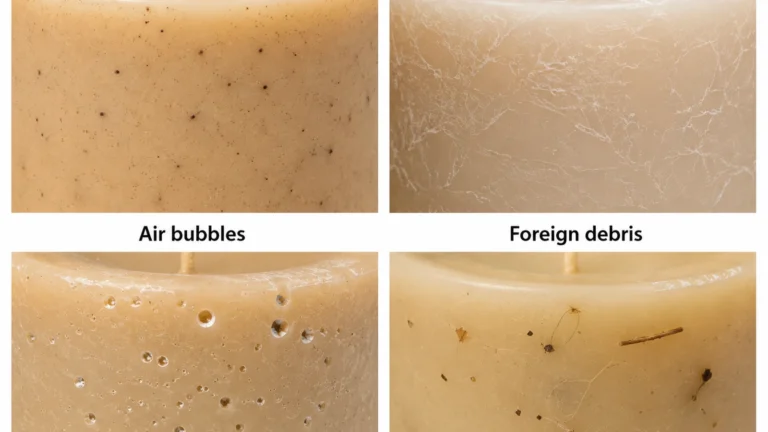
Why Candle Dye Chips or Blocks Leave Specks in Finished Candles
Solid candle dye chips or blocks leave specks when inadequate heat, oversized pieces, incomplete mixing, excessive local loading, or an incompatible colorant…
Read guide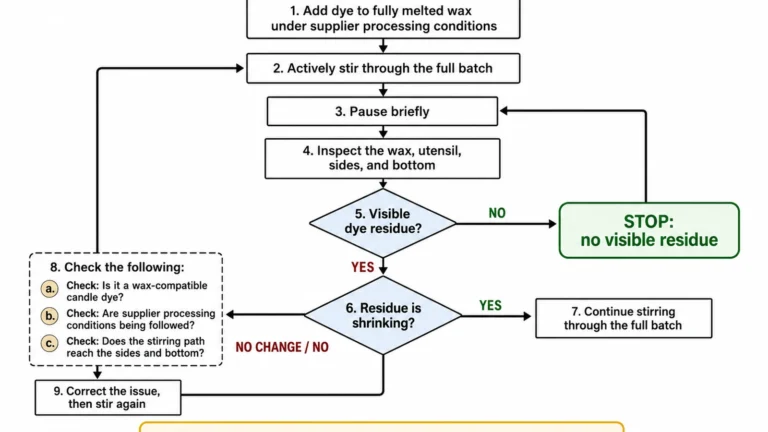
How Long to Stir Candle Dye for Full Dissolution
There is no single stirring time for every candle dye. Liquid dye may need only a quick stir, while chips, flakes, or…
Read guideChange one variable. Measure it. Record it. Test it.
Good candle making is controlled comparison. Keep the jar, wax, fragrance and process stable while you test the variable that actually needs an answer.
- Define the goalContainer type, scent target, appearance and use.
- Measure by massRecord wax, fragrance, dye and additives consistently.
- Control the processTrack melt, add, pour, room and cure conditions.
- Burn testObserve flame, melt pool, soot, heat and scent over full cycles.
The original categories remain available
Candle making is the main focus, while the existing soap, bath-bomb and practical DIY sections stay exactly where they are.
Practical information for makers who want controlled, safer and more consistent results.
The publication organizes material choices, measurements, process windows, testing methods and troubleshooting into clear guides. Supplier instructions and product-specific safety testing remain the final reference for any real formula.
How the site works