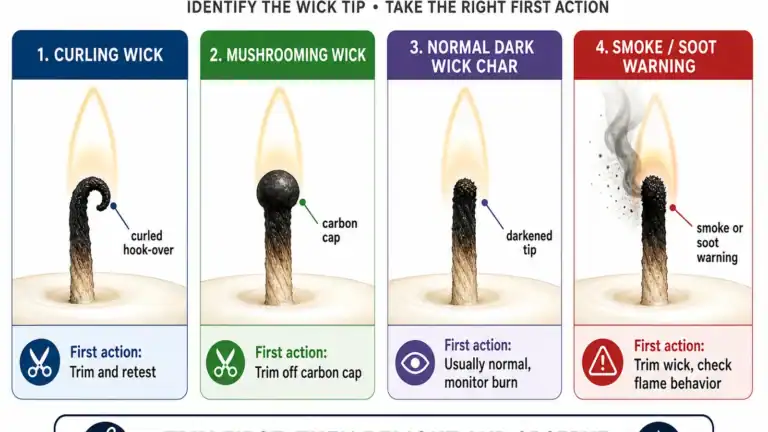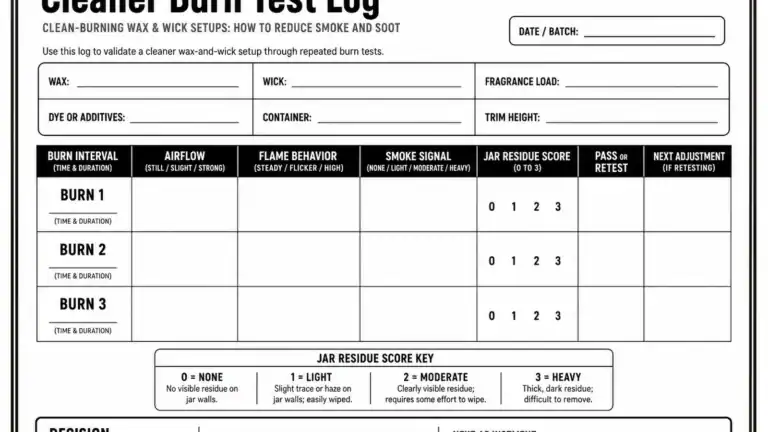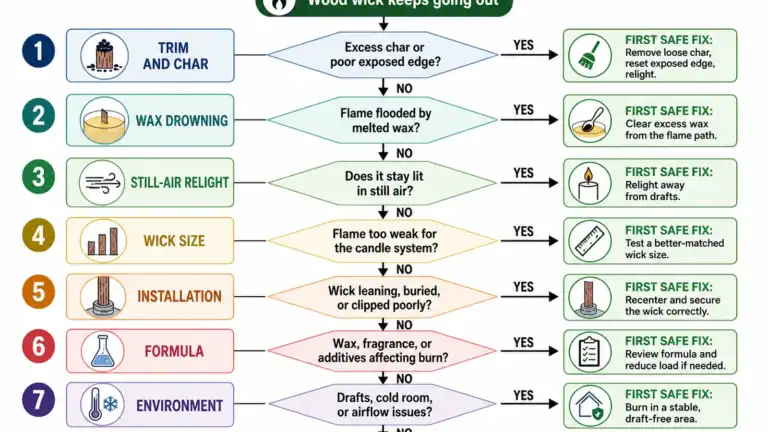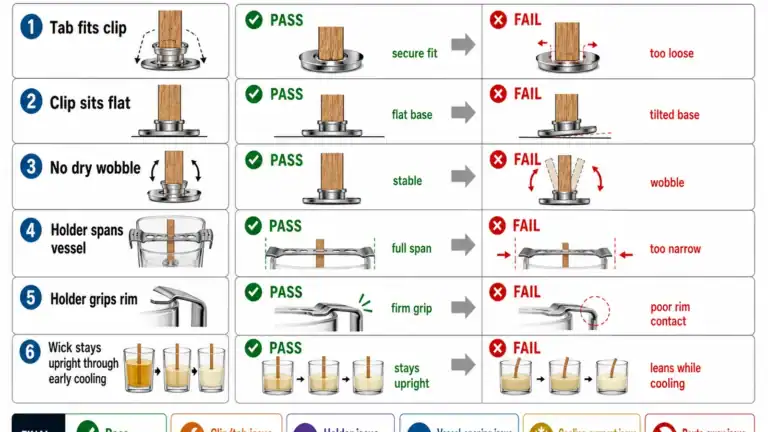
A safe container-candle setup uses a heat-tolerant container and a properly sized wick that keep the flame centered, soot low, and the vessel intact through repeated burns. On this page, safe means...
Category: Homemade Candles
Candle Safety Standards: ASTM, EU CLP & Label Rules (Complete Guide)
Candle safety compliance is the pre-sale process of confirming that a candle burns in a controlled way, carries the right label layers, and meets any market-specific hazard duties before you sell...
Candle safety standards and labeling rules are the standards, warning frameworks, and market duties that set a baseline for fire safety, label content, and traceability before a candle is sold or...
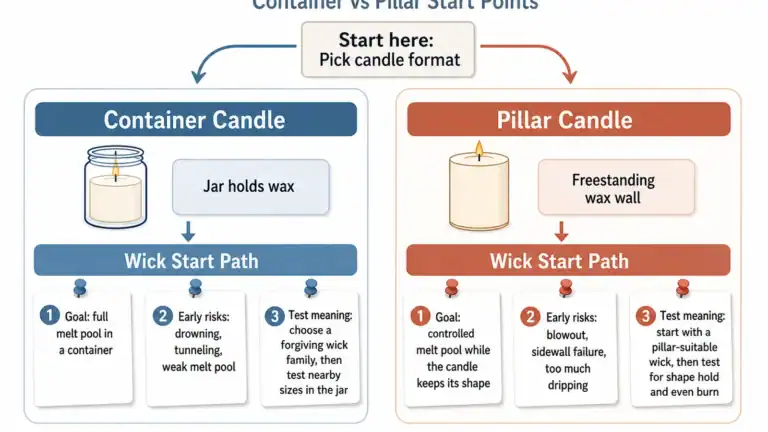
The best wax for pillar candles vs container candles is the wax that best fits the candle format first: firmer, self-supporting waxes usually suit pillars, while softer, adhesion-friendly waxes...
Rapeseed Wax vs Soy Wax: Which Is Better for Scented Candles?
Rapeseed wax and soy wax are two plant-based candle wax options, and for scented container and jar candles neither is universally better. Rapeseed often fits better when regional sourcing fit and jar...
Coconut apricot wax is a container blend known for smooth tops and strong scent throw, but supplier formulas vary and the wax needs more testing and heat care than tougher options. On this page,...