

A candle can smoke after you blow it out, and a brief, light plume from the wick is usually normal.
That smoke comes from the hot wick immediately after the flame goes out. Aftersmoke is visible smoke or glow from the wick after the flame has been extinguished. Here, “normal” means short-lived and limited, not harmless in every amount or safe to ignore when it is thick, lingering, or repeated. If the candle smokes while it is still burning, that is a different issue from post-extinguish wick smoke. Judge the plume by duration, density, wick condition, airflow, burn timing, and the way you extinguish the candle.
Is It Normal for a Candle to Smoke After You Blow It Out?
A candle can smoke after blow-out because the hot wick keeps releasing a small plume after the flame goes out.
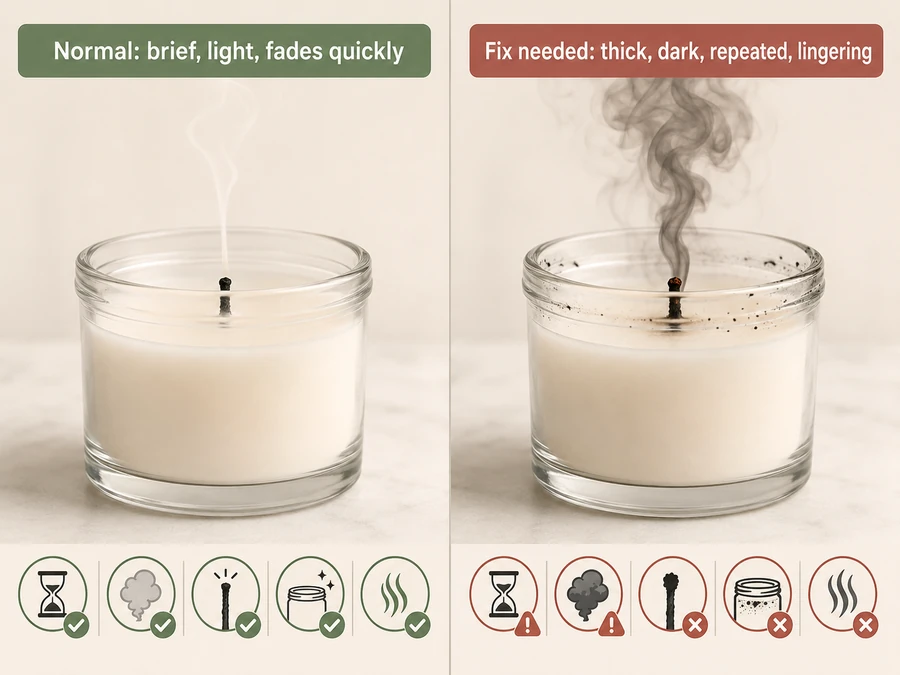
Post-extinguish wick smoke is the visible smoke that rises from the wick right after extinguishing. A brief plume is expected when the wick is still hot, especially if you blow across the flame instead of cutting off oxygen more gently. The issue starts when the smoke is thick, dark, long-lasting, or happens every time even after basic wick care.
Normal smoke is short and fades as the wick cools. Excess smoke points to a condition you can usually fix: a long wick, a carbon-heavy wick tip, trapped soot near the flame area, a draft, or a hot melt pool after a long burn.
| What you see after blow-out | What it usually means | What to do next |
|---|---|---|
| Thin plume that fades quickly | Normal hot-wick smoke | Let it clear and trim before the next burn if needed |
| Thick gray or dark smoke | Wick may be too long or carbon-loaded | Trim the cooled wick before relighting |
| Smoke with black flecks near the jar | Soot buildup may be present | Check wick length and jar walls after cooling |
| Smoke every time you extinguish it | Repeat maintenance issue | Reset wick care and change extinguishing method |
| Smoke that starts while the candle is still burning | Different problem from blow-out smoke | Diagnose active-burning soot separately |
| Smoke after placing the candle in a drafty spot | Air movement may be disturbing the wick | Move it away from fans, vents, and open windows |
“Normal” does not mean you should lean over the candle and breathe the plume. It means a small amount can happen even when the candle is functioning as expected.
How Much Smoke Is Too Much, and How Long Should It Last?
Too much post-extinguish smoke is thick, dark, harsh-smelling, repeated, or still clearly visible near the 30-second mark.
A normal plume should thin out right away as the wick cools. If the candle leaves a dense cloud, dark trail, or strong smoky smell after extinguishing, treat it as a sign to adjust the wick, airflow, or extinguishing method before the next burn.
The 30-second mark should be treated as a warning boundary for ordinary use, not as permission to inhale the plume or ignore dense smoke.
Use the pattern rather than one isolated moment. One smoky blow-out after a long burn can happen. Repeated heavy smoke after ordinary burns is more useful evidence because it shows the wick or burn conditions are not staying clean.
A quick check helps separate routine smoke from a fixable issue:
| Check | Normal range | Fix-needed sign |
|---|---|---|
| Plume size | Small and narrow | Wide, heavy, or dark |
| Plume behavior | Thins quickly | Hangs in the air |
| Repeat pattern | Occasional | Happens after most burns |
| Wick appearance after cooling | Even, short, and clean enough | Long, curled, mushroomed, or crumbly |
| Jar condition | Little visible residue | New soot marks near the rim |
| Smell | Mild blown-out candle smell | Strong smoky odor that lingers |
If the wick looks long or bulb-shaped after cooling, trim it before the next burn. Do not trim a hot wick or disturb liquid wax, because that can drop debris into the melt pool and make the next burn dirtier.
Smoke After Blow-Out vs Smoke While Burning
Smoke after blow-out and smoke while burning are separate candle problems.
Post-blow-out smoke comes from the hot wick after the flame is gone. Smoke while burning means the live flame is producing visible smoke or soot during use, which usually needs a different diagnosis.
The timing tells you which issue you have. If the smoke appears only after you extinguish the candle and fades as the wick cools, this page’s guidance applies. If the candle smokes while the flame is still active, look at flame height, wick length, drafts, wax debris, and soot formation during the burn.
| Timing | Likely issue | Why it matters |
|---|---|---|
| Smoke appears only after blow-out | Post-extinguish wick smoke | Often normal if brief and light |
| Smoke appears before blow-out | Active-burning smoke | More likely a wick, flame, or burn-condition problem |
| Smoke increases when you blow harder | Extinguishing method issue | The air blast can scatter smoke and wick debris |
| Smoke repeats after every burn | Maintenance pattern | Wick length, soot load, or burn habits need correction |
| Smoke comes with black jar stains | Soot problem may be building | The candle may need a care reset before reuse |
The simplest boundary is this: smoke after the flame goes out can be routine; smoke from a candle that is still burning should not be treated as the same thing.
Why a Candle Smokes More After You Blow It Out
A candle smokes more after blow-out when the wick is too long, carbon-heavy, overheated, or disturbed by moving air.
The smoke still comes from the extinguished wick, not from the whole candle. A clean, trimmed wick usually releases a smaller plume because there is less hot carbon left to smolder. A long or mushroomed wick has more burned material at the tip, so it can keep smoking after the flame disappears.
Common causes stack together. A long burn can heat the wax pool, a draft can push the flame unevenly, and a curled wick can collect carbon at one side. By the time you blow the candle out, the wick has more residue to release as visible smoke.
| Cause | Why it increases post-blow-out smoke | Best next step |
|---|---|---|
| Long wick | Leaves more hot wick material after the flame goes out | Trim after the candle cools |
| Mushroomed wick tip | Holds carbon that can smolder | Remove the cooled carbon bulb |
| Drafts | Make the flame burn unevenly before extinguishing | Move the candle away from moving air |
| Long burn session | Can leave the wick hotter and dirtier | Shorten the next burn and reset the wick |
| Soot near jar rim | Shows the burn may be too smoky | Check wick length and flame behavior next time |
| Blowing hard across the wick | Spreads smoke and disturbed wick particles | Use a gentler extinguishing method |
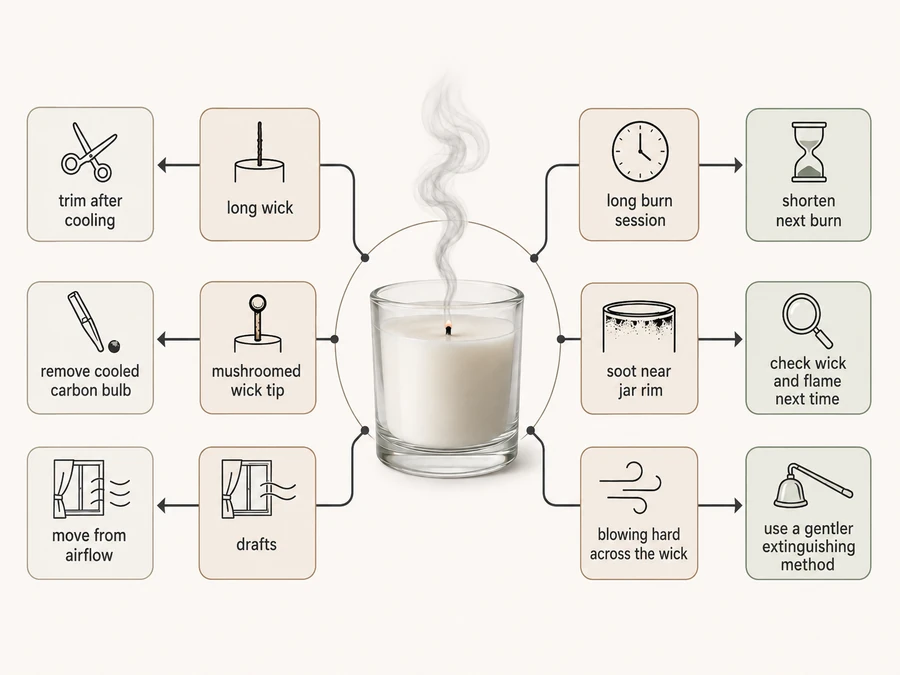
If the candle smoked only once after a long or drafty burn, treat it as a condition to correct. If it smokes heavily after every ordinary burn, the wick care routine needs a reset.
How Drafts and Room Airflow Change the Smoke Plume
Airflow can make a candle smoke more by pushing the flame, cooling one side unevenly, and spreading the plume after blow-out.
A draft does not need to feel strong to affect the wick. Fans, open windows, air vents, door movement, and busy walkways can all shift the flame before you extinguish it. That uneven burn can leave the wick tip hotter, more curled, or more carbon-loaded than it would be in still air.
After blow-out, airflow can make a small plume look worse because it carries the smoke sideways through the room. That does not always mean the candle produced more smoke. It may mean the smoke moved through a wider area instead of rising in a narrow line.
Move the candle to a still, stable surface before the next burn. Keep it away from vents, fans, window drafts, and places where people pass close by. If the smoke drops after that change, airflow was probably part of the problem.
Why Long, Hot Burns Can Create More Smoke at Extinguishing
A long, hot burn can make post-extinguish smoke heavier because the wick and melt pool stay hotter when the flame goes out.
In this article, “hot burn” means a candle session that leaves the wick, wax surface, and container warmer than usual. It is not a fire-hazard claim by itself. The point is that heat and wick residue can make the final plume thicker when you blow the candle out.
Long burns can also let the wick grow, curl, or form a carbon bulb. When that wick is extinguished, the extra burned material can smoke until it cools. This is why the same candle may release a light plume after a shorter burn and a heavier plume after a long evening burn.
Let the candle cool fully, then trim the wick before relighting. If the wick tip is curled, brittle, or bulb-shaped, remove the excess carbon rather than relighting it as-is.
Which Extinguishing Method Creates Less Smoke?
A wick dipper or snuffer usually creates less visible smoke than blowing hard across the flame.
Here, less smoke means a smaller visible plume at extinguishing, not a guarantee that every candle is cleaner, safer, or smoke-free.
The extinguishing method changes how quickly oxygen leaves the flame and how much air pushes across the hot wick. Blowing works, but it can scatter smoke, disturb the wick tip, and spread the plume across the room. A gentler method can keep the plume smaller and more contained.
| Method | Smoke effect | Best fit | Watch-out |
|---|---|---|---|
| Blowing out | Often creates the most visible plume | Fast, no tool needed | Can scatter smoke and wax if you blow too hard |
| Candle snuffer | Cuts oxygen around the flame | Reducing visible smoke | Must be lifted away after the flame is out |
| Wick dipper | Coats the wick in melted wax | Very low-smoke extinguishing | Wick must be lifted back upright before the wax sets |
| Candle lid | Can reduce oxygen slowly | Some jar candles made for lid use | Do not use a lid not meant for heat |
| Water | Not a recommended candle-extinguishing method | None for normal candle use | Can splatter hot wax and should be avoided |
| Pinching the wick | Can stop smoke quickly | Not recommended for most home users | Burn risk and wick damage risk |
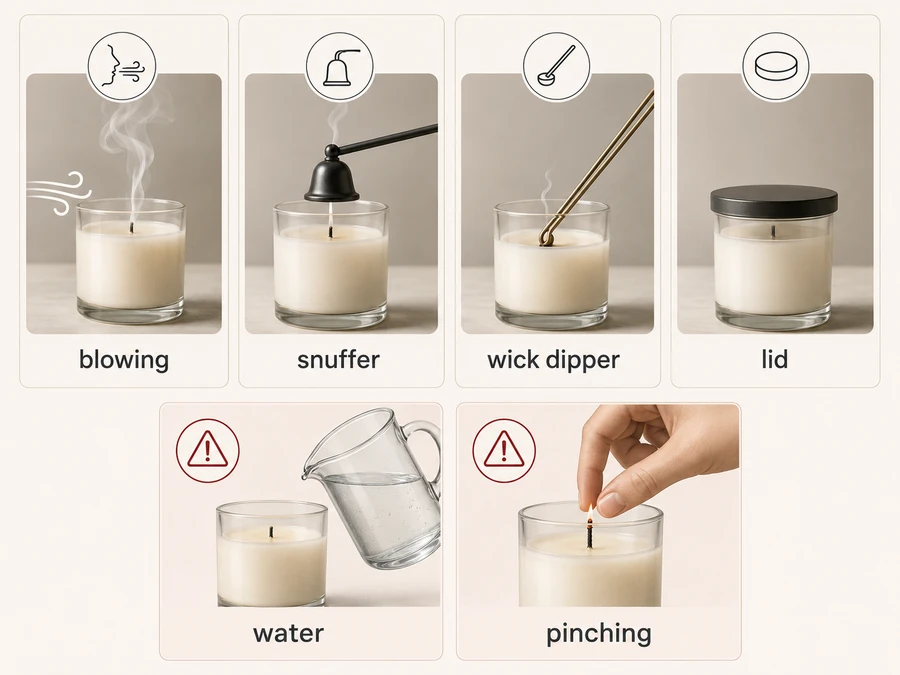
A snuffer is the easiest low-smoke option for most people because “easiest” here means simple handling without touching the wick or dipping it into wax. It does not mean safest for every candle or smoke-free in every case. A wick dipper can create even less smoke because it bends the wick briefly into melted wax, then returns it upright for the next burn.
Do not press a lid tightly onto a candle unless the candle maker says the lid is heat-safe for extinguishing. Some lids are decorative or meant for dust protection only.
When Post-Extinguish Smoke Means You Should Fix, Reset, or Stop Using the Candle
Fix the candle when post-blow-out smoke is thick, repeated, dark, harsh-smelling, or paired with soot marks.
This decision applies to repeated excessive smoke after extinguishing, not every visible plume. A small plume after blow-out is routine. A heavy plume that keeps returning means the candle’s wick condition, burn setup, or extinguishing method needs attention.
| Warning sign after blow-out | What it may mean | What to do |
|---|---|---|
| Thick smoke after normal burn times | Wick may be too long or carbon-heavy | Trim after cooling |
| Dark smoke or black flecks | Soot load may be high | Reset wick care before relighting |
| New black marks inside the jar | Flame may have burned too dirty | Watch flame behavior next burn |
| Harsh smoky smell that lingers | Smoke plume may be too heavy | Switch method and shorten next burn |
| Smoke every time you blow it out | Repeat maintenance issue | Use a snuffer or wick dipper and trim consistently |
| Wick is buried, split, unstable, or crumbling | Wick may no longer burn cleanly | Stop relighting if it cannot be reset |
A basic reset is simple: let the wax cool, trim the wick, remove loose wick debris, move the candle away from drafts, and use a gentler extinguishing method next time.
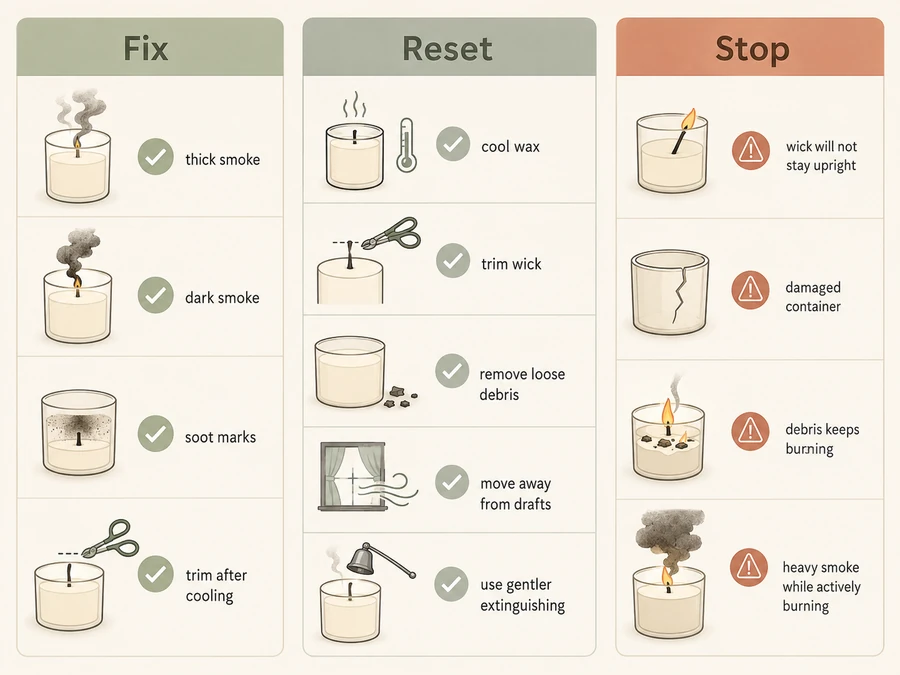
If heavy smoke continues after trimming, still-air placement, and a gentler extinguishing method, treat the candle itself as the likely problem rather than adding anything to the wax or wick.
Stop using the candle if the wick will not stay upright, the container looks damaged, debris keeps burning in the wax, or the candle smokes heavily during active burning. Those signs move beyond normal post-extinguish smoke and need separate safety judgment.