
A candle that smokes black while it is burning is showing an active-burn soot problem in normal home use. Black smoke is soot from incomplete combustion, where the flame releases unburned carbon instead of burning the wax fuel cleanly. Brief smoke after you blow out the flame is a separate timing issue, so do not use the same fix path for that symptom. Safety here means practical home-use action: extinguish, ventilate, discontinue, or replace the candle when smoke, heat, or soot keeps returning. This guide helps you identify the cause, apply the right fix, and know when to stop using the candle.
What to Do First When a Candle Starts Smoking Black
A candle smoking black during active burning should be corrected immediately, not watched until the jar darkens. Extinguish it, let the wax and wick cool, then fix the visible burn condition before relighting.
Black smoke means the flame is not burning cleanly under the current wick, airflow, wax-pool, or heat conditions. The safest first result is a smaller, steadier flame with no visible smoke trail.
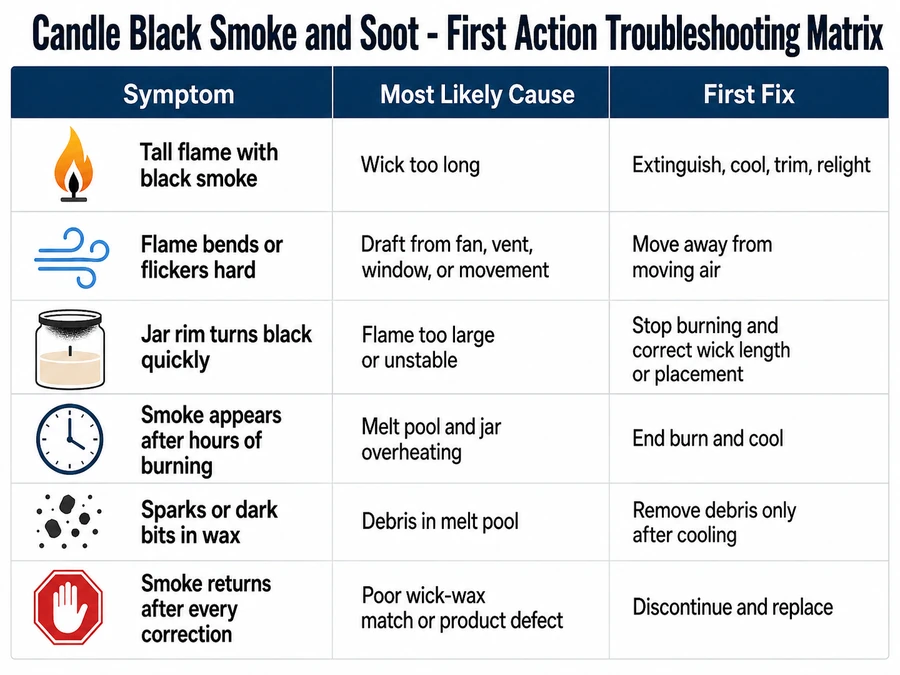
| Symptom you see while the candle burns | Most likely cause | First fix |
|---|---|---|
| Tall flame with black smoke | Wick is too long | Extinguish, cool, trim the wick, then relight |
| Flame bends or flickers hard | Draft from fan, vent, window, or movement | Move the candle away from moving air |
| Jar rim turns black quickly | Flame is too large or unstable | Stop burning and correct wick length or placement |
| Smoke appears after hours of burning | Melt pool and jar are overheating | End the burn session and let the candle cool |
| Sparks or dark bits in wax | Debris in the melt pool | Remove debris only after the wax cools enough to handle safely |
| Smoke returns after every correction | Poor wick-wax match or product defect | Discontinue use and replace the candle |
Follow the correction in order. Put the flame out first, because trimming or moving a burning candle can spill hot wax or make the flame flare. Let the wick stop glowing before touching it, then trim away excess charred wick and relight only when the wax pool is calm.
A small amount of smoke after extinguishing is different from black smoke during active burning. This page handles the active-burn problem: smoke or soot forming while the flame is still lit.
Stop the burn session instead of testing one more minute when the flame is tall, the jar is darkening, or soot collects on nearby surfaces. The outcome should be visible within the next burn: a stable flame, less jar staining, and no black smoke trail.
Prevent Black Smoke on the Next Burn
Preventing black smoke on the next burn means controlling the same wick, airflow, debris, and heat conditions before the flame becomes unstable again.
- Trim the wick before lighting.
- Burn the candle away from fans, vents, windows, and traffic paths.
- Clear loose wick trimmings, match pieces, dust, or debris from the wax surface.
- End the session if the flame grows, smokes, or makes the jar very hot.
- Discontinue the candle if black smoke returns after normal corrections.
Fix Wick and Flame Problems That Cause Soot
Wick and flame problems are the most common causes of black candle smoke during normal use. A long, carbon-heavy, or oversized wick feeds a bigger flame, which increases soot and dark residue.
Start with the wick because it is the easiest variable to correct. When the wick is too long, the flame pulls more fuel than it can burn cleanly. That creates a taller flame, more flicker, and a higher chance of black smoke.
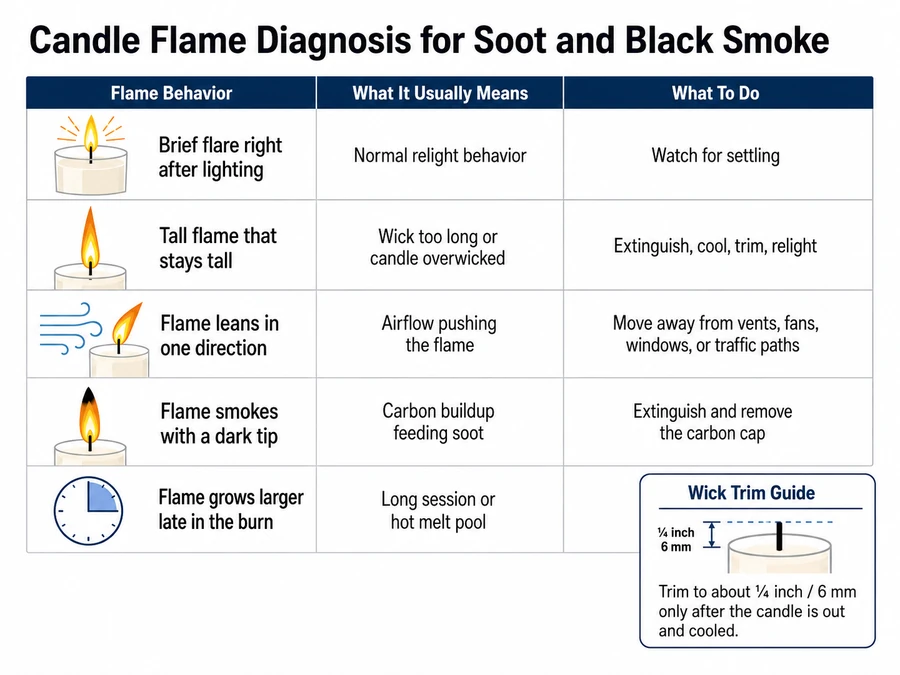
Trim the wick only after the candle is out and the wax has cooled. Cut the wick back to about ¼ inch / 6 mm, unless the candle label gives a different length, then remove loose charred pieces from the wax surface. A clean wick should relight with a controlled flame rather than a waving torch-like flame.
Do not confuse a wick that is visible with a wick that is too long. The problem is the operating wick length during the burn, especially when the flame grows tall, leans, smokes, or forms a thick carbon tip.
A wick problem is fixed when the next burn has three signs: the flame stays steady, the jar does not blacken quickly, and no black smoke rises from the flame. If smoke returns after proper trimming, look at airflow, burn time, or the candle’s wick-wax match.
Tell a Too-Large Flame from a Normal Relight
A too-large flame keeps growing, flickering, smoking, or staining the jar after the candle settles. A normal relight may flare briefly, then calm down within the first few minutes.
Use the flame behavior, not only the flame height, to judge the problem. A flame that dances because of a draft needs placement correction. A flame that stays oversized in still air points more strongly to excess wick, carbon buildup, or an overwicked candle.
| Flame behavior | Likely meaning | What to do |
|---|---|---|
| Brief flare right after lighting | Normal relight behavior | Watch for settling before judging |
| Tall flame that stays tall | Wick is too long or candle is overwicked | Extinguish, cool, trim, and relight |
| Flame leans in one direction | Airflow is pushing the flame | Move away from vents, fans, windows, or traffic paths |
| Flame smokes with a dark tip | Carbon buildup is feeding soot | Extinguish and remove the carbon cap |
| Flame grows larger late in the burn | Long session or hot melt pool | End the burn and cool the candle |
The contrast matters because the wrong fix wastes time. Moving the candle will not solve an oversized wick, and trimming the wick will not solve a fan blowing across the flame.
Remove Mushrooming Before It Worsens Soot
Wick mushrooming is a carbon cap that forms on the wick tip and makes the flame burn larger. When that cap keeps burning, it can feed black smoke and stain the jar.
Mushrooming does not mean the candle is moldy or ruined by default. It means carbon has built up at the wick tip during burning. The practical fix is to extinguish the candle, let it cool, then trim away the dark bulb before the next burn.
| What you see | What it means | Best action |
|---|---|---|
| Small dark bead on the wick | Early carbon buildup | Trim before the next burn |
| Thick black bulb at the wick tip | Mushrooming is feeding a larger flame | Extinguish, cool, trim, and relight later |
| Carbon pieces fall into wax | Loose wick debris can disturb burning | Remove cooled debris before relighting |
| Mushrooming returns every burn | Wick may be too large for the candle | Stop using if soot keeps returning |
Do not pinch, pull, or cut the wick while the candle is burning. Hot carbon can break off into the wax, and the flame can flare when disturbed.
The result after trimming should be a cleaner wick tip and a calmer flame. If the wick forms a large carbon cap again during every burn, treat it as a warning that the candle may not be matched well enough for clean use.
Fix Airflow and Burn Conditions That Trigger Soot
Airflow and burn conditions can turn a normal candle flame into a smoky, unstable flame. Drafts, long burn sessions, and debris all change how the flame receives heat, fuel, and oxygen.
A candle should burn in still air on a heat-safe, stable surface. Moving air makes the flame lean and flicker, which can push unburned carbon toward the jar wall or into the room.
Common draft sources include ceiling fans, open windows, HVAC vents, doorways, and people walking close to the candle. Normal room air is not the issue. The issue is moving air strong enough to bend or shake the flame.
Use this fast diagnosis sequence:
- Watch the flame for leaning, fluttering, or repeated bending.
- Look for nearby fans, vents, windows, or traffic paths.
- Extinguish the candle before moving it.
- Relight in a still-air location after the wax settles.
- Check whether the flame stays upright without black smoke.
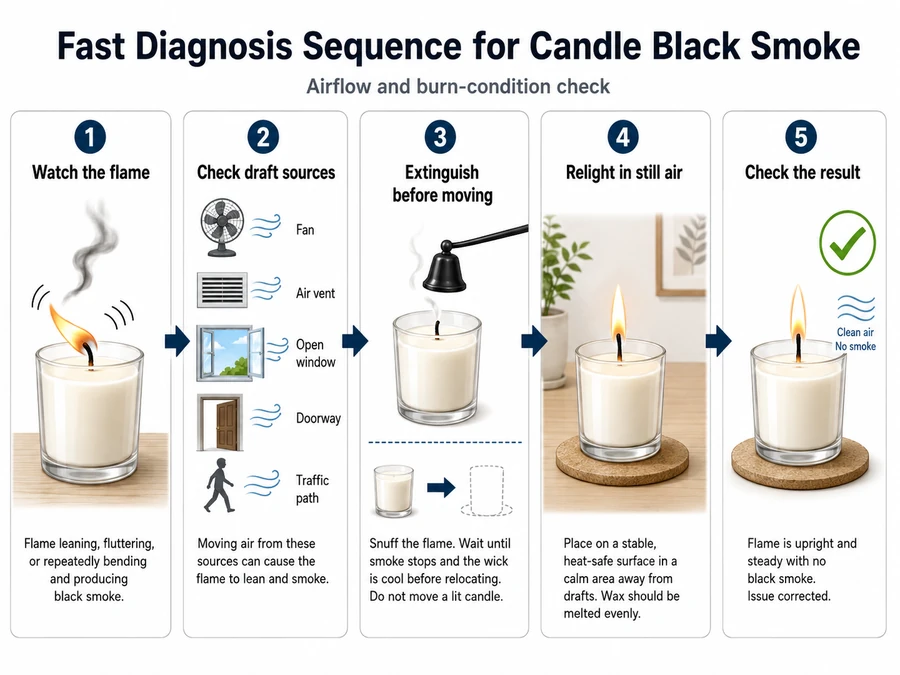
If the smoke stops after relocation, the candle setup was the cause. If the smoke continues in still air, move back to wick length, carbon buildup, burn time, or product quality.
End Overheated Long-Burn Sessions Early
A candle that burns too long can develop a hotter, deeper melt pool and a less stable flame. When black smoke appears late in the session, end the burn instead of pushing longer.
Long sessions can make the jar hotter, the wax pool deeper, and the flame less controlled. That does not mean every long burn is dangerous, but it does mean late-session smoke deserves a reset.
| Late-burn sign | What it suggests | What to do |
|---|---|---|
| Smoke starts after hours of clean burning | Heat buildup may be changing the burn | Extinguish and cool the candle |
| Jar feels very hot | Container heat is rising | Stop the session and let it cool fully |
| Flame grows taller over time | Wick and melt pool may be feeding too much fuel | End the burn and trim before relighting |
| Soot collects near the rim | Flame is depositing residue | Stop, cool, clean safe exterior residue, then reassess |
Let the candle cool before relighting. A fresh session should start with a trimmed wick, a calmer wax pool, and a stable flame. If the same candle smokes late in every burn even after shorter sessions, stop using it as a routine candle.
Clear Debris from the Melt Pool Before Relighting
Debris in the wax pool can disturb the flame and add smoke during active burning. Remove loose wick pieces, match fragments, dust, or charred material before the next burn.
Do not reach into hot wax or fish debris out while the candle is lit. Extinguish the candle first, let the wax cool to a safer handling state, then remove visible debris with a clean tool.
| Debris type | Why it matters | Safer fix |
|---|---|---|
| Fallen wick carbon | Can reignite or darken the wax pool | Remove after the wax cools |
| Match head or matchstick pieces | Adds foreign material near the flame | Extinguish and remove before relighting |
| Dust or lint on the wax surface | Can burn briefly and smoke | Keep the candle covered between uses |
| Broken wick trimmings | Can feed tiny flare-ups | Clear trimmings before every burn |
The outcome should be a clean wax surface around the wick. If the candle still smokes after debris removal, the cause is more likely wick length, airflow, burn time, or the candle’s wick-wax match.
When Repeated Soot Points to the Candle, Not Just the Setup
Repeated soot after good candle care can mean the candle itself is poorly matched for clean burning. If trimming, still air, shorter sessions, and debris removal do not work, stop treating it as user error.
A candle can smoke because the wick is too large for the wax, vessel, fragrance load, or burn pattern. From a home-use view, you do not need to prove a manufacturing defect. You only need to decide whether the candle keeps producing soot after normal corrections.
Use this decision check:
- Trim the wick before the next burn.
- Burn the candle away from drafts.
- Stop long sessions before the jar gets very hot.
- Remove debris from the cooled wax surface.
- Relight once under better conditions.
- Discontinue the candle if black smoke returns again.
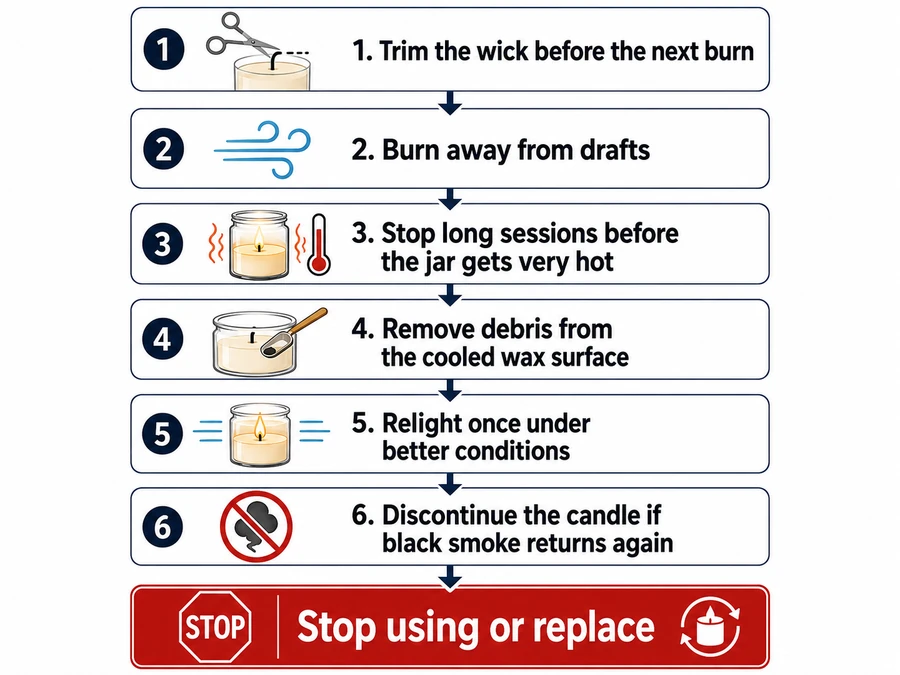
That last step matters because repeated soot raises the cost of continuing to use the candle. The cleaner outcome is to replace it rather than keep correcting a candle that will not burn steadily.
A candle is not automatically unsafe because it soots once. The concern is repeated black smoke, fast jar blackening, harsh odor, unstable flame behavior, or soot that returns after careful correction.
Spot One-Sided Soot and Melt-Pool Imbalance
One-sided soot often means the flame is leaning, the jar is heating unevenly, or the melt pool is feeding the wick unevenly. The mark location helps separate airflow trouble from candle-design trouble.
If soot gathers on the side where the flame leans, check for moving air first. If the candle smokes in still air and the flame still leans or burns unevenly, the vessel, wick placement, or wax pool may be contributing.
| Pattern | Likely cause | Correction |
|---|---|---|
| Soot on one side near a draft | Airflow pushes the flame | Move the candle to still air |
| Soot on one side in still air | Wick may be off-center or burn may be uneven | Stop use if it repeats |
| Deep pool on one side | Uneven heating or placement issue | Use a level, stable surface |
| Rim blackens even after trimming | Flame may be too large for the container | Discontinue or replace the candle |
Do not turn this into a full container-design diagnosis. For home use, the key decision is simple: if a level, still-air burn with a trimmed wick still creates one-sided soot, the candle may not be worth continuing.
Treat Formulation Risk as a Last-Step Comparison
Some candles are more likely to soot because the wick, wax, fragrance, dye, and vessel do not burn well together. Treat this as a comparison after you rule out wick care, drafts, long sessions, and debris.
Do not assume fragrance or dye is the cause just because the candle is scented or colored. The more useful test is whether the same candle keeps smoking under good burn conditions while other candles in the same room do not.
| Comparison point | What it suggests | What to do |
|---|---|---|
| Only one candle smokes after trimming | Candle-specific burn issue | Replace or discontinue that candle |
| Several candles smoke in the same spot | Airflow or placement issue | Change the location before blaming the candle |
| Smoke appears only after long sessions | Heat and burn time issue | Shorten sessions and cool fully |
| Smoke returns quickly in still air | Wick-wax match may be poor | Stop using if it repeats |
| Strong soot plus unstable flame | Higher practical-use risk | Extinguish and do not relight until corrected |
Formulation risk is conditional, not automatic. A heavily scented candle can burn cleanly when it is well matched, and a lightly scented candle can soot if the wick is wrong for the wax and container.
The outcome is a replacement decision, not a chemistry diagnosis. If a candle keeps producing black smoke after normal care, choose a better-burning candle instead of trying to force it to work.
When Black Smoke Becomes a Safety Stop Signal
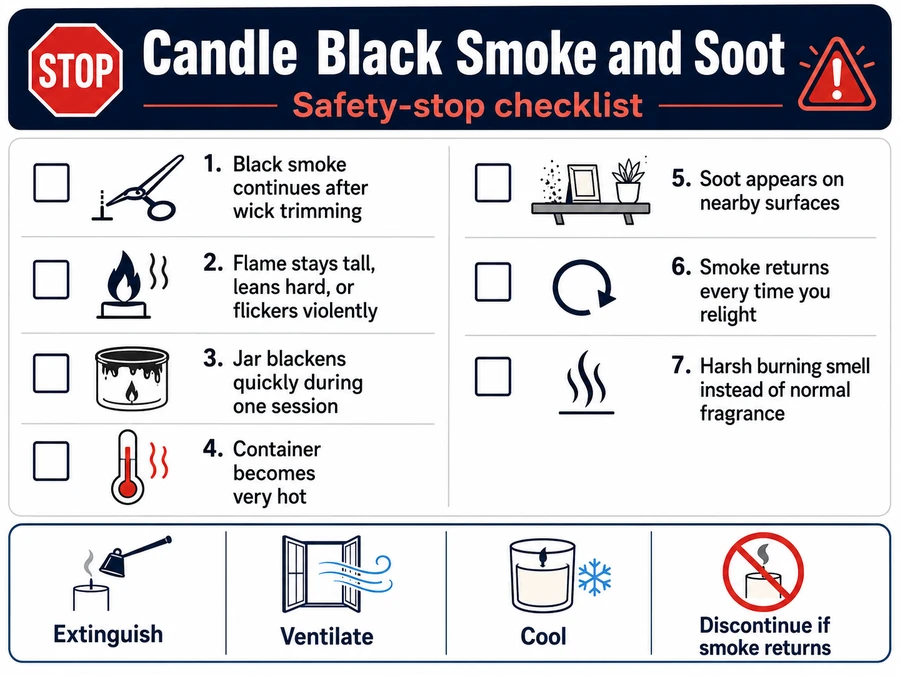
Black smoke becomes a stop signal when it is repeated, heavy, or paired with an unstable flame, excessive heat, harsh odor, or fast soot buildup. Extinguish the candle and do not keep troubleshooting while it burns.
This stop signal is a burn-use decision, not a full health or emissions diagnosis; the practical goal is to reduce smoke exposure, heat buildup, and soot spread.
Safety here means practical burn-use decisions in the home. It does not mean proving a legal defect, testing emissions, or diagnosing health effects. The safer outcome is to stop the burn before residue, heat, or flame behavior worsens.
Use this safety checklist:
| Stop using the candle when… | Why it matters |
|---|---|
| Black smoke continues after wick trimming | The easiest fix has failed |
| The flame stays tall, leans hard, or flickers violently | The burn is unstable |
| The jar blackens quickly during one session | Soot output is high |
| The container becomes very hot | Heat conditions may be unsafe |
| Soot appears on nearby surfaces | Residue is leaving the candle area |
| Smoke returns every time you relight | The candle may be poorly matched or defective |
| You smell harsh burning, not normal fragrance | Something is burning poorly |
Ventilate the room after heavy black smoke, especially before lighting another candle. Let the candle cool, check the wick and wax surface, then decide whether one controlled relight is reasonable. If the same smoke returns, discontinue the candle.
A small smoke wisp after blowing out the flame is not the same problem as black smoke while the candle is lit. Active-burn black smoke points to a burn condition that needs correction; repeated active-burn soot points to a candle you should stop using.