Apr 25, 2026
How to Make Paraffin Candles (Containers + Pillars)
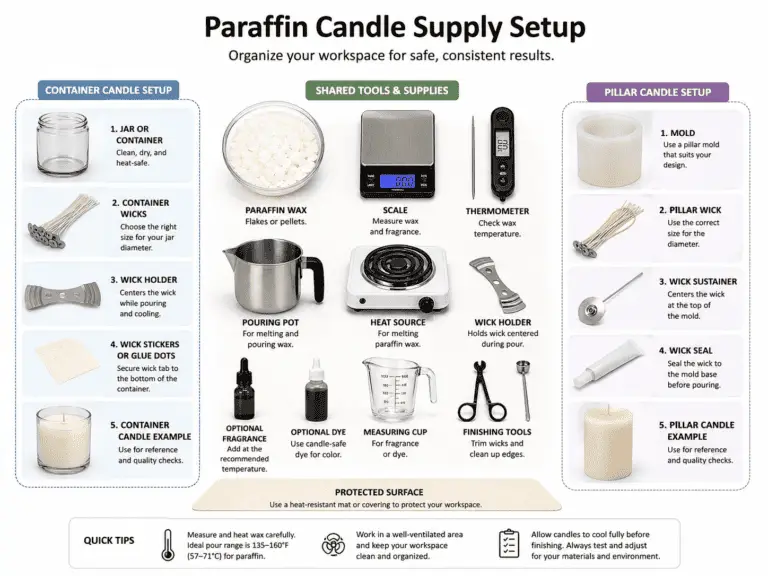
To make paraffin candles, choose container or pillar wax, set the wick and vessel or mold, melt, add optional scent or dye,…
Read guide
Compare wax families, blends, additives, temperatures, finish, hardness, adhesion and scent performance.
Start with the main guideTo make paraffin candles, choose container or pillar wax, set the wick and vessel or mold, melt, add optional scent or dye,…
Read guide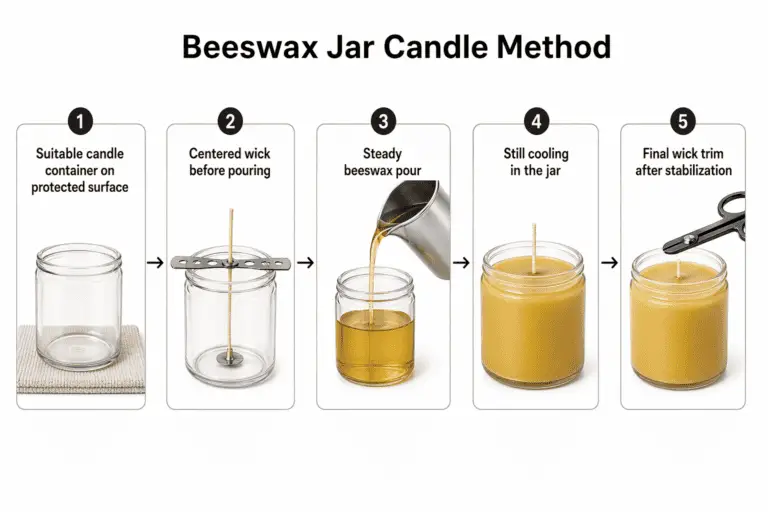
Beeswax candle making is the process of making jar candles, pillar candles, and taper candles primarily with beeswax by choosing the format,…
Read guide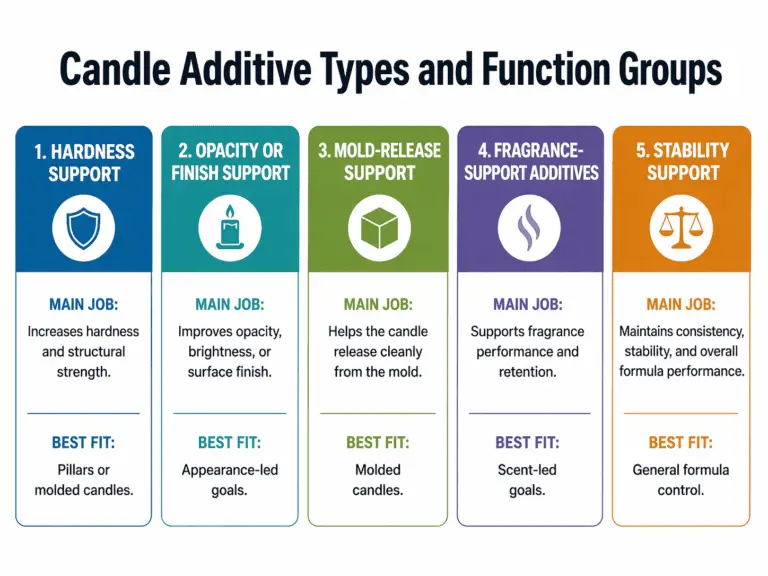
Candle additives are optional wax modifiers that help with a specific result, but many candles work without them when the wax, candle…
Read guide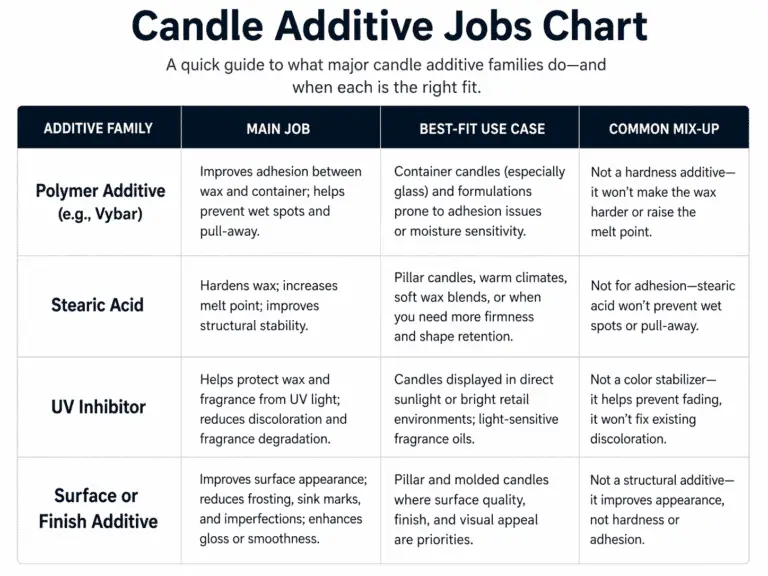
Use functional wax additives as a tested percentage of wax weight, starting low by additive type and wax family so you adjust…
Read guide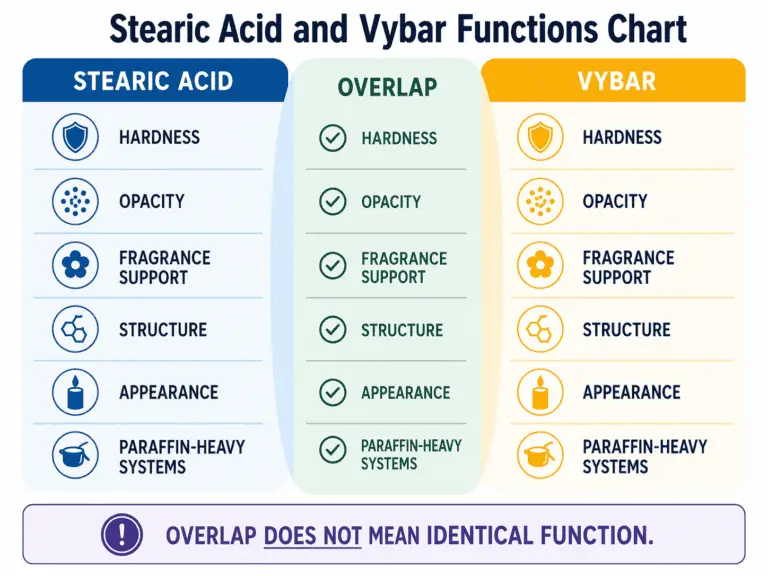
Yes, stearic acid and Vybar can sometimes be used in the same candle formula, but whether they should be combined depends on…
Read guide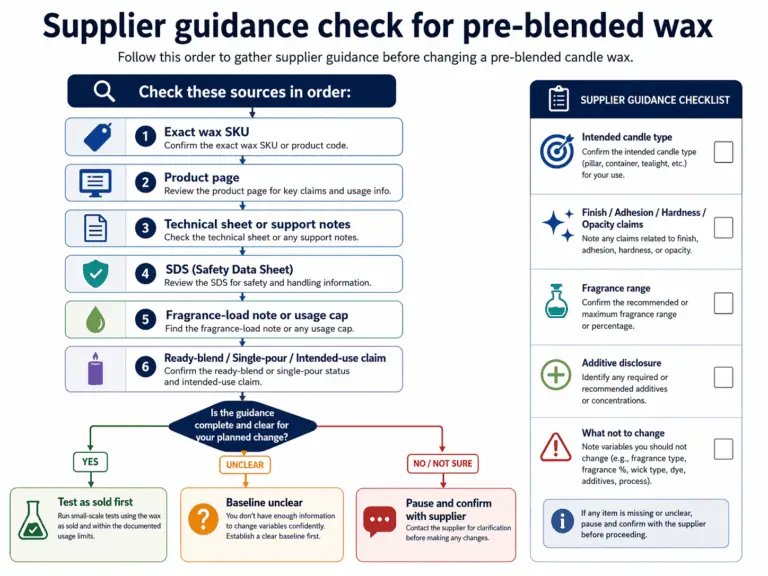
Usually, no extra additive is needed for pre-blended candle wax unless supplier guidance or testing shows a specific gap the existing blend…
Read guide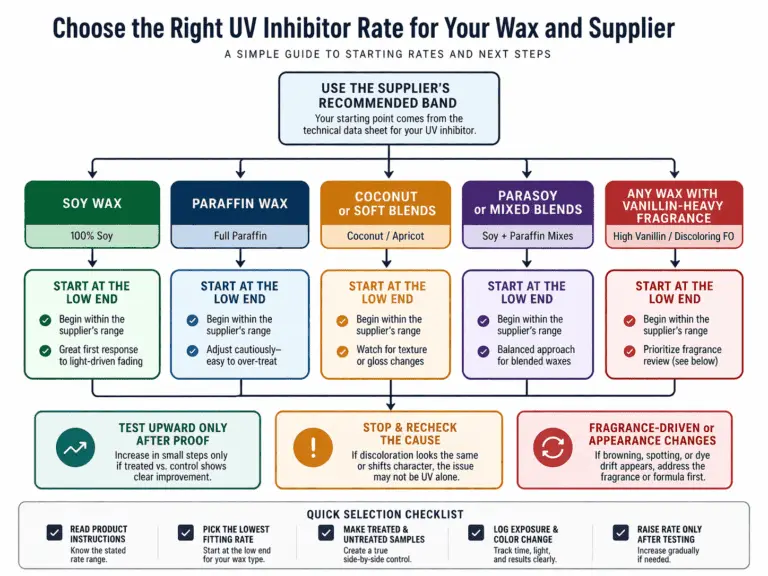
A UV inhibitor is a candle additive that can slow some light-driven fading or yellowing, and you use it by choosing a…
Read guide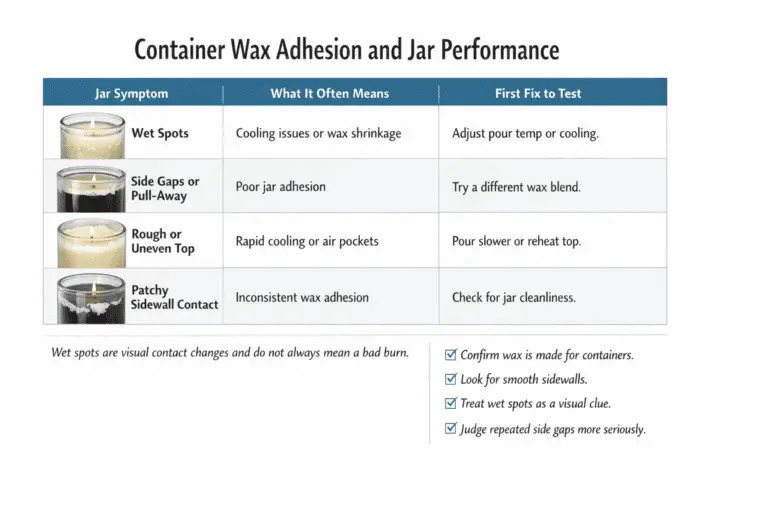
The best wax for pillar candles vs container candles is the wax that best fits the candle format first: firmer, self-supporting waxes…
Read guide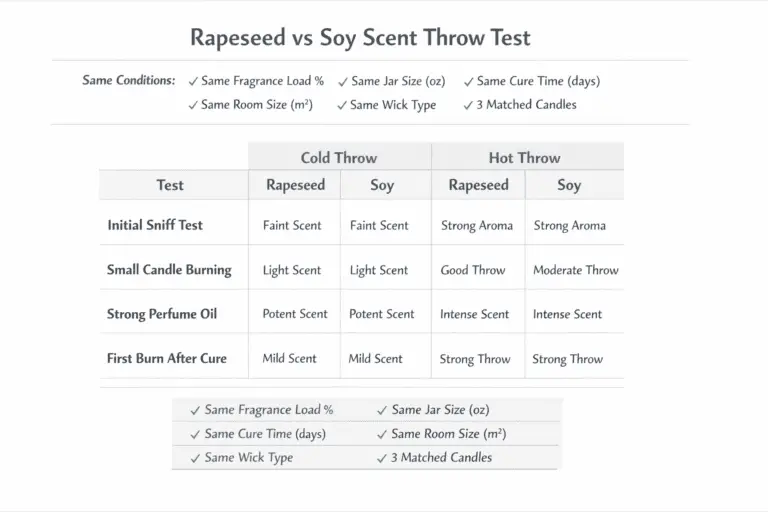
Rapeseed wax and soy wax are two plant-based candle wax options, and for scented container and jar candles neither is universally better.…
Read guide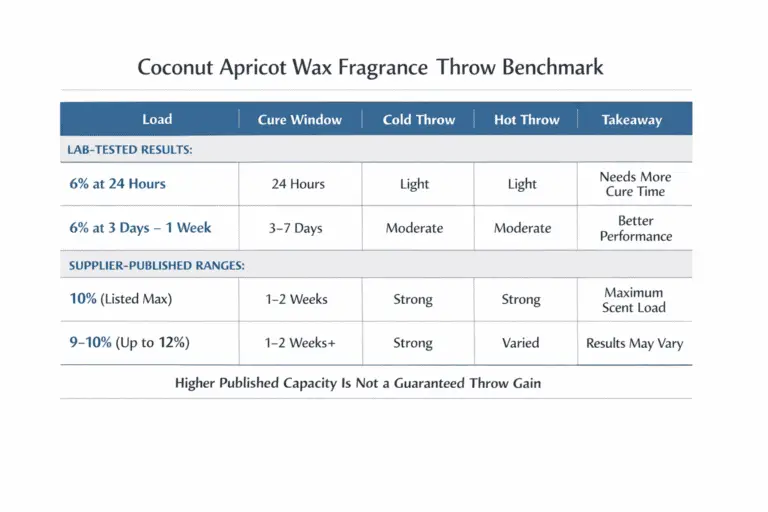
Coconut apricot wax is a container blend known for smooth tops and strong scent throw, but supplier formulas vary and the wax…
Read guide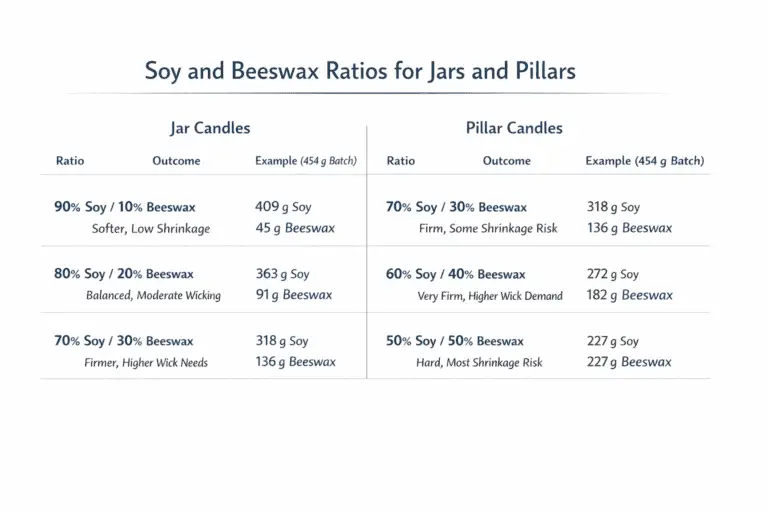
Yes, you can mix soy and beeswax for candles. On this page, a soy-beeswax blend is a soy-led wax system used to…
Read guide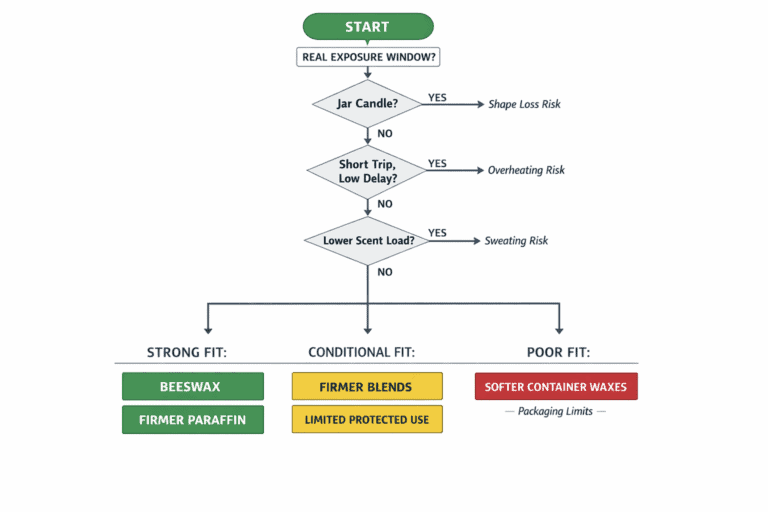
On this page, best means the wax family most likely to resist softening, shape loss, and saleable-finish loss in the final candle…
Read guide