
Essential oils can be used in some candles, but only when the exact oil has suitable supplier guidance and performs safely in the chosen wax, wick, and container.
Do not use a universal drop count; weigh the scent material, follow the exact supplier’s candle-use limit, and test the finished candle before regular use.
Essential-oil candles can vary widely in scent strength, wax stability, and burn behavior, so a pleasant bottle scent does not prove candle performance.
This guide explains what to verify, what can go wrong, and when a candle fragrance oil may be the more predictable choice.
Can you put essential oils in candles?
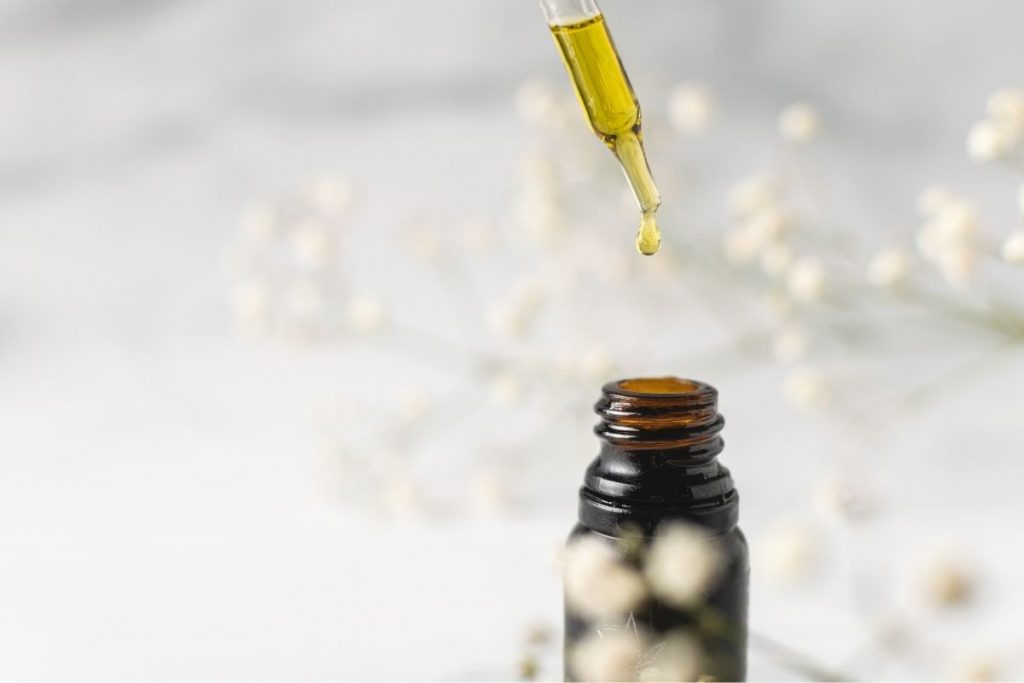
You can use an essential oil in a candle only when the exact product is identified, the supplier supports candle use, and the tested wax-and-wick system burns acceptably.
More essential oil does not automatically create a stronger candle. The useful amount depends on the product, wax, wick, container, and supplier limit, so measure by weight rather than by drops.
Judge scent strength only after the candle has cured and completed controlled cold-throw and hot-throw tests. Change one variable at a time so the result can be repeated.
Are essential oils flammable in candles?
Essential oils are combustible, meaning they can burn under the right conditions; mixing them into wax does not make an untested candle automatically safe. The finished candle still needs controlled burn testing.
Use only the amount supported by the exact supplier and wax system. Too much scent material can cause sweating, wick problems, unstable burning, or poor scent performance.
Never add essential oil to a burning candle, an open flame, or a hot wax pool. Extinguish the flame and allow the candle to cool before handling it.
Can you put too much essential oil in a candle?
Too much essential oil can destabilize the wax-and-wick system and produce an uneven flame. Essential oil remains combustible, especially when it reaches its flashpoint. A flashpoint is the temperature at which vapor can catch fire, so dilution alone does not prove safety.
Adding more oil does not guarantee a stronger scent, and putting too much will cause a problem when the wax cannot hold it. The result may be sweating, wick clogging, smoke, or an unstable flame. Use a weighed test formula instead of trial and error by drops.
Do not add extra essential oil simply because the first candle smells weak. Check the supplier limit, cure time, wick match, wax compatibility, and test conditions before changing the amount.
What essential oils can be used for candles?
Use only essential oils with clear product identity, supplier support for candle use, and acceptable results in the chosen wax-and-wick system. Aroma preference alone does not prove candle suitability.
A blend may combine contrasting aroma families, such as citrus with lavender, but each ingredient still needs clear identity and candle-use guidance.
Different oils can smell fresh, floral, herbal, minty, woody, or citrus-like. Describe the aroma rather than promising medical, disinfecting, mood, sleep, or concentration effects from a burning candle.
The next section compares aroma character and practical candle suitability, not health or aromatherapy outcomes.
Which essential oils are best for candle making?
The best essential oils for candles are documented products that remain stable in the chosen wax and pass finished-candle burn tests. Cost and aroma matter only after those conditions are met.
The examples below describe familiar aroma directions only. They are not universal winners, and each exact product still needs documentation and candle testing.
Lavender gives a soft floral and herbal aroma. Its candle performance depends on the exact oil, wax, load, wick, and test conditions.
Avoid treating a lavender candle as a treatment for stress, anxiety, sleep problems, blood pressure, or any other health condition.
Rose materials can add a rich floral aroma, but true rose extracts may be costly and product strength varies widely.
Describe rose by its aroma and tested candle performance rather than by claims about depression, anxiety, breathing rate, or blood pressure.
Peppermint has a strong, cooling aroma that can dominate a blend. Use only a documented product and avoid medical or appetite-related claims.
A peppermint candle should not be presented as a way to control appetite, stress, tension, or nervousness.
Citrus oils can smell bright and fresh, but some may change during heating or produce weaker hot throw, the scent released while a candle burns.
Orange and lemon are common aroma examples, but the exact product documentation and candle test result matter more than the fruit name.
What are suitable essential oils for soy candles?
Essential oils can work in soy wax, but performance is product-specific and may be less predictable than a candle fragrance oil designed and tested for that use.
Adding more oil is not a reliable fix for weak scent. Excess material can separate from the wax, affect the wick, or make the burn less stable.
Heat can change volatile aroma materials, so judge both the unlit candle and the burning candle after a controlled cure and burn test.
Do not treat general oils like coconut oil as fragrance oils. Use a scent material with clear candle-use instructions and test it in the exact soy-wax system.
A candle fragrance oil is often the more predictable option when strong hot throw, repeatability, and supplier candle documentation are the main goals.
How do you blend essential oils for candles?
Blend only identified materials that each have suitable candle-use information. Record every component by weight so the blend can be repeated and evaluated.
A fragrance load is the scent-material weight relative to the wax weight or, in some systems, the total blend weight. Use one stated method consistently and check the exact wax and supplier limit before following this article.
Test a small aroma blend first, then weigh the final blend for the candle formula. Do not rely on a fixed drops-per-tablespoon rule because droplet size and product density vary.
Is it better to use essential oils or fragrance oils for candles?
Candle fragrance oil is usually the more predictable choice; an essential oil is suitable only when the exact product is documented and tested. For either type, check identity, carrier, restrictions, and supported applications.
Candle fragrance oils often provide stronger and more repeatable throw because they are formulated and tested for candle use. That advantage still depends on the exact product and finished-candle test.
Do not apply one universal amount per pound. Follow the wax and fragrance supplier guidance, calculate by weight, and verify the result through controlled testing.
If you are considering a mixture of both, confirm that every component is identified and supported for the intended candle use before testing the blend.
What happens if you put too much essential oil in a candle?
Too much essential oil does not guarantee stronger throw and can cause sweating, wick clogging, smoke, or an unstable flame. More scent material is not a substitute for a compatible formula.
When scent performance is weak, test the wax, wick, cure, container, room, and scent material as separate variables. Do not keep increasing the oil without a documented limit.
Why don’t my candles smell strong?
Weak candle scent can come from the scent material, wax, wick, cure time, container, room size, or test method. Soy wax is not automatically scentless, and fragrance oil is not automatically successful.
Follow the exact supplier’s mixing and cure guidance instead of one universal temperature or time. Trim and test the wick according to the candle design because burn performance affects hot throw.
How can I make my candles smell stronger?
To improve scent strength, change one recorded variable at a time and compare the finished candles under the same conditions.
- Use a weighed amount that stays within the exact wax and scent supplier guidance.
- Measure wax and scent material with a scale, not by cups, spoons, or drop counts.
- Use the mixing temperature stated for the exact wax and scent material; there is no universal temperature that fits every formula.
- Follow the wax supplier’s cure guidance and compare candles only after the same cure period.
- Store test candles away from excess heat and direct light, and keep the storage conditions consistent.
- Compare scent in the intended container and room because vessel size, melt-pool behavior, and room volume affect the result.
- Trim and test the wick according to the candle design, and stop the test if the flame or container becomes unsafe.
How many drops of essential oil should I put in a candle?
There is no universal drops-per-candle rule. Essential oil should be measured by weight and limited by the exact material, wax, and supplier guidance.
Check the exact wax and scent documentation before calculating a test batch. Do not assume that soy wax neutralizes scent or that another wax will automatically perform better.
The candle size alone does not determine the scent amount. The calculation must use the actual wax weight, the declared percentage method, and the maximum supported by the exact materials.
How much essential oil do I put in a 16 oz candle?
A 16 oz candle has no universal essential-oil amount. Calculate from the actual wax weight and the approved percentage for the exact oil and wax, then test the finished candle.
How much essential oil do I put in a 12 oz candle?
A 12 oz candle also needs a weight-based calculation. Do not copy an amount from another candle size without confirming the wax weight and supplier limit.
How much essential oil do I put in an 8 oz candle?
An 8 oz candle should use the same weight-based method. The jar label may describe volume rather than the actual wax weight it holds.
How much essential oil do I put in a 4 oz candle?
A 4 oz candle still requires the actual wax weight and a documented percentage. A fixed fraction of an ounce cannot be assumed safe or effective for every essential oil.