

Candle containers for beginners are heat-suitable vessels for container candles, usually straight-sided glass, tins, or ceramic made for candle use, not decorative drinkware or unknown household vessels. For most beginners, straight-sided glass is the best first container lane because it is the easiest vessel to test consistently and read clearly without changing too many variables at once.
This guide helps you choose between glass, tins, and ceramic without changing too many variables at once. You will use heat safety, inner diameter, shape, shipping needs, and label fit to pick one container lane first. Most early burn problems get harder to read when the vessel changes from test to test. Once the container is locked, you can move to wick sizing, prep, and crack prevention as separate steps.
| What you care about most | Pick | Why it works | Watch-outs |
| Fast wick learning | Straight-sided glass | Easy to see melt pool, soot, and hang-up | More break risk if mishandled |
| Shipping durability | Lacquer-lined tins | Less shatter risk and lighter parcels | Seams, lining, and lid fit still matter |
| Retail-ready look | Ceramic or heavy glass | Strong presentation and stable label space | Supplier variation can be harder to read in testing |
| Repeatable beginner baseline | Standard straight-sided glass | Common sizes and simple diameter reading | Wall thickness and seams can still vary by lot |
Use only candle-safe containers for candle making
On this page, candle-safe containers are vessels made for repeated candle heat with stable walls and non-porous interiors that do not crack, leak, or scorch during normal burns. Here, safe means container suitability for container candles, not a full legal, toxicology, or home-safety judgment.
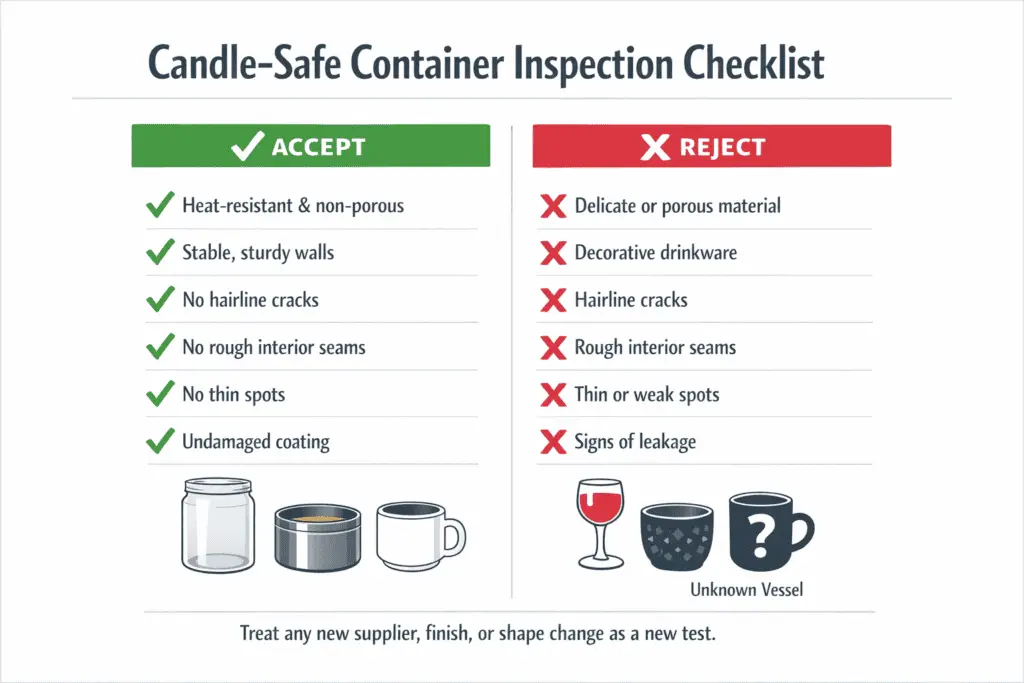
Safe container choice starts before wax, wick, and fragrance. Decorative drinkware, thin jars, and unknown vessels can fail even when the wick setup looks normal. Start with purpose-made candle jars, candle tins, or ceramic vessels sold for candle use, then test one container line consistently.
- Reject containers with hairline cracks, rough interior seams, or obvious thin spots.
- Avoid porous interiors or finishes that can absorb oil or trap residue.
- Treat shape changes, coating changes, and supplier changes as new tests, not the “same jar.”
For the broader parent guide, see Choosing the Right Candle Containers. After you pick a vessel, move to How to Prepare Candle Containers Before Pouring Wax and How to Fix or Avoid Cracked Candle Containers as separate steps.
What to choose: straight-sided glass vs tins vs ceramic for candle making
Straight-sided glass is easiest to learn in, tins are best when durability and shipping matter most, and ceramic works best after you already have a stable burn baseline.
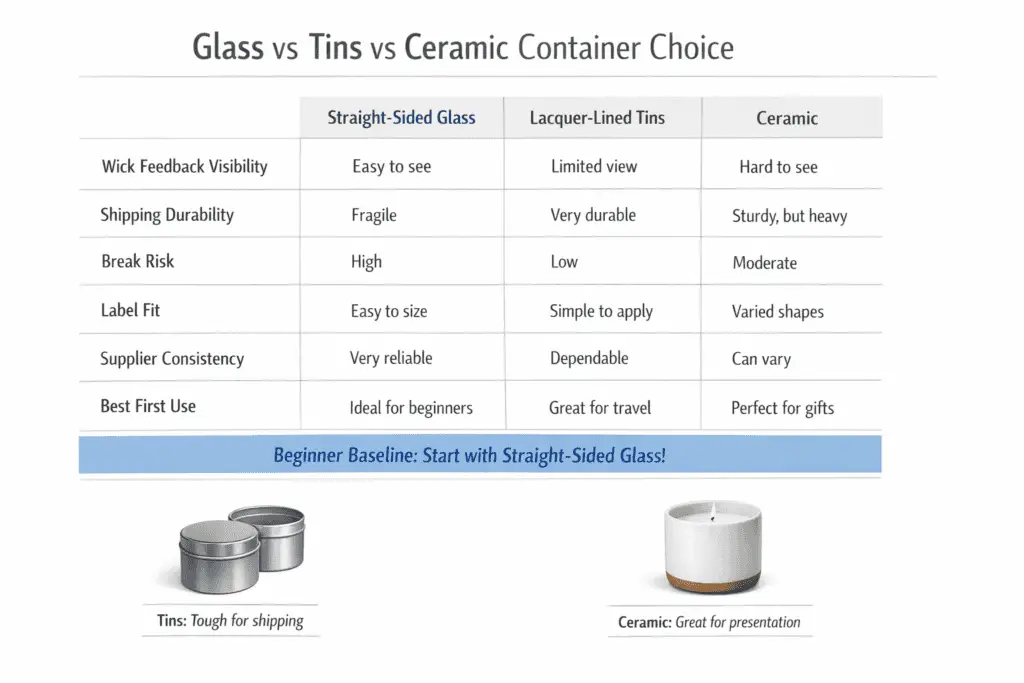
Most beginners struggle because they change too many variables at once—container shape, diameter, wax, and wick—then blame “the jar” when the burn looks wrong. A straight-sided clear glass jar gives fast visual feedback on melt pool width, flame height, and early soot. Tins hide some of those cues, but they win on durability and shipping. Ceramic can look polished and premium, but supplier variation and thicker walls often make early testing slower to read.
Two quick chooser rules (so you actually decide):
- If you’re learning wick behavior from scratch, start with straight-sided clear glass so you can read the burn early.
- If you plan to ship regularly, start with lacquer-lined tins and build your testing around seam checks and lid fit.
- If presentation matters most, move to ceramic after you have a stable baseline in a simpler container.
- If you’re undecided, pick the one you can buy consistently from the same supplier for at least one full test cycle.
Use this chooser framework before you buy:
- Safety first: choose candle-safe vessels only, then reject any line with cracks, rough seams, or coating damage.
- Shape and inner diameter: straight-sided jars give the simplest beginner baseline because they are easier to measure, easier to read, and easier to label cleanly.
- Shipping and sourcing: tins reduce shatter risk, while glass and ceramic trade durability for visibility or presentation, so buy enough of one line to finish a full test cycle before you switch.
For a material-only comparison, see Glass vs Tin Containers for Candles: Pros and Cons.
How shape, seams, and finish change the choice
Shape, seams, and finish change the first-choice decision because they affect heat behavior, burn visibility, and how easy the container is to repeat in testing.
- Straight-sided vs shouldered: straight-sided jars usually burn more evenly for beginners, while shouldered jars can trap heat and change airflow, which often demands a different wick choice.
- Tin details that matter: choose lacquer-lined tins with clean seams and a lid that fits without scraping the coating, because coating breaks and poor seams can lead to leaks, rust, or odor issues.
- Clear vs amber vs matte: clear glass shows frosting and soot fastest, amber hides frosting better, and matte finishes disguise visual defects but can hide early warning signs during wick testing.
Is it safer to start with tins than glass?
Tins are safer against shatter risk and shipping damage than glass, but they are not automatically safer in every burn condition. Lining quality, seam integrity, and lid fit still decide whether a tin is a sound candle container.
Do amber jars burn “better” than clear?
Not automatically—amber hides frosting and soot better, but the wick decision still comes from inner diameter and geometry.
How jar size affects wick choice
Jar size affects wick choice through the inner diameter at the wax line, not the mouth measurement or label size.
This page uses jar size only to lock the container lane first; the full wick choice and wick sizing steps belong on the wick pages below.
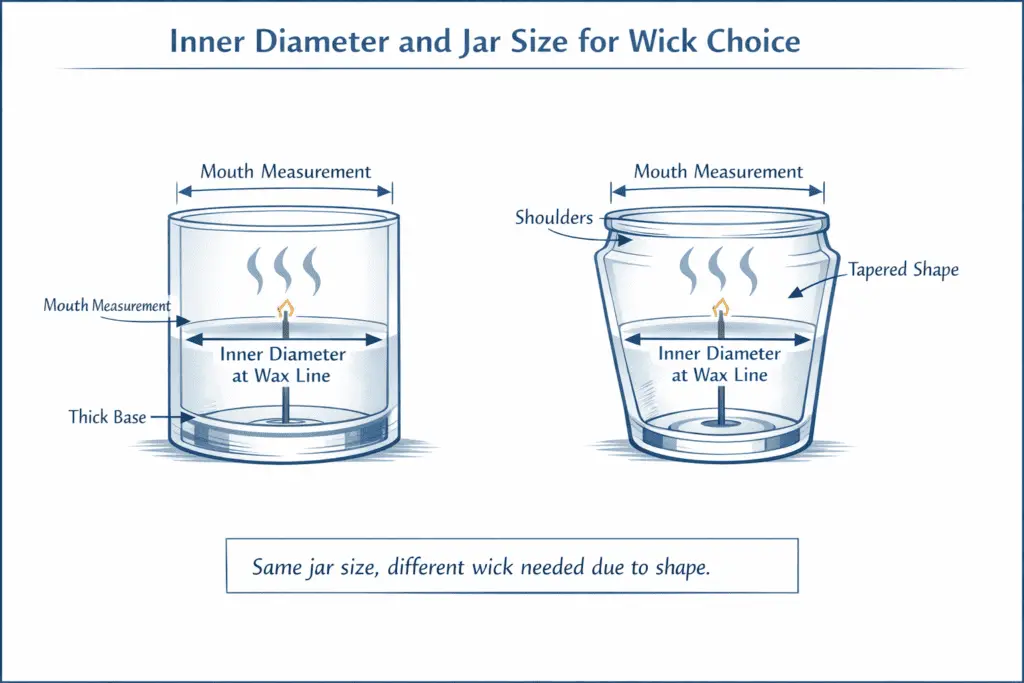
Inner diameter (ID) is the width inside the container where the wax actually sits. Shoulders, taper, and thick bases change how heat moves, so the same listed jar size can need a different wick. Use this page to lock the container lane first, then choose the wick inside that lane.
For the actual wick decision, use How to Choose the Best Wick for Candle Making first, then How to Properly Size Your Candle Wick for the size step inside your chosen container lane.
Which candle container should you choose first?
Choose straight-sided glass first if you want the clearest wick feedback, lacquer-lined tins first if you ship often, and ceramic after you already have a stable baseline in a simpler vessel.
Pick the vessel lane first, then move to wick sizing, container prep, and crack prevention on the pages that cover those jobs in full.
- Pick straight-sided glass when you want easy diameter measurement and visible burn feedback.
- Pick lacquer-lined tins when low breakage and lighter parcels matter more than seeing every burn cue.
- Pick ceramic when presentation matters and you can accept more supplier-to-supplier variation.
If you want a narrower beginner-only shortlist, see Best Candle Containers for Beginners.