Reuse leftover candle wax only when it is mostly clean, identifiable, and practical for a simple, low-risk project.
Leftover wax can still be useful, but only after a quick check of its condition, wax type, scent, and amount. Most people get better results when they sort scraps before melting anything, especially when the wax came from different candles. A small, clean batch may suit a simple reuse project, while dirty or mystery wax usually belongs in a labeled stash or the discard pile.
Start with the reuse-or-toss decision, then move into wax compatibility.
Should You Reuse or Toss Leftover Candle Wax?
Reuse leftover candle wax only when it is mostly clean, identifiable, and still practical for a simple, low-risk project.
Leftover wax is worth saving when you can tell what it is, the scent still seems usable, and the batch is clean enough for the project you have in mind. Start by sorting it with Candle Wax Types in mind, then decide whether it is better suited to a small repour, a wax melt, or simple storage for later. If the wax is badly contaminated, smells stale or burnt, or sits in a container you do not trust, move it out of the reuse pile and use How to Dispose of Candle Wax as the fallback. If the wax passes the basic check but seems too mixed or too small for a neat repour, How to Make Wax Melts from Old Candles is usually the easier next step.
Use this quick decision check before you melt anything.
| What you see | Best call | Why |
| Clean wax, known type, decent scent | Reuse now | It has the best chance of behaving predictably |
| Clean but small, mixed, or not needed yet | Save for later | It may work better once sorted into a bigger batch |
| Heavy soot, dirt, mystery mix, stale smell, unsafe vessel | Toss | The cleanup and uncertainty usually outweigh the result |
A repour asks the most from the wax, because it needs cleaner material, a more predictable base, and a better scent outcome. Wax melts are more forgiving, especially when the batch is small or not perfectly matched. Saving scraps for later makes sense when the wax passes the basic threshold but still needs sorting by type or scent before it becomes useful.
Check Whether the Wax Is Clean Enough to Save
Not all dirty wax is equal, but heavily contaminated wax is usually not worth forcing into reuse.
Minor surface soot, loose wick bits, and a little ash can sometimes be managed. Dirt, glitter, embedded debris, large blackened areas, or wax that looks scorched all push the batch toward the discard path. A simple salvage order works best: trim the dirty top layer, remove wick tabs or hardware, remelt only the cleaner portion, and strain only when the batch is otherwise worth keeping.
Use a stricter standard for a new candle than for a lower-stakes melt. Wax that is acceptable for a casual melt can still be too speckled, cloudy, or burnt-looking for a repoured candle you want to burn cleanly. If reused wax keeps looking gray, gritty, or oddly dull after cleanup, that is usually a sign the contamination runs deeper than the surface, and the batch should stop there.
Sort Wax by Type Before You Mix Anything
Sort leftover wax by type before mixing, because same-family scraps are the safest place to start and unknown blends should stay separate.
The easiest reuse wins come from keeping like with like: soy with soy, paraffin with paraffin, beeswax with beeswax, and coconut-based scraps with their own family when you know them. Mixed but known waxes can still suit low-stakes reuse, but unknown blends should stay separate until you know whether the result needs to look polished or simply stay usable. If you do not know the wax type, check the original label, product page, order history, or brand notes before guessing from appearance alone, and treat unknown-brand scraps as low-confidence material.
A quick compatibility view helps.
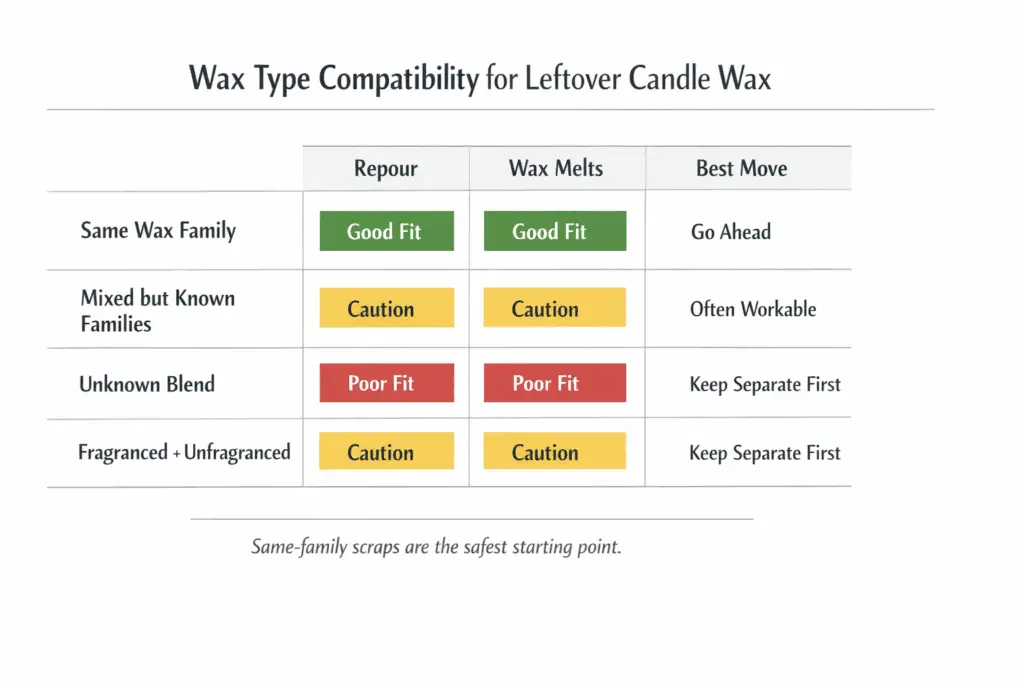
| Wax situation | Repour | Wax melts | Best move |
| Same wax family | Good fit | Good fit | Reuse with confidence |
| Mixed but known families | Caution | Often workable | Keep expectations modest |
| Unknown blend | Poor fit | Sometimes workable | Keep separate first |
| Fragranced plus unfragranced | Caution | Often workable | Test scent outcome before combining |
Compatibility matters because different waxes do not always remelt, hold fragrance, or reset the same way. Even when two scraps melt together, they may still cool, smell, or burn differently enough to ruin a clean repour. The smarter rule is not, “Can these melt together?” It is, “Will these behave well enough for the project I want?”
Keep compatible scents together too. Similar scent families usually combine more cleanly than sharp floral-and-bakery or woody-and-sweet mixes, and scraps that already smell weak, muddy, or stale rarely improve after reheating.
Remelt Leftover Wax Safely
Remelt leftover wax gently with indirect heat, a suitable container, and enough patience to avoid scorching the wax or overheating the vessel.
A careful remelt starts before the wax goes near heat. Sort by wax family, remove obvious debris, and, if needed, get wax out of candle jars before you reheat anything in a safer vessel. If the current container feels decorative, thin, chipped, cracked, or simply uncertain, transfer the wax before reheating instead of gambling on it. When the batch is too mixed, too dirty, or too questionable to handle with confidence, a simple melt project or discard decision is usually smarter than forcing a clean repour.
Use the safest method that fits the wax you have.
| Method | Best for | What it needs | Main caution |
| Double boiler or heat-over-water setup | Most leftover wax batches | A heat-safe pouring vessel and steady low heat | Slow is safer than rushing |
| Microwave after transferring to a suitable container | Small batches only | A microwave-safe vessel and short intervals | Easy to overheat if you push it |
| Reheating in the original jar | Only when the jar is clearly fit for heat | A stable, undamaged candle container | Skip if the container is in doubt |
A double-boiler setup is the safer default because it warms the wax gradually and gives you more control. A microwave can work for small amounts, but it needs short bursts, close watching, and a proper container from the start. Reheating directly in the original jar only makes sense when you are confident the container was made for candle heat and is still in good condition.
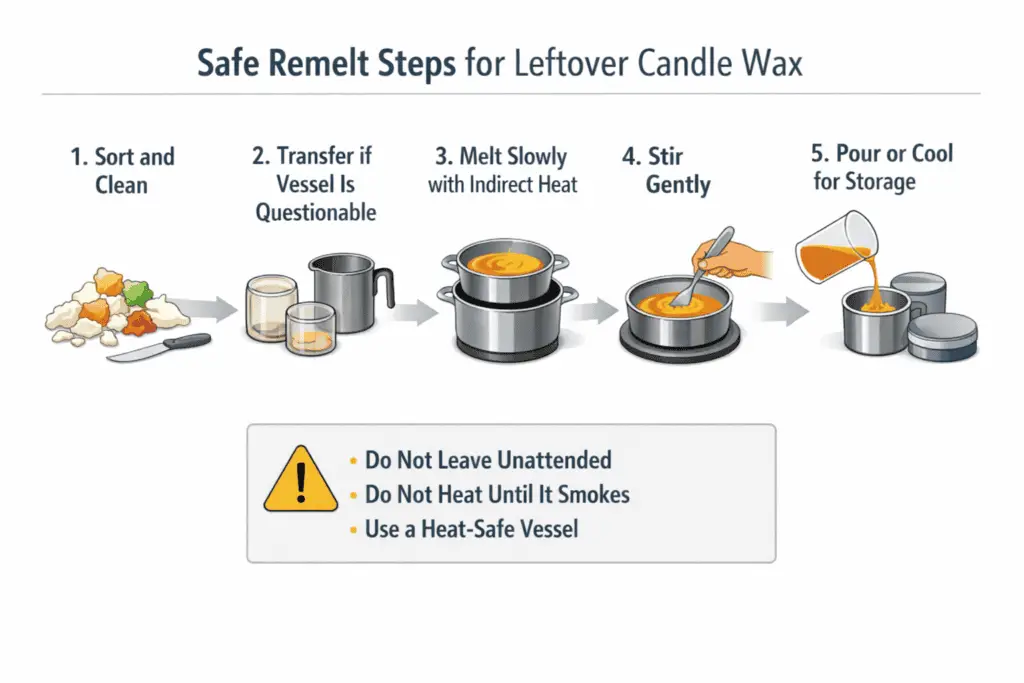
A simple remelt order keeps mistakes down:
- Sort the wax and remove wick tabs, spent wicks, labels, or loose debris.
- Transfer out of any vessel that looks questionable.
- Melt slowly until the wax is fluid, not aggressively hot.
- Stir gently only as needed to even out the melt.
- Pour into the chosen mold or container, or let it cool for storage.
Keep the work area simple and stable. Do not leave wax unattended, do not heat it until it smokes, and do not treat a decorative cup or random household glass as automatically safe just because it already holds wax. A slow melt protects both scent and finish better than forcing speed.
What to Do if the Wax Smells Burnt or Looks Off
A burnt smell usually means the wax got hotter than it needed to, or the batch already carried soot and fragrance damage before reheating.
If the wax starts smelling harsh, darkening fast, or looking unusually thin in the pot, stop adding more heat. Let it settle, then decide whether it still belongs in a lower-stakes project. A lightly overheated batch may still suit How to Make Wax Melts from Old Candles, but a strongly scorched or dirty batch is usually no longer worth a clean repour. At that point, How to Dispose of Candle Wax becomes the better answer than trying to rescue a bad melt.
Choose the Best Reuse Format for the Wax You Have
The best reuse format depends on how much wax you have, how clean it is, and whether the wax type and scent still make sense together.
Start with a simple match between condition and outcome instead of trying to force every scrap into a new candle. Clean same-family wax can become a mini repour or tealight, mixed but usable scraps often work better as wax melts, rougher clean leftovers can suit fire starters or wax seals, and scent-only scraps may fit a small sachet or another simple household use. When the wax is dirty, stale, or uncertain enough that no project sounds sensible, disposal is the cleaner finish.
These practical reuse ideas fit most clean leftover wax:
- Mini repour or tealight for a clean, same-family batch with enough volume.
- Wax melts for mixed scents or small scraps that do not need a polished finish.
- Fire starters for rough but still usable wax that does not need to burn like a candle.
- Wax sachets or wax seals for tiny leftovers where scent or shape matters more than burn quality.
- Simple household reuse only when the wax is clean and the project is low-stakes.
This quick chooser makes the next step clearer.
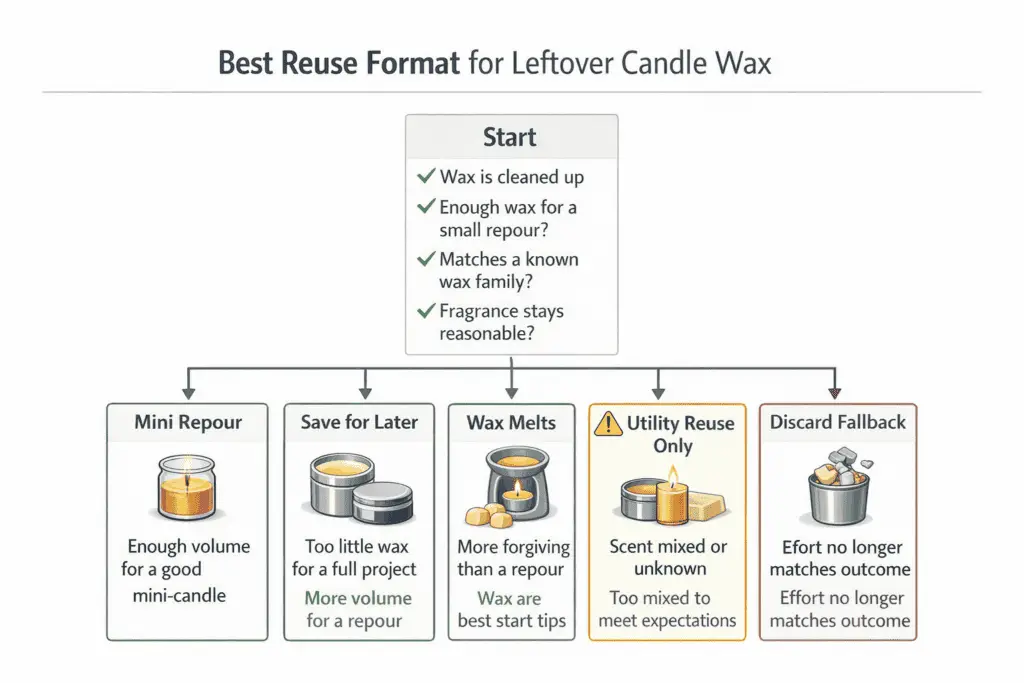
| Wax condition | Best reuse format | Why it fits |
| Clean, enough volume, same wax family, scent still good | Mini repour | Most likely to look and perform acceptably |
| Clean but small amount | Save for later or combine with like scraps | Too little may not justify a full project yet |
| Clean but mixed scents or uncertain blend | Wax melts | More forgiving than a repoured candle |
| Unscented or nearly scentless chunks | Utility reuse only or save by type | Better as simple filler or later sorted use |
| Dirty, stale, or heavily mixed mystery wax | Discard fallback | Effort and outcome no longer match |
Use the project decision before you reheat anything. If you only have a little wax from one candle, saving it for a later same-type batch often makes more sense than forcing a tiny pour. If you have a clean and usable amount, a mini repour can work. If the batch comes from several jars, especially with mixed scents, wax melts are usually the more forgiving direction.
Match the Container or Mold to the Reuse Project
Choose the mold or container based on the end use, not just what happens to be nearby.
Repours work best in small, heat-safe jars or tins where the wax will stay and burn in place. Wax melts are easier in silicone molds because release tends to be simpler once the wax cools. Small cups can suit tiny portions when the wax is staying in the vessel, while rigid or decorative containers are weaker choices when you need easy release or when the material itself is uncertain.
| Reuse format | Best vessel choice | Why |
| Mini repour | Small heat-safe jar or tin | Stable for an in-place burn |
| Wax melts | Silicone mold | Easier release after cooling |
| Tiny test portion | Tealight cup or small tin | Good for small controlled amounts |
| Decorative container of unknown tolerance | Avoid for reheating | Looks do not prove heat safety |
This is where many small leftovers go wrong. People focus on the wax and forget the vessel, then end up with sticking, cracking, awkward release, or a container they never should have reheated. Pick the project first, then pick the vessel that matches it. When the batch still feels uncertain, use the quick chooser above to narrow the route before you melt anything.
What if You Only Have Tiny Leftovers From Several Jars?
Tiny leftovers are usually better pooled by wax family and scent direction than forced into a single polished project right away.
A few clean, same-scent scraps may be worth saving until the batch becomes useful. A few mixed scraps usually lean toward How to Make Wax Melts from Old Candles because the format asks less from the wax and the scent blend does not need to feel as refined. But when the leftovers are dirty, stale, or so mixed that you cannot describe what they are anymore, How to Dispose of Candle Wax is often the more practical choice.
Store and Label Wax Scraps for Later
Store leftover wax only after it has already passed the reuse test, and label it by wax family, scent family, and condition so later remelting stays easy.
A simple storage system works better than a big random stash.
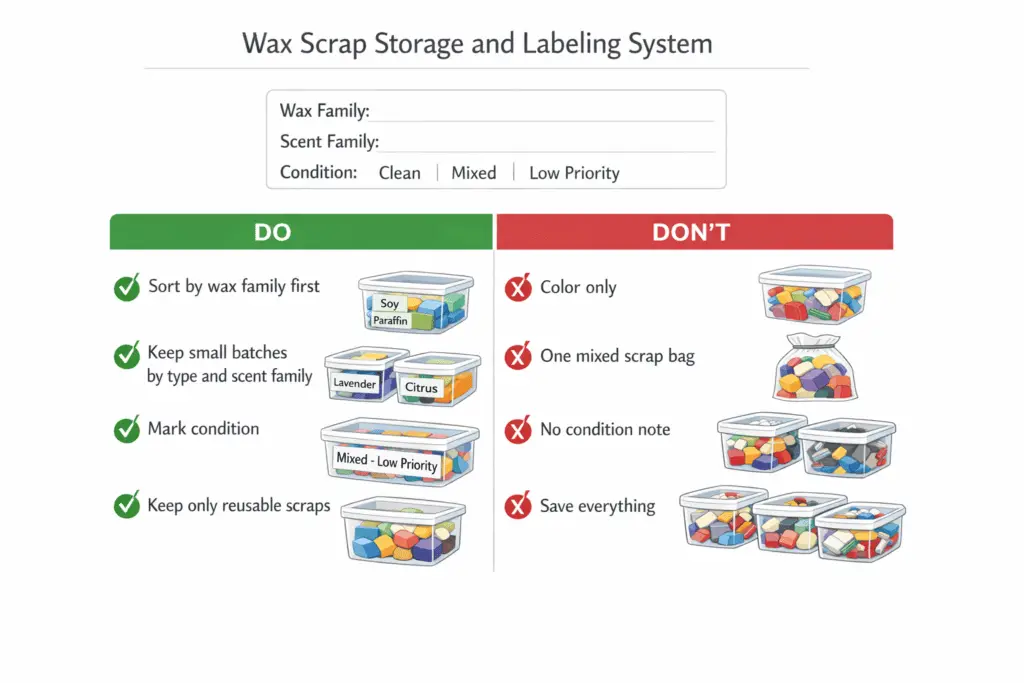
| Storage habit | Better choice | Why it helps |
| Sort by color only | Sort by wax family first | Color says little about how the wax will behave |
| One mixed scrap bag | Small batches by type and scent family | Future reuse stays much easier |
| No condition note | Mark clean, mixed, or low-priority | You avoid treating every batch like premium wax |
| Save everything | Keep only reusable scraps | Waste is lower when the stash stays usable |
A saved scrap should still be a useful scrap, not a future mystery. Bag, cup, jar, or bin systems can all work as long as the label tells you what the batch is, how clean it is, and whether it is worth keeping. If a stash turns into crumbs you cannot identify, weak leftovers that no longer smell good, or dirty bits that keep getting downgraded, clear it out instead of storing clutter.
Quick FAQ About Leftover Candle Wax
Most leftover candle wax is worth keeping only when it is clean, known, and still suited to a simple reuse project.
These quick answers cover the most common follow-up decisions people face after sorting scraps.
Can you reuse dirty candle wax?
Only lightly dirty wax is sometimes worth saving after you trim the top and remove debris. Heavily sooted, stale, or contaminated wax is usually not worth the cleanup.
Can you mix different candle wax types?
You can sometimes mix known wax families for low-stakes reuse, but unknown blends are better kept separate. A neat repour needs more predictability than a casual melt.
What is the easiest way to use tiny leftovers?
Tiny leftovers are usually easiest to save by wax family or turn into simple wax melts once the batch becomes useful. Forcing a polished candle from a few scraps rarely pays off.
Should you reuse wax that smells burnt?
Usually not for a clean repour. A lightly overheated batch may still suit a low-stakes project, but strongly burnt wax is usually better discarded.