
Too much fragrance in soy wax can cause sweating, poor binding, weak burn performance, and unstable flames because soy wax can only hold a limited amount of oil.
Soy wax can only bind a limited amount of fragrance oil before performance starts to break down. When that limit is exceeded, the candle may sweat, burn unevenly, clog the wick, or throw scent poorly even when it smells strong in the jar. The issue is not just cosmetic, because loose oil can change how the melt pool forms and how the flame behaves. Spotting overload early makes it easier to decide whether to rework the batch, test it again, or stop using it.
Signs You Added Too Much Fragrance to Soy Wax
Too much fragrance in soy wax usually shows up as surface oil, soft tops, weak or unstable flames, and scent that seems strong cold but disappointing when burned. Freshly poured candles can look acceptable at first, then reveal overload after cooling or during the first full burn.
Common signs include:
- Oily beads or sweating on the surface
- A top that stays unusually soft, tacky, or damp-looking
- Wet spots that worsen instead of settling
- A wick that struggles to stay lit or drowns early
- Sputtering, mushrooming, or excess soot
- Strong cold throw with weak hot throw
- A melt pool that looks greasy or behaves inconsistently
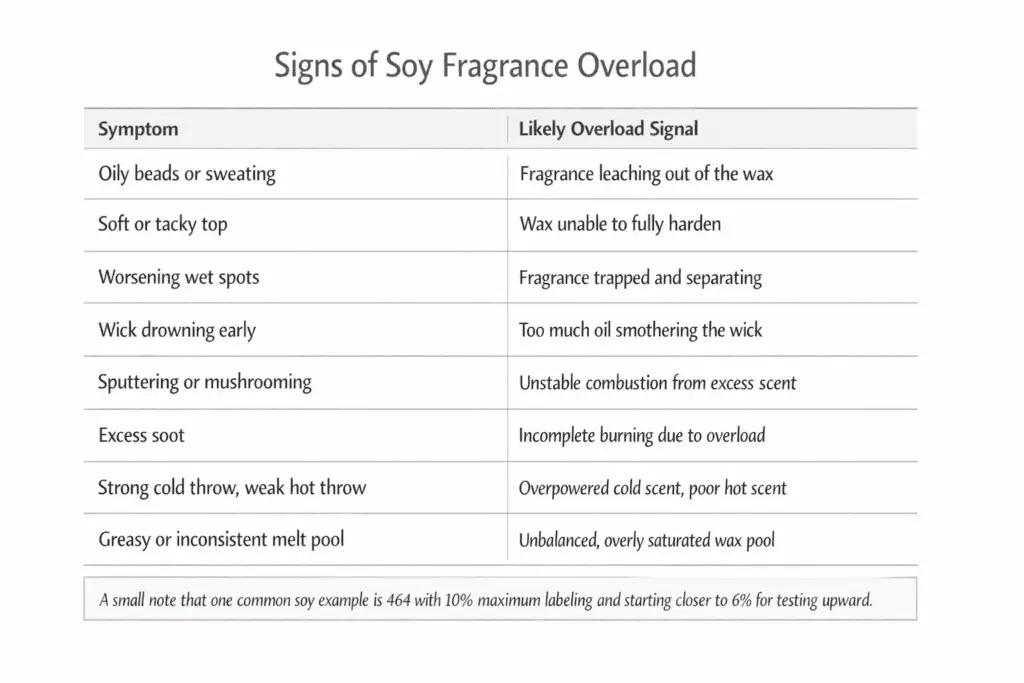
Fragrance overload should be near the top of your troubleshooting list because soy reacts differently from other candle wax types, and loose oil can imitate wick issues, cure problems, and poor jar adhesion at the same time. Many beginners focus on pour temperature, but excess oil can change both the look of the wax and the way the candle burns.
Before deciding the batch only needs more time, compare those symptoms with normal soy candle cure time because curing can improve balance slightly, but it will not rescue a formula that already exceeds what the wax can hold. If the flame steadies after a wick change but the surface still sweats or the melt pool still looks greasy, overload is usually a better explanation than a simple wick mismatch or a too-cool fragrance-add temperature.
A practical check is to review the formula, compare the fragrance percentage to the supplier recommendation, and confirm that the batch’s fragrance load actually falls inside the wax’s working range. Then burn test one fully cured candle without changing any other variable. If several jars from the same batch show sweating, clogging, or erratic flames, the load is usually the real problem.
Why Soy Wax Stops Holding More Fragrance
Soy wax stops holding more fragrance when the amount or chemistry of the oil pushes past what the wax structure can bind evenly. Once that limit is crossed, some oil stays loosely suspended instead of integrating cleanly into the candle.
Binding is not just about adding more scent for a stronger candle. It depends on the wax formula, the fragrance itself, the mixing temperature, and how the candle cools and cures. Soy is softer than many harder blends, so extra oil can disrupt the wax structure instead of improving performance. That is why overloaded candles may smell richer in the jar but behave worse once lit.
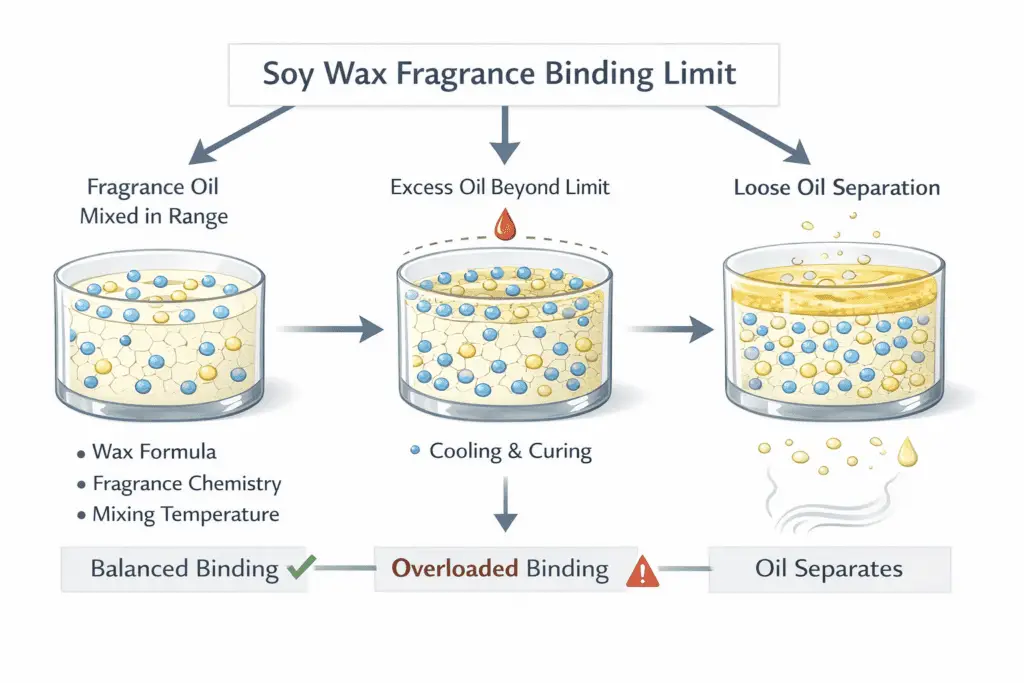
Container size alone does not determine a safe load. The wax supplier’s recommended range and the fragrance supplier’s notes matter more than a generic number. Some soy products even publish a higher maximum load on paper but still perform best when testing starts lower. A common example is 464 soy wax, which is often listed with a 10% maximum fragrance load even though suppliers may suggest starting closer to 6% and testing upward.
It also helps to separate binding from flashpoint, because flashpoint is mainly a handling reference and does not prove that an oil will bind well in soy. That is one reason wax type matters so much. Soy, paraffin, coconut, and blended waxes can react very differently to the same fragrance percentage.
The best way to understand the limit is to test small batches and change only one variable at a time. A well-balanced candle is not the one with the most oil in it, but the one that keeps a steady flame, forms a clean melt pool, and throws scent without sweating or clogging.
What Excess Fragrance Does to Burn, Wick, and Scent Throw
Excess fragrance can make a soy candle burn dirtier, feed the wick unevenly, and weaken hot throw even when the candle smells strong before lighting.
The main problem is that the wick is no longer pulling a balanced mix of wax and fragrance. When too much oil is present, the flame may turn lazy, sputter, mushroom, or drown because the fuel source is less stable. That can leave a greasy melt pool, dark residue on the jar, and a scent experience that feels heavier at first but weaker across the room.
In practice, overload often changes all three performance areas at once:
- Burn quality drops because the flame struggles to stay consistent
- Wick behavior gets worse because excess oil can clog or overfeed it
- Scent throw becomes less reliable because clean evaporation matters more than raw fragrance percentage
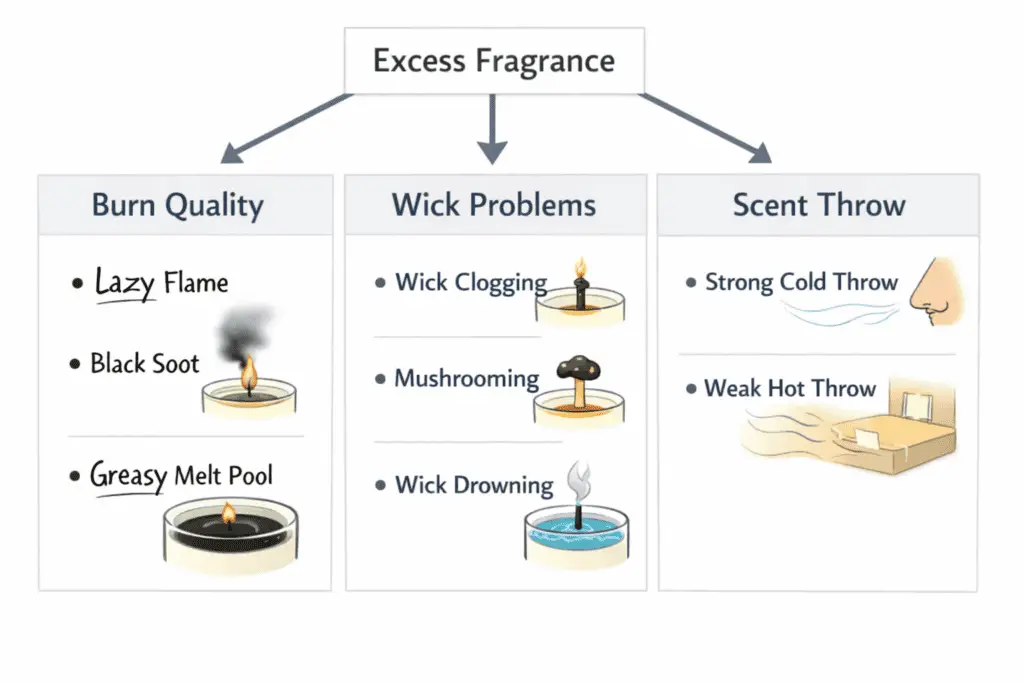
A clean-burning candle usually throws scent more evenly than an overloaded one. Good performance comes from balance, not from pushing the highest possible fragrance percentage into the wax.
How to Fix a Batch With Too Much Fragrance
The safest fix is to stop burning the batch as-is, then either rebatch it with more plain wax to lower the load or discard it if the formula is no longer trustworthy.
Start by checking your notes so you know the wax type, the fragrance oil used, and the percentage added. If you can still calculate the original batch with a candle batch calculator or your own worksheet, a slight overage can often be corrected by remelting and diluting with unscented compatible wax before repouring. If the amount is unknown, the jars are sweating heavily, or the burn was already unsafe, it is better not to keep testing random fixes.
A simple recovery path looks like this:
- Stop burning or gifting the overloaded candles.
- Recalculate the true fragrance percentage from the original batch.
- Remelt and add enough plain wax to bring the load back into a normal test range.
- Repour, cure fully, and run a fresh burn test with the same wick.
- Discard the batch if separation, heavy smoking, or repeated wick failure continues.
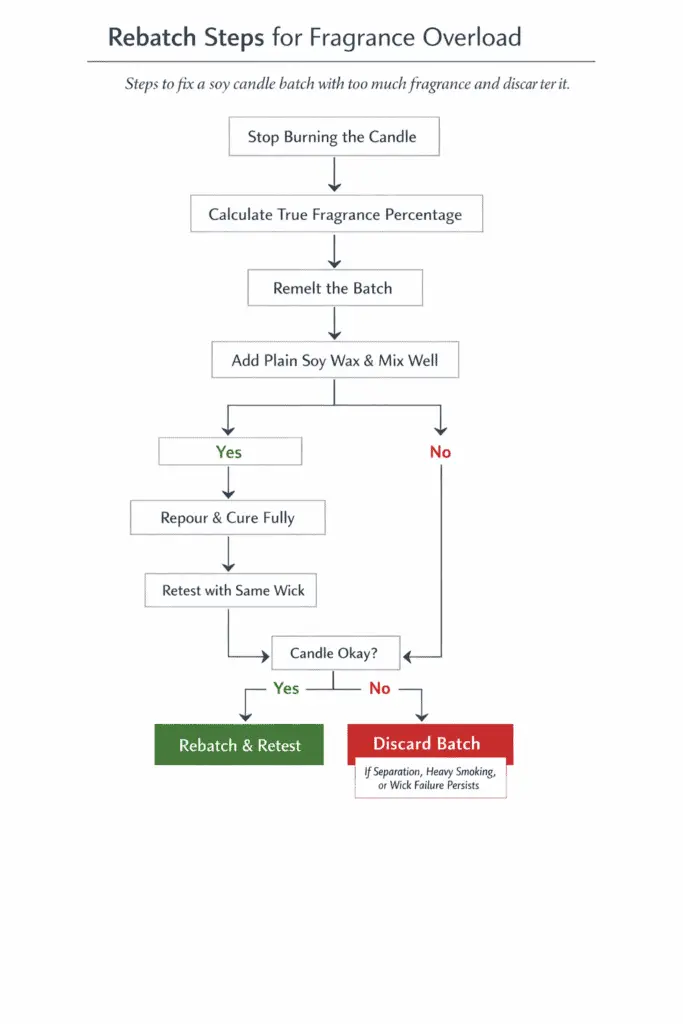
Do not try to solve fragrance overload by moving to a much larger wick first. That usually masks the formula problem for a short time and can create a hotter, dirtier burn.
How Much Fragrance Soy Wax Can Safely Hold
Most soy waxes perform best within the fragrance range recommended by the supplier, and pushing beyond that range usually hurts burn quality before it improves scent.
There is no single percentage that works for every soy wax because formulas differ in softness, additives, and oil compatibility. Some soy blends tolerate more oil than others, but safe performance still depends on whether the candle burns cleanly, binds well, and throws scent consistently after curing.
A practical way to judge the batch is to calculate the percentage, compare it with the supplier’s working range, and then confirm it with a fragrance load calculator and your own burn tests. The real target is not the highest number on paper but the load that gives stable results in your specific wax, jar, wick, and fragrance combination.
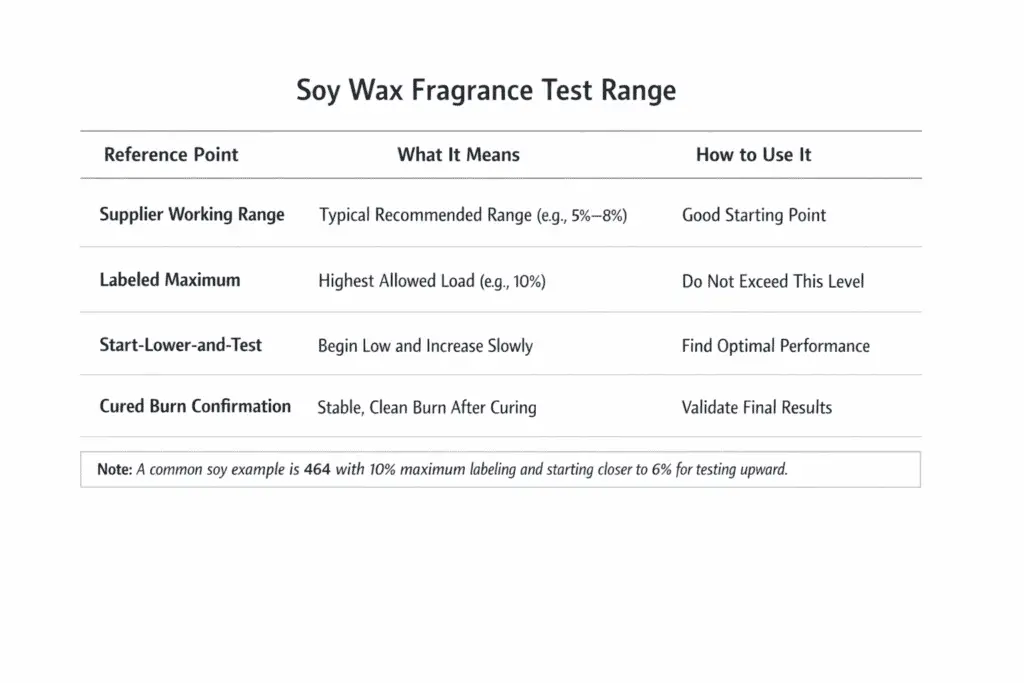
Methods note: Supplier load numbers are working references, not universal performance guarantees. For example, one common soy reference point is 464 wax, which is often published with a 10% maximum fragrance load while suppliers may still suggest starting closer to 6% and testing upward. Use the wax maker’s tested range and your own cured burn results to confirm the best-performing load.
For most batches, a moderate load that stays inside the tested range is safer than trying to chase maximum scent by default. When the flame stays steady, the melt pool forms evenly, and the hot throw carries well, you are usually closer to the real sweet spot.
How to Prevent Fragrance Overload Next Time
The best way to prevent fragrance overload is to measure carefully, stay within the wax maker’s tested range, and change only one variable at a time during testing.
Small process habits make the biggest difference. Weigh both wax and fragrance on a scale instead of estimating by volume, keep notes on each batch, and avoid assuming a stronger fragrance always needs a higher percentage. It also helps to test new oils in small pours first, because one fragrance can behave very differently from another even in the same soy wax.
A simple troubleshooting checklist should include:
- Wax type
- Fragrance percentage
- Mixing temperature
- Pour temperature
- Cure time
- Wick size
- Burn test results
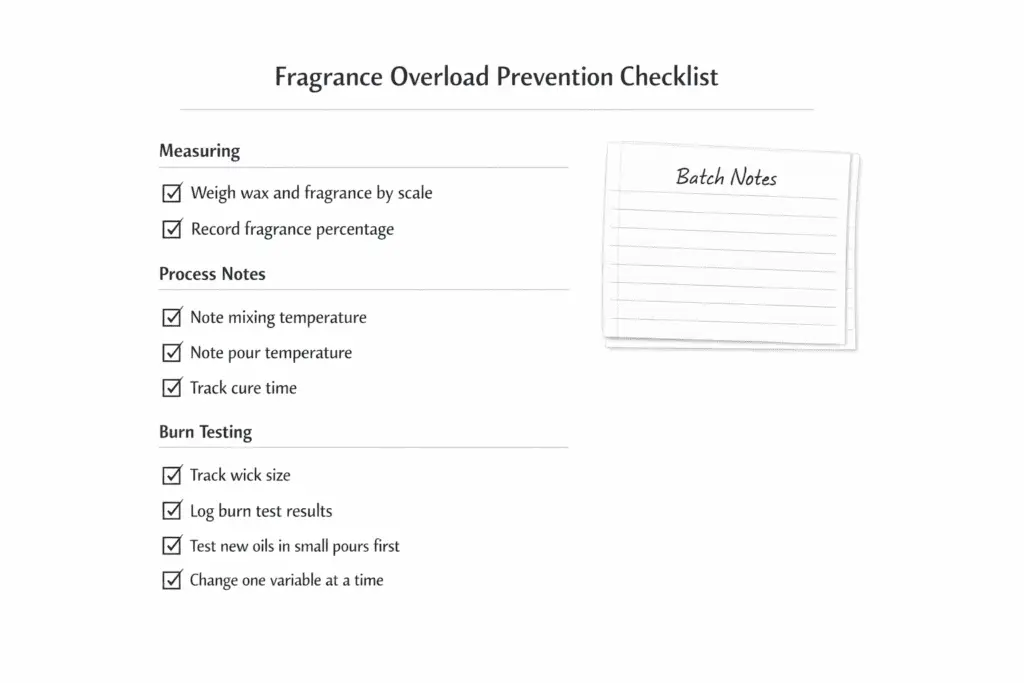
Keeping track of those details helps you catch mistakes before they repeat across several jars. One of the most useful controls is the temperature at which you add fragrance to soy wax, because adding oil too cool can affect binding, while adding it too hot can make your process less consistent from batch to batch. If that variable keeps causing problems, compare your process with broader fragrance-add temperature windows by wax before you raise the percentage again.
The goal is repeatability, not guesswork. When each batch is measured, logged, cured, and tested the same way, it becomes much easier to spot the real limit before excess fragrance turns into a wasted pour.
FAQ About Too Much Fragrance in Soy Wax
These quick answers cover the most common follow-up questions about fragrance overload in soy wax without replacing full batch testing.
Can extra cure time fix too much fragrance in soy wax?
No. Cure time can improve balance slightly, but it will not make an overloaded soy formula bind oil that already separated from the wax.
Can too much fragrance make a candle smell strong cold but weak hot?
Yes. Overloaded candles often smell strong in the jar but throw scent poorly when burned because the fuel mix is less stable.
Should you fix fragrance overload by using a larger wick?
Usually no. A larger wick can hide the formula problem for a short time, but it can also create a hotter, dirtier, less controlled burn.