

Candle mold types are the main families of molds used to shape candles, and on this page they are grouped by material, construction, and candle form factor. The main types include silicone, metal, polycarbonate, plastic clamshells, votive, tealight, pillar, taper, novelty or figurine, lock-and-key seam, textured pattern, and specialty molds.
This page classifies the main mold families and their overview-level trade-offs, not full buyer guidance, troubleshooting workflows, or from-scratch mold-making methods.
Choosing the right mold on this page means choosing the mold family that fits the shape, finish, production speed, reuse, and project needs of the candle you want to make. It does not mean one universal best mold or a full troubleshooting-led buying decision. Beginners often start with simple silicone or metal molds, then add polycarbonate, clamshell, and novelty designs as their product lines change. Each family has trade-offs in detail, durability, cost, and release, so this guide compares the main types at overview depth and routes deeper setup, troubleshooting, and technique questions to dedicated pages.
For the broader layout of mold materials, shapes, and related mold questions, see the candle molds and shapes overview.
Candle Mold Types at a Glance
The main candle mold types are silicone, metal, polycarbonate, clamshell, votive, tealight, pillar, taper, novelty, seam, textured, and specialty food-grade molds.
On this page, those types are grouped by material family such as silicone, metal, and polycarbonate, by construction style such as clamshell or seam molds, and by candle form factor such as votive, tealight, pillar, and taper. Food-grade claims are a safety boundary, not a primary mold-performance family.
Some molds fit more than one group at the same time. A pillar mold can also be metal or silicone, and a textured mold can also be a seam mold, so the groupings on this page work as a simple classification layer rather than one flat list.
| Mold type | Best for | Main trade-off | Finish | Reuse | Skill level |
|---|---|---|---|---|---|
| Silicone | Figurines, undercuts, textured candles | Slower cooling and more matte finish | Detailed, often softer-looking | High with gentle care | Beginner to advanced |
| Metal | Smooth pillars, votives, repeat production | Less forgiving with undercuts and seams | Very smooth and glossy | High | Beginner to intermediate |
| Polycarbonate | Polished pillars and clear-wall quality control | Can scratch and does not flex | Smooth and glossy | Moderate to high | Intermediate |
| Plastic clamshell | Wax melts with built-in packaging | Limited reuse and heat tolerance | Packaging-first rather than premium finish | Low | Beginner |
| Votive / tealight | Testing, samplers, low-wax batches | Small format is sensitive to wick choice | Clean and simple | Varies by mold or cup | Beginner |
| Pillar / taper | Classic freestanding candles | Needs straighter setup and cleaner demold | Ranges from smooth to decorative | High | Beginner to intermediate |
| Novelty / seam / textured | Sculptural or specialty candles | More setup, venting, or cleanup | High visual impact | Varies | Intermediate to advanced |
- Silicone molds: Best for detailed, textured, novelty, and figurine candles. Easy to demold, slower to cool, and ideal when detail matters more than production speed.
- Metal molds: Best for smooth pillars, votives, and repeat production. They cool quickly, hold shape well, and usually give the glossiest finish.
- Polycarbonate molds: Best when you want a rigid mold with clear walls so you can monitor bubbles, wick alignment, and pull-away during cooling.
- Plastic clamshell molds: Best for wax melts, not freestanding candles. They are cheap, fast, and packaging-friendly, but limited in reuse and heat tolerance.
- Votive and tealight molds: Best for small test batches, sampler candles, and wick testing with low wax use.
- Pillar and taper molds: Best for classic freestanding candles where shape consistency and cleaner presentation matter.
- Novelty, seam, and textured molds: Best for sculptural candles and specialty designs, but they usually require more setup, venting, and demold care.
How to Choose the Right Type of Candle Mold
The right type of candle mold means the mold family that fits the shape, finish, production speed, reuse, and project needs of the candle you want to make. On this page, right does not mean one universal best mold, a full buyer guide, or a troubleshooting-led selection process.
- Choose silicone if you want deep texture, figurines, undercuts, or limited-edition novelty shapes.
- Choose metal if you want fast cooling, repeatable production, and smooth glossy pillars or votives.
- Choose polycarbonate if you want rigid walls plus visibility during cooling, especially for polished pillars and specialty shapes.
- Choose plastic clamshells if you are pouring wax melts and want built-in packaging, not long-term reusable molds.
- Choose votive or tealight molds if you are testing waxes, fragrances, dyes, or wick combinations with low wax use.
- Choose pillar or taper molds if your goal is classic freestanding candles with consistent dimensions and cleaner shelf presentation.
- Choose novelty, seam, or textured molds only when the visual shape is the selling point and you are willing to trade some speed for setup, venting, and demold care.
For a deeper step-by-step, see choose the right mold. If you are just starting out, a short list of the best candle molds for beginners can help narrow your first purchase.
Silicone Candle Molds – What They Are, Pros, Cons & Best Uses
Silicone candle molds are flexible, heat-tolerant forms that capture fine detail and release easily, best for intricate shapes, embeds, and small-batch pours in home studios.
Within the broader family of candle molds, silicone fits the detailed end of the range. It is commonly used for figurines, textured candles, and shapes with undercuts because the walls flex away from the wax instead of forcing the candle to bend during demolding. For a broader layout of mold families and shapes, see the mold shapes overview.
Silicone usually trades some production speed and gloss for easier release and finer detail. If you need the full process after choosing this mold family, move to use silicone candle molds.
Metal Candle Molds (Aluminum/Tin) – What They Are, Finish & Speed
Metal candle molds are rigid, highly conductive forms that set wax quickly and give smooth, glossy pillars and votives when preheated and sealed correctly.
Metal sits at the production-focused end of the main mold families. Aluminum and tin are common choices for straight pillars, votives, and some tapers because they pull heat from the wax quickly and support repeatable shapes with crisp edges and a glossy finish.
Metal works best when speed, repeatability, and smooth surfaces matter more than flexibility. If the decision is specifically about material choice, see silicone vs metal molds. If rigid-mold issues start to dominate, move to the deeper page on how to prevent air bubbles in molds.
Polycarbonate Candle Molds – What They Are & When to Use Them
Polycarbonate candle molds are rigid, clear plastic molds that cool wax quickly and excel at smooth, glossy pillars and specialty shapes when you want fast production and visual quality control.
Polycarbonate sits between metal and silicone in the main mold families. It is rigid like metal but transparent, so you can watch bubbles, pull-away, and wick alignment as the candle cools. That makes it useful for polished pillars and specialty shapes where you want a smooth surface plus visibility during the pour and cooling cycle.
Its main trade-offs are scratching, reduced flexibility, and a stronger dependence on clean release technique than silicone. On this page, the key point is its place in the mold-type range: a rigid, clear option for smooth candles and visual quality checks.
Plastic Clamshell Molds (PET/PP) – What They Are & Reuse Limits
Plastic clamshell molds are thin PET or PP trays designed mainly for wax melts, giving quick, low-cost pours with built-in packaging but limited reuse and heat tolerance.
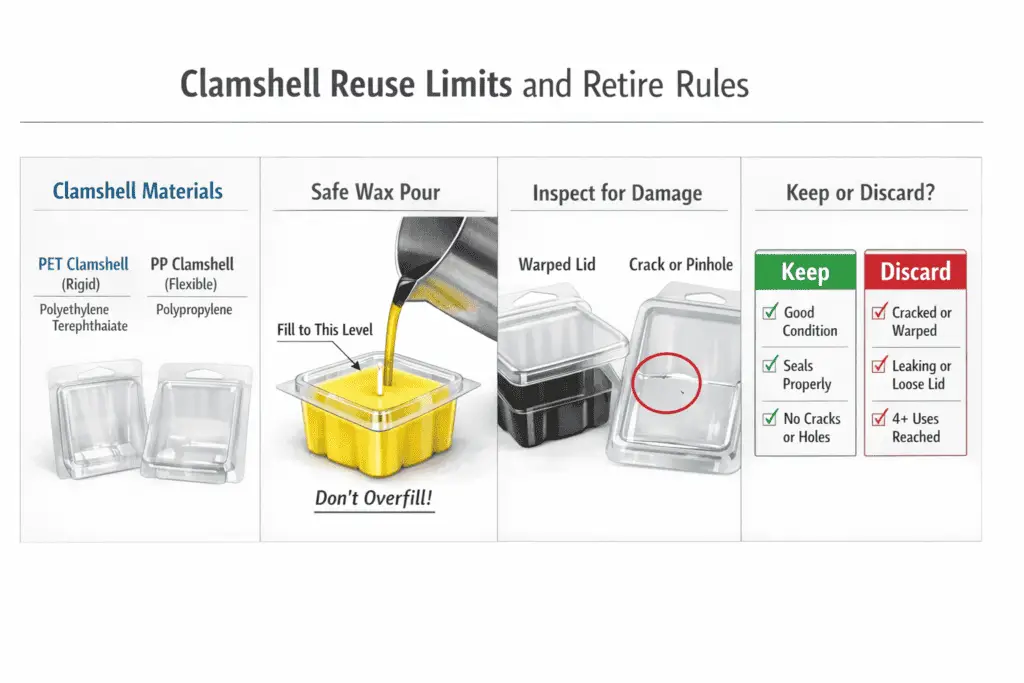
Most people meet clamshells when they pour wax melts rather than freestanding candles. These lightweight trays combine mold and package in one piece, which keeps costs low and speeds up batching for melt lines.
PET is usually clearer, while PP is often more heat tolerant. In both cases, clamshells are best treated as limited-life or single-use packaging instead of a long-term reusable mold category.
If a clamshell warps, cracks, clouds badly, or stops snapping closed cleanly, retire it from production use. That makes clamshells useful for speed and convenience, but not the best choice when reuse and long-term durability are the main goal.
Votive Candle Molds – What They Are & Where They Fit
Votive candle molds are small holder-based molds for short candles, usually cylindrical, and they fit sampling, testing, and repeatable small pours more than broad decorative work.
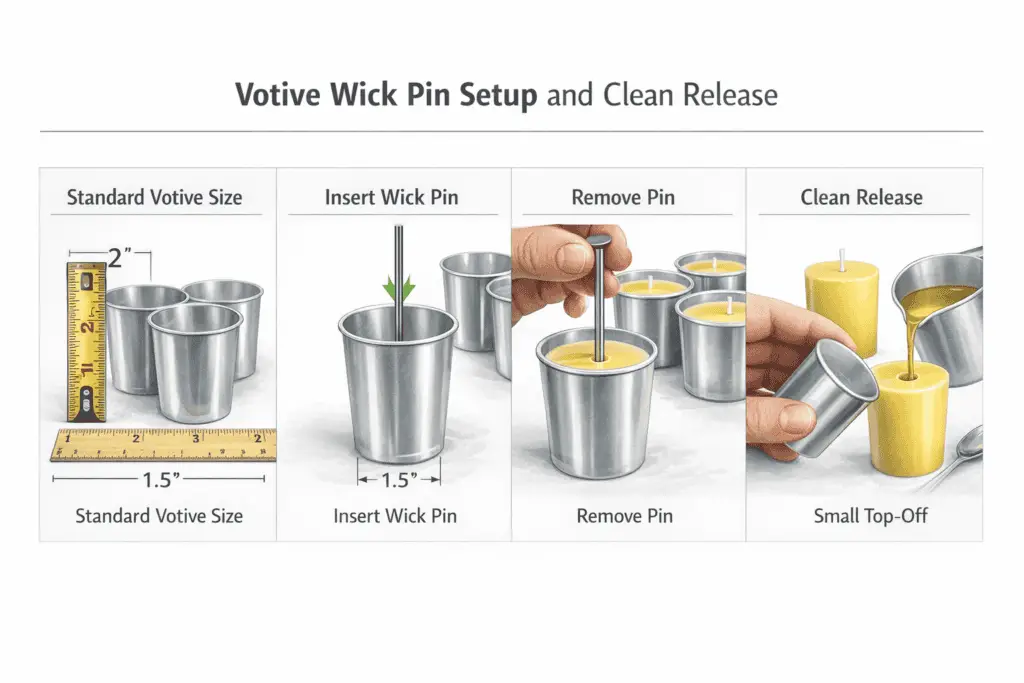
In the broader mold-type range, votive molds are a small-format category for candles that sit inside holders. They are commonly made in metal, polycarbonate, and silicone, with metal common for smooth repeat production and silicone used when more shape detail matters.
On this page, the main point is their role as a holder-based mold type for sampling, testing, and repeatable short candles rather than a full wick-setup or release guide.
Tealight Molds & Cups – What They Are & Where They Fit
Tealight molds and cups are tiny cup-based forms for very small candles, used mainly for sample packs, quick tests, and low-wax batches.
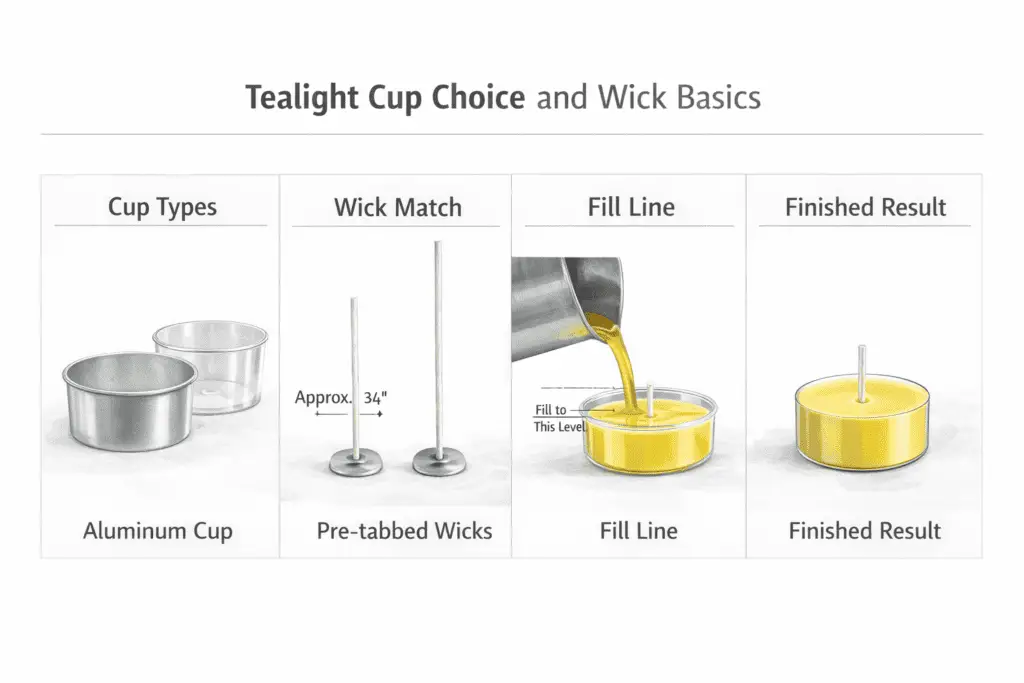
Tealights are another small-format mold family, usually made with aluminum cups, clear polycarbonate cups, or similar small inserts. Their main distinction on this page is format: a very small cup-based candle rather than a freestanding shape.
For this types page, the key distinction is size and format. Deeper wick and pouring choices belong on dedicated process pages, not here.
Pillar Candle Molds – What They Are & Material Trade-Offs
Pillar candle molds are freestanding mold types for upright candles such as cylinders and squares, available in smooth and textured designs across several materials.
Pillar molds are the classic freestanding mold category for cylinders, squares, and other upright shapes that burn without a separate container. Smooth pillars usually favor speed and polish, while textured pillars place more emphasis on surface detail and visual style.
Material choice still matters inside this form factor: metal leans toward faster cooling and gloss, while silicone leans toward flexibility and deeper surface detail. If you need the full workflow, move to the dedicated guide on how to make pillar candles.
Taper Candle Molds – What They Are & Material Trade-Offs
Taper candle molds are long, narrow freestanding molds for formal taper candles, usually made from metal, silicone, or polycarbonate.
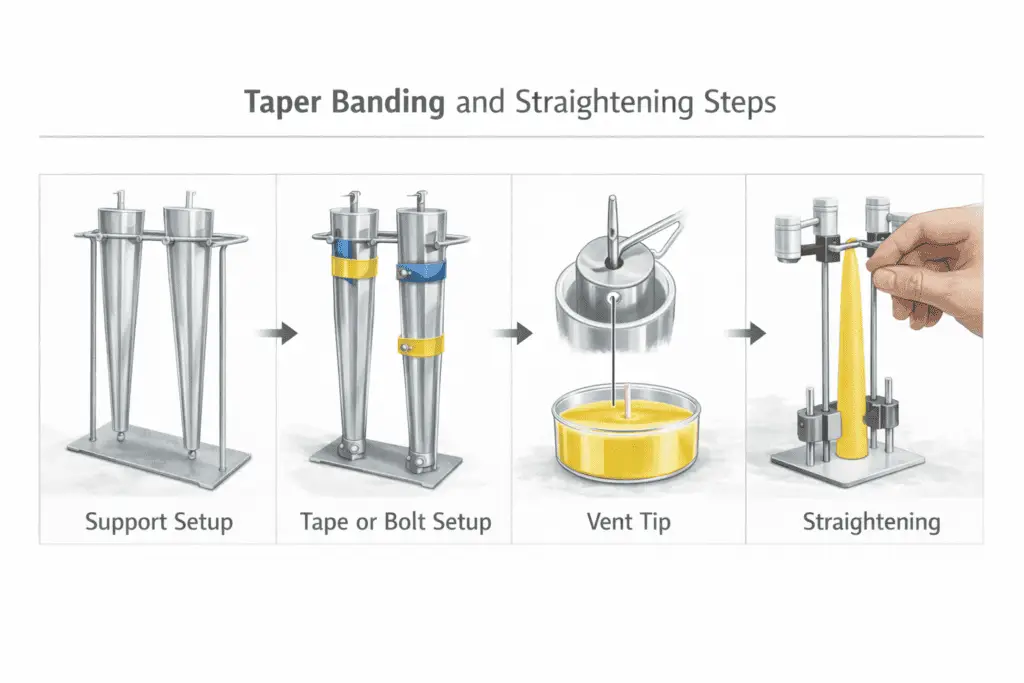
Taper molds are a freestanding form-factor family built around long, narrow candles that are more alignment-sensitive than basic pillars or votives. Metal is common for smooth formal tapers, while silicone and polycarbonate appear when the design or the cooling view calls for a different mold behavior.
On this page, the main takeaway is type fit: tapers are a long, narrow mold family where material choice shapes finish and handling. If you need the full workflow, move into the dedicated guide on how to make taper candles.
Novelty & Figurine Candle Molds – What They Are & Where They Fit
Novelty and figurine candle molds are specialty molds for sculptural candles with faces, shapes, or other decorative features, usually made from silicone.
Novelty and figurine molds sit in the specialty end of the candle mold range, where the shape itself is often the main selling point. Flexible materials dominate here because faces, folds, ears, wings, and other fine features release more cleanly when the mold walls can peel back from the wax.
That makes this family a strong fit for sculptural candles and seasonal designs. If you need deeper setup and release detail on this specialty group, move to novelty candle molds.
Two-Part Lock-and-Key Seam Molds – What They Are & Where They Fit
Two-part lock-and-key seam molds are multi-piece candle molds for shapes that cannot release cleanly from a one-piece form.
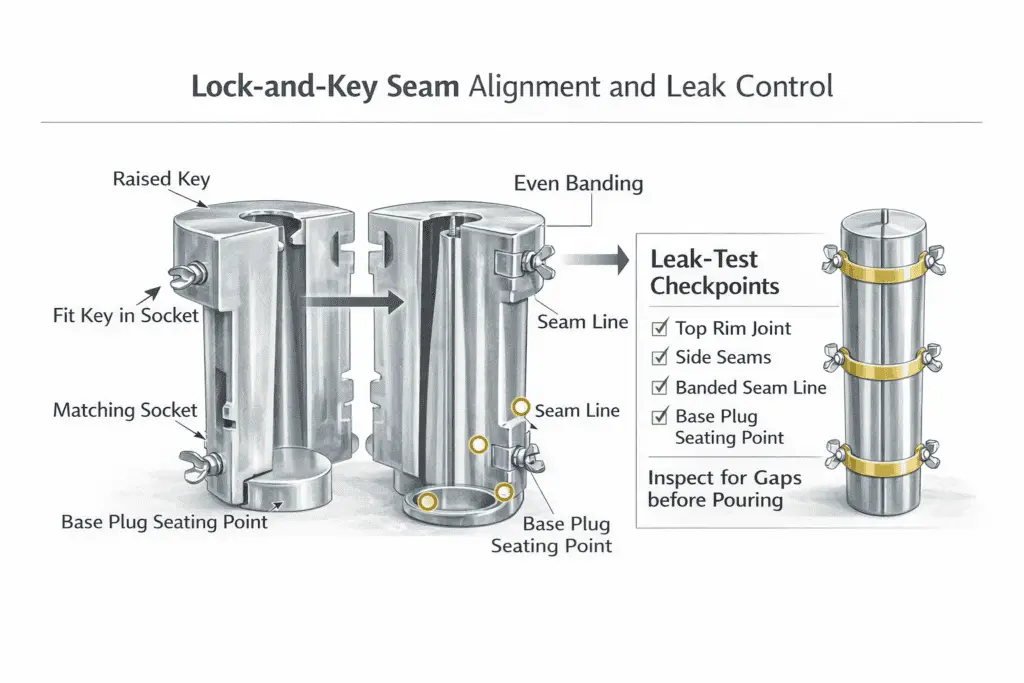
These molds are a specialty construction type used for shapes that need more than one mold piece. Their keyed edges align the parts before pouring, which makes them a specialty construction type rather than a standard everyday mold.
On this page, the important distinction is classification: lock-and-key seam molds are multi-piece, alignment-sensitive molds for complex shapes, not the default choice for simple everyday pours.
Textured Pattern Molds – What They Are & Where They Fit
Textured pattern molds are molds with carved or embossed interior surfaces that imprint visible patterns into the finished candle.
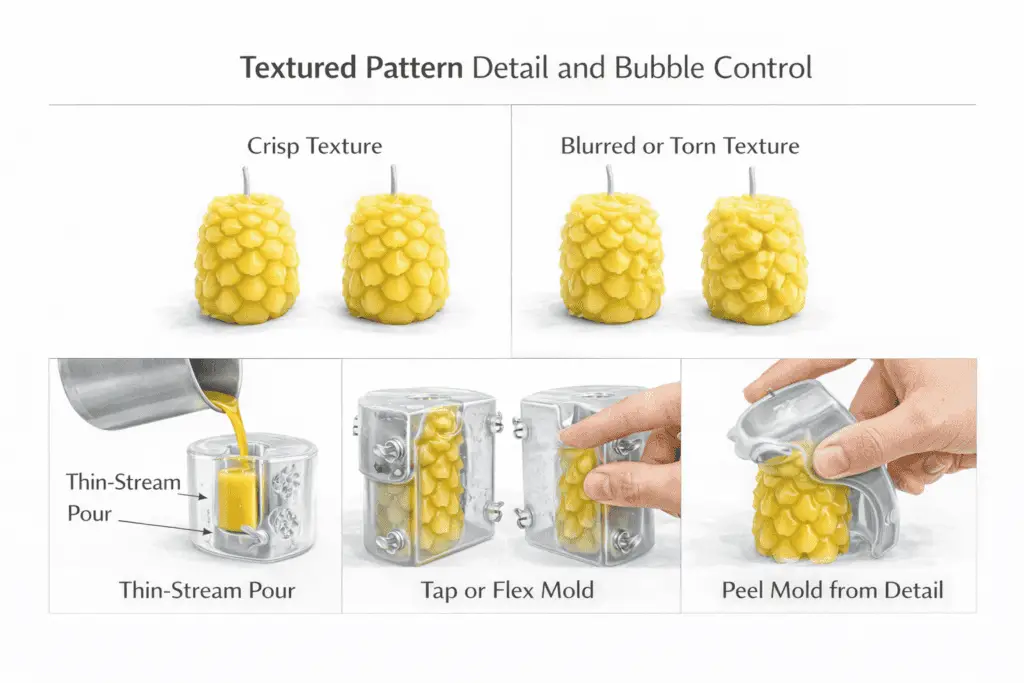
Textured molds are a specialty type where the surface pattern is part of the candle design. Honeycomb, bark, ribbed, lace, knit, and geometric finishes usually work best in flexible materials when the pattern is deep, while shallower patterns can appear in more rigid molds.
For this page, the key distinction is simple: textured molds are chosen for visible surface pattern rather than plain smooth walls. Deeper bubble and temperature control belongs on process pages, not here.
Food-Grade vs Craft-Grade Molds – Safety Boundary, Not a Primary Mold Type
Food-grade and craft-grade describe a safety and use boundary, not a primary candle mold family, so this page treats them as a clarification rather than as a separate mold-performance type.
Food-grade molds are manufactured for direct food contact, while craft-grade molds are not. For candle makers, the practical rule is to keep food and candle gear separate and to treat any mold used for candles as candle-only from that point forward.
Quick Answers About Candle Mold Types
These quick answers cover common clarification questions about beginner ease, surface finish, reuse, and fine detail.
What is the best candle mold for beginners?
For most beginners, silicone and basic metal votive or pillar molds are the easiest starting point. Silicone is forgiving for demolding, while simple metal molds help you learn clean setup and repeatable results. For a deeper beginner-first shortlist, see best candle molds for beginners.
Which candle molds give the smoothest finish?
For smooth, glossy surfaces, metal and polycarbonate usually perform best when pour temperature and cooling conditions are controlled. For a material-first choice, see silicone vs metal molds.
Are plastic clamshell molds reusable?
They can sometimes be reused for studio tests, but they are better treated as limited-life or single-use packaging for wax melts. On this page, that keeps them in the packaging-first category rather than the reusable-mold category.
Which mold is best for detailed novelty candles?
For detailed novelty candles, silicone is usually the best option because it flexes around undercuts and fine detail during demolding. For deeper setup and release detail, move to novelty candle molds.