

The best wicks for coconut and coconut-apricot candles are test-starting wick families matched to wax softness, jar diameter, fragrance load, and burn behavior.
Wick types and sizing means choosing a wick family and test range that fit the wax blend, vessel diameter, fragrance load, and target burn behavior. For coconut and coconut-apricot container candles, “best” means the strongest starting direction for testing, not one guaranteed wick size. Soft wax behavior, high fragrance loads, and premium jars can change flame strength, melt pool progress, scent throw, and burn stability. The goal is to compare wick families before committing to full packs while keeping exact sizing and full burn validation separate.
Why Coconut and Coconut-Apricot Wax Need Different Wick Judgment
Coconut and coconut-apricot waxes often need different wick judgment because soft wax behavior, fragrance load, and vessel diameter can change wick heat demand.
Wick types and sizing means choosing a wick family and test range, not only matching a wick diameter to a jar. In these waxes, the best wick is the best starting direction under the stated wax, vessel, fragrance, and testing conditions.
| What changes | Why it matters for wicking |
|---|---|
| Softer wax texture | The melt pool may develop differently than in harder wax blends. |
| Coconut-apricot blend variation | Some blends need more or less heat depending on hardness and additives. |
| Fragrance-heavy formulas | Fragrance can change flame behavior, residue, and scent throw. |
| Vessel heat retention | Thick glass, ceramic, or metal can change how fast the candle heats. |
| Melt-pool timing | A slower early melt pool is not always a failed wick. |
Coconut-apricot wax does not always need a special wick, but it often needs a different starting judgment than a generic chart suggests. A soy-wax chart can give a rough reference point, but it should not decide the final wick for a coconut or coconut-apricot candle. The better approach is to compare wick types and sizing rules against the actual wax blend, jar diameter, and fragrance load.
A slower melt pool can happen because soft waxes and creamy blends may respond gradually during early burns. That does not automatically mean the wick is too small. It means the wick should be judged by flame stability, melt-pool progress, scent throw, and vessel behavior together.
Use how coconut-apricot wax behavior changes wick testing when the wax blend itself is the question. Use confirm wick choice with a controlled burn test when the wick looks close but still needs pass/fail validation.
For the full wax-blend behavior and curing profile, use the coconut-apricot wax guide; for pass/fail testing, use the candle burn-testing guide.
Best Wick Families to Test First for Coconut and Coconut-Apricot Candles
The best wick family for coconut or coconut-apricot candles is the best family to test first under your wax blend, jar diameter, fragrance load, and vessel conditions.
Named wick families are starting candidates, not guaranteed final wick sizes. For coconut-apricot wax, the best first shortlist usually includes CD or CDN-style, ECO-style, LX-style, Premier-style, HTP-style, and wood wick candidates.
| Wick family candidate | Likely role in testing | Test it when | Move away when |
|---|---|---|---|
| CD / CDN-style | Balanced heat candidate | You need a common cotton starting point for container blends. | The flame runs too hot, soots, or mushrooms heavily. |
| ECO-style | Firmer, structured cotton candidate | You want a stable cotton option for vegetable-heavy blends. | The wax hangs up badly or scent throw stays weak after proper testing. |
| LX-style | Cleaner, controlled burn candidate | You want a steady flame profile in a standard jar. | The melt pool lags too much for the vessel width. |
| Premier-style | Fine-adjustment cotton candidate | You need smaller step changes between test sizes. | The series does not give enough heat range for the jar. |
| HTP-style | Stronger heat-profile candidate | You need more heat without jumping straight to a very aggressive wick. | The vessel gets too hot or the flame becomes unstable. |
| Wood wick | Wider flame-style candidate | You want a wood flame and can test width, vessel heat, and fragrance carefully. | The flame drowns, crackles unevenly, or overheats the jar. |
A wick family starting point is a heat-profile choice before exact sizing. CD is not automatically better than ECO, and ECO is not automatically better than LX. The better option is the one that gives the target candle a stable flame, progressive melt pool, usable hot throw, and safe vessel behavior during testing.
Do not copy another maker’s wick choice unless the wax supplier, jar diameter, fragrance load, dye use, vessel material, and cure timing are close. Supplier sizing differs, fragrance changes results, and vessel diameter can turn a good wick in one jar into a poor candidate in another. Treat the table as a shortlist, not a final answer.
Use the wick size chart to choose the exact size within the family. Use the wick sample pack guide when you need adjacent sizes for testing. Use the individual wick-series guide for deeper series-specific behavior.
How Jar Diameter Changes Your Starting Wick Size
Jar diameter changes wick choice because the wick must produce enough heat for the melt pool without creating an oversized flame or overheated vessel.
Wick sizing is the process of matching wick heat output to container diameter and wax formula before confirming the choice through burn testing. The best wick size is a starting range for the jar and candle conditions, not a guaranteed final size.
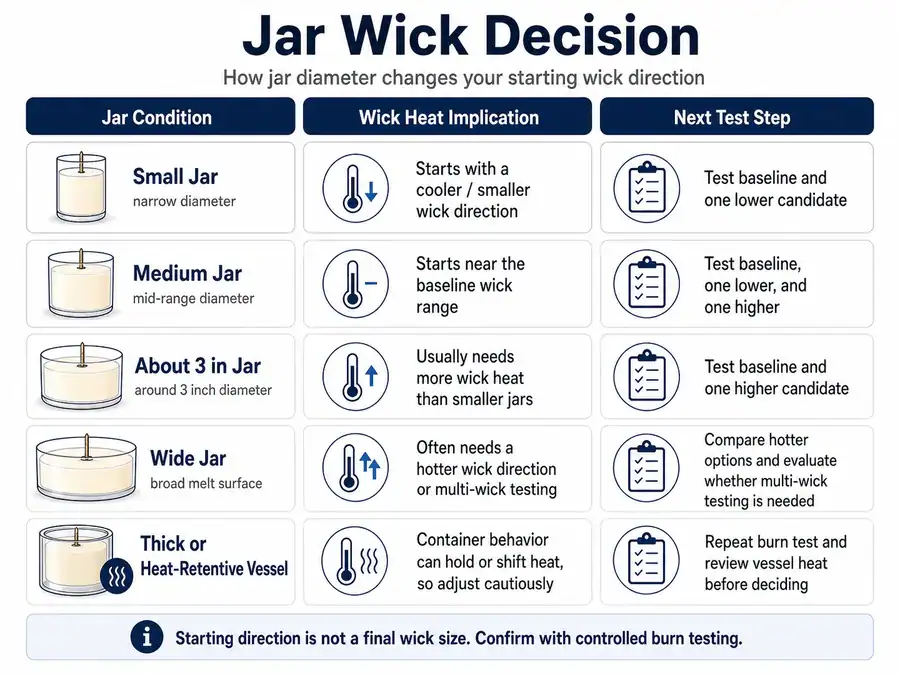
| Jar condition | Wick-selection implication | Best next step |
|---|---|---|
| Small jar | Start with a lower-heat candidate within the chosen wick family. | Test one baseline size and watch flame stability. |
| Medium jar | Start near the supplier’s diameter guidance, then adjust for wax softness and fragrance load. | look up the exact wick size for your jar diameter after choosing the wick family. |
| About 3 in jar | Treat the diameter as a starting clue, not a final answer. | Choose a nearby test range and compare burn behavior. |
| Wide jar | One large wick may create too much flame or heat before the melt pool looks even. | decide when a wide jar needs two smaller wicks before forcing one oversized wick. |
| Thick, ceramic, or heat-retentive vessel | Heat can build faster than the diameter alone suggests. | Watch vessel heat and adjust the test range cautiously. |
A wider coconut wax jar usually needs more wick heat, but more heat is not always better. If one large wick creates a tall flame, soot, heavy mushrooming, or a hot vessel, the better starting direction may be a different wick family, a smaller size, or a two-wick layout.
A 3 in coconut wax candle should not be assigned one universal wick size because wax blend, fragrance load, vessel material, and wick series labels all change the result. The clean way to move from diameter to testing is to pick a wick family, select a small adjacent range, and validate the wick size with a burn test.
Use the wick size chart for exact size lookup. Use the double-wicking guide for spacing and layout if the jar is wide enough to require two wicks. Use the burn-testing guide to validate the chosen size.
How Fragrance Load Changes Wick Performance in Coconut Blends
Fragrance load can change wick performance because the wick is burning the full candle formula, not just the wax.
Wick choice is formula-dependent because fragrance, dye, and additives can make the same wick appear too hot, too cool, unstable, or weak. The best wick choice assumes the actual fragrance load and additive set, not a plain wax test.
| Symptom after changing the formula | Possible wick cause | Possible formula cause | Retest direction |
|---|---|---|---|
| Wick drowns or struggles | Wick may be too cool for the candle formula. | Fragrance load or oil behavior may be making the melt pool harder to sustain. | Test one warmer wick candidate after checking the formula. |
| Weak scent throw | Wick heat may not be releasing enough fragrance. | Fragrance choice, load, cure, or wax binding may be limiting release. | troubleshoot weak scent throw separately from wick size before changing many variables. |
| Heavy mushrooming | Wick may be too hot or too large. | Fragrance residue or dye can add fuel-side buildup. | Retest with one smaller wick or a cleaner-burning candidate. |
| Soot or flicker | Wick may be oversized for the vessel. | Formula load may be feeding an unstable flame. | Reduce wick heat or test the same wick in a cleaner formula. |
| Uneven melt pool | Wick may be too cool for the jar width. | Wax, fragrance, and vessel heat may be interacting unevenly. | Compare one wick change against one formula change. |
Fragrance load can affect wick size conditionally. A higher or heavier fragrance load can make a wick drown, mushroom, soot, or underperform, but those signs do not prove the wick family is wrong. The safer reading is to check whether fragrance load is changing wick performance before blaming the wick alone.
Weak hot throw can come from wick heat mismatch, but it can also come from fragrance choice, cure timing, wax compatibility, or too much formula change at once. If the flame and melt pool look acceptable but scent is still weak, the main issue may be formula release rather than wick size.
Use the fragrance-load guide for formula limits. Use scent-throw troubleshooting if the main issue is hot throw rather than flame or melt pool. Use the burn-testing guide to isolate wick and fragrance variables during burn testing.
Change one variable per test. If fragrance load, dye, vessel, and wick size all change together, the next burn result will not show which variable caused the improvement or failure.
What Good Wick Performance Looks Like in Coconut-Apricot Candles
Good wick performance in coconut-apricot candles means a stable flame, progressive melt pool, safe vessel temperature, and usable scent throw—not the biggest flame or fastest melt pool.
Good performance is a multi-signal judgment. The best wick is the one that balances heat, melt behavior, scent release, and vessel safety for the wax blend and jar, not the one that forces the wax to the edges fastest.
| Burn sign | What it can mean | Better reading |
|---|---|---|
| Stable flame | Wick heat is close to the formula’s needs. | Keep testing nearby sizes before changing family. |
| Slow but moving melt pool | The wick may still be viable in a soft blend. | Do not call it failed tunneling too early. |
| Weak hot throw | Wick heat may be low, or the fragrance may not be releasing well. | separate scent-throw problems from wick-size problems before changing several variables. |
| Tall flame or soot | Wick may be too hot, too large, or overloaded by the formula. | Test smaller or cleaner-burning candidates. |
| Hot vessel | Wick heat, jar material, or wick count may be unsafe for that setup. | check candle safety signs when the vessel or flame runs hot before continuing. |
A full melt pool is useful, but it is not the only goal in coconut-apricot wax. A candle can look promising even when the first burn does not reach every edge, especially if the flame is calm and the melt pool keeps progressing. A candle can also look powerful with a large flame while actually moving toward soot, excess heat, or poor long-burn behavior.
Use a simple reading pattern: compare flame height, melt-pool movement, vessel heat, and scent throw together. If only scent is weak, the fragrance or cure may be the main problem. If flame and vessel heat are high, the wick may be too aggressive even when the melt pool looks appealing.
Use the burn-testing guide for the full pass/fail procedure, and use a full burn test to confirm wick performance after the first screening burns. Use scent-throw troubleshooting when the main issue is fragrance release. Use candle safety guidance if the jar gets too hot, the flame is excessive, or soot is persistent.
Balanced decision rule: choose the wick that gives steady heat, controlled melt progress, safe vessel behavior, and usable scent throw under the actual wax, fragrance, and jar conditions.
Cotton vs Wooden Wicks for Coconut and Coconut-Apricot Wax
Cotton and wooden wicks can both work in coconut and coconut-apricot candles, but they should be compared as different wick types with different heat behavior.
Cotton wicks are usually easier to size and compare across series. Wooden wicks can work well, but they need stricter testing around width, vessel heat, fragrance load, and flame behavior.
| Wick type | Best use case | Main risk in coconut blends | When to test it |
|---|---|---|---|
| Cotton wick | You want easier size changes and repeatable series testing. | The wrong series or size can mushroom, soot, or underheat. | Start here when you need predictable comparison across adjacent sizes. |
| Wooden wick | You want a wider flame style and are ready to test width carefully. | The wick can drown, overheat, or behave differently by vessel and fragrance. | Test it when the jar, wax, and fragrance can support the wood width. |
| Cotton series change | You are close but need a cleaner or warmer burn profile. | Treating all cotton wicks as the same can mislead the test. | test cotton wick series after choosing a wick family if the first cotton line is close but imperfect. |
| Wood width change | The wood flame is promising but unstable or underpowered. | Width changes can shift heat faster than expected. | compare wood-wick sizing for coconut-blend candles before moving to a full wood-wick setup. |
Wick type means the material and construction of the wick family, such as cotton or wood, that affects heat output, flame style, and testing behavior. Cotton is not automatically better than wood, and wood is not automatically better for scent throw. The better choice is the test direction that fits the wax blend, jar diameter, fragrance load, vessel material, and desired flame style.
Wooden wicks can be good for coconut wax when the vessel and formula support them. They should not be chosen only for appearance or sound because the wick still has to pass the same burn signs: stable flame, controlled melt pool, safe vessel heat, and usable scent throw. Cotton wicks are usually easier for beginners to compare because supplier series and adjacent sizes are simpler to test side by side.
For wood-wick sizing, flame instability, crackle behavior, or width-specific troubleshooting, use the dedicated wood-wick guide. For cotton choices, use cotton wick-series guides after narrowing the family. In both cases, confirm cotton or wood wick behavior with a burn test before committing to full packs.
How to Choose a Wick Sample Range Before Buying Full Packs
A wick sample range helps you test adjacent wick candidates before buying full packs for coconut or coconut-apricot candles.
A wick testing range is a small set of nearby wick sizes or comparable wick candidates used to validate a starting point. The best wick choice becomes reliable only after controlled testing with the same wax blend, jar diameter, fragrance load, vessel, and cure timing.
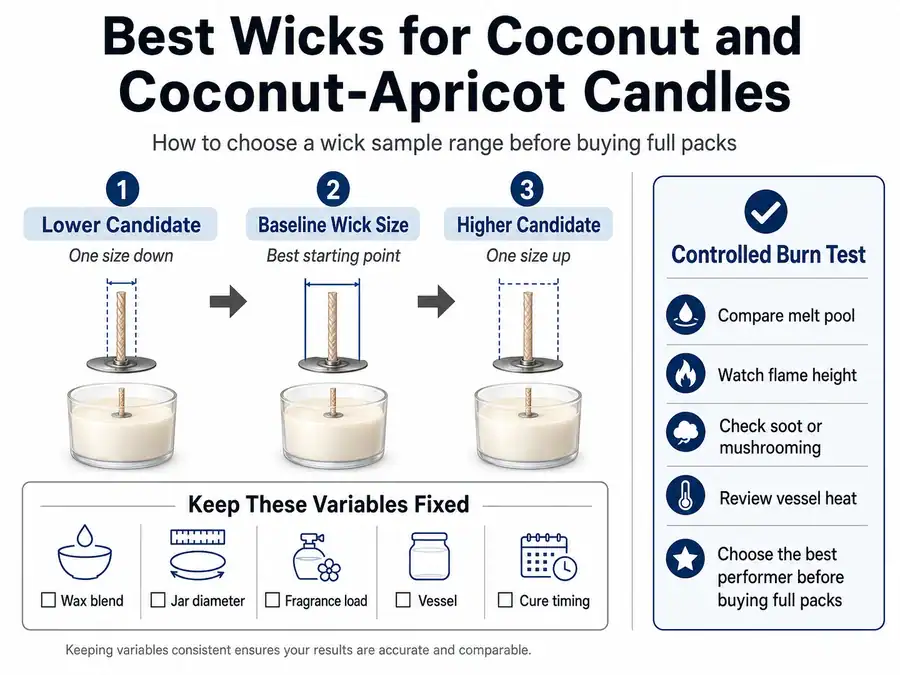
| Starting situation | Sample range to test | Why it works |
|---|---|---|
| You have a wick family but no final size | Test the baseline size, one lower candidate, and one higher candidate. | It shows whether the candle needs less heat, similar heat, or more heat. |
| The baseline burns close but not cleanly | Test nearby sizes in the same family first. | It keeps the heat profile similar while adjusting strength. |
| The wick tunnels or drowns | Test a warmer nearby candidate after checking cure and fragrance load. | It avoids blaming wax before the wick range is tested. |
| The wick soots, mushrooms heavily, or overheats the jar | Test a cooler nearby candidate or a cleaner series. | It reduces heat before changing the full formula. |
| The results are inconsistent | Keep the same wax, jar, fragrance, dye, and cure timing. | It isolates wick performance from formula changes. |
Use build a wick sample range before buying full packs as the purchase rule, not as a shortcut to a final answer. A sample range is most useful when it includes the likely baseline and nearby alternatives, because one wick size gives no comparison point.
Use choose the baseline size from the wick chart after you have chosen the wick family. Supplier wick charts are helpful for baseline planning, but they still need wax-specific testing because coconut and coconut-apricot blends can vary by softness, fragrance load, additives, and vessel heat.
A clean test changes one variable at a time. Do not change wax blend, wick family, fragrance load, and vessel in the same round, because the result will not show what caused the change. If the same candle improves after one wick adjustment, the sample range is doing its job.
How this table was built: the sample-range logic uses supplier size guidance as the baseline reference, then narrows the test to adjacent candidates. It treats the table as planning guidance only; burn intervals, logging, and final pass/fail scoring belong in the dedicated burn test process.
Use wick sample packs to test adjacent sizes before buying full packs. Use the wick size chart to choose the baseline size. Use the burn-testing checklist for the full pass/fail procedure, and run a controlled burn test before committing to a wick.
What Wick Failure Signs Mean in Coconut and Coconut-Apricot Candles
Failure signs should guide the next wick test, but they do not prove the wick is the only problem.
A wick failure sign is a burn symptom that points toward a likely retest direction. In coconut and coconut-apricot candles, tunneling, drowning, mushrooming, soot, weak scent throw, hot jars, and uneven melt pools can also come from formula, vessel, cure, or testing conditions.
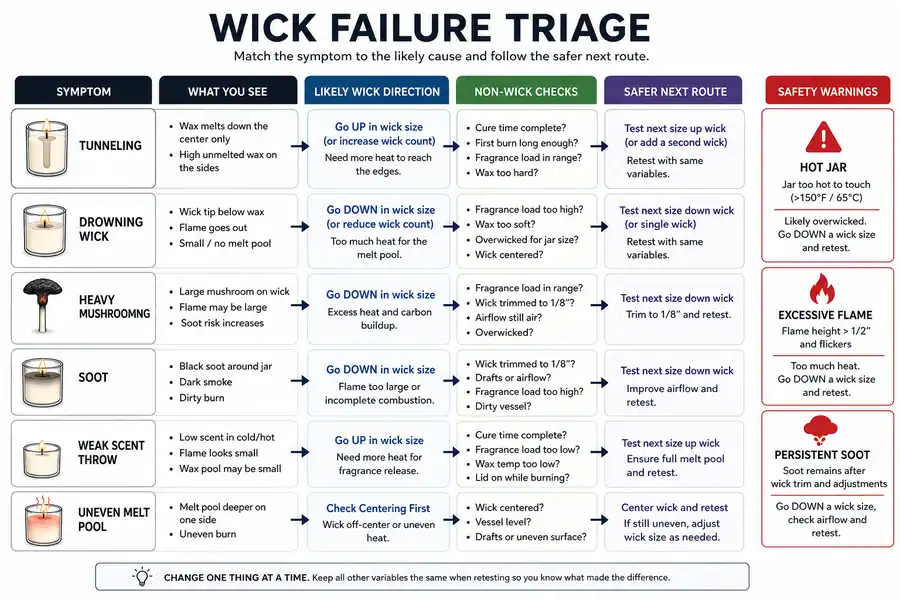
| Failure sign | Likely wick direction | Check before changing everything | Best route |
|---|---|---|---|
| Tunneling | Test a warmer wick candidate if the melt pool never progresses. | Early burn timing, jar width, and cure timing. | diagnose coconut-apricot candle tunneling before changing wick families. |
| Drowning wick | Test more heat or a different series if the flame cannot sustain itself. | Fragrance load, dye, and wax softness. | Check formula variables before changing the full setup. |
| Heavy mushrooming | Test a cooler candidate or cleaner-burning series. | Fragrance residue and wick trimming habits. | separate mushrooming from soot and wick overheating. |
| Soot | Reduce wick heat or change series if soot repeats. | Drafts, fragrance load, and vessel heat. | Route persistent residue to a deeper soot diagnosis. |
| Weak scent throw | Test whether wick heat is too low, then check fragrance and cure. | Fragrance choice, load, and cure timing. | Use scent-throw troubleshooting when formula release dominates. |
| Hot jar | Reduce heat, reassess wick count, or stop the test. | Vessel material, diameter, and flame size. | Use safety guidance when heat or flame behavior is concerning. |
| Uneven melt pool | Test nearby sizes only after checking vessel shape. | Glass thickness, jar shape, and off-center wick placement. | Compare vessel behavior before blaming the wick alone. |
The best wick direction is the one that avoids recurring failure signs after controlled testing. It is not the wick that fixes every candle problem, because the wax blend, fragrance load, cure timing, and vessel can create symptoms that look like wick failure.
Do not diagnose too early from one short burn. A slow melt pool in a soft coconut blend can be normal during early screening, while repeated drowning, soot, or overheating is a stronger sign that the test direction needs to change. Keep the same formula and vessel when you retest so the symptom points to a clearer cause.
How this table was built: the triage logic groups common burn symptoms by likely wick direction and non-wick variables to check first. It is a routing tool, not a full repair process, so repeated or safety-related symptoms should move to the right deeper guide.
Use the wick troubleshooting hub for full diagnostic workflows. Use the soot or mushrooming guide if flame residue is the main issue. Use candle safety guidance if the vessel runs hot, the flame is excessive, or soot persists, and route repeated wick failure signs to the right troubleshooting guide.
Summary: Which Wick Should You Test First?
Start with the wick family that best fits your wax blend, jar diameter, fragrance load, vessel, and test plan.
The best wick for coconut and coconut-apricot candles is a test starting point, not a universal size. Choose the family first, test nearby sizes, then confirm the result under the same wax, jar, fragrance, vessel, and cure conditions.
| Candle situation | Wick to test first | Why this direction fits |
|---|---|---|
| Soft coconut or coconut-apricot blend | Start with a balanced cotton family such as CD / CDN-style, ECO-style, LX-style, Premier-style, or HTP-style. | These give a practical heat-profile shortlist before exact sizing. |
| Medium container candle | Choose a family, then use the wick size chart to choose the exact test size after selecting a wick family. | Diameter helps set the baseline, but the wax and formula still decide the final result. |
| Wide jar | Consider whether two smaller wicks are better than one oversized wick. | Wide jars can need heat spread, not just a stronger single flame. |
| High fragrance load | Test a nearby warmer or cleaner-burning candidate only after checking formula behavior. | Fragrance load can change flame stability, mushrooming, soot, and hot throw. |
| Wood-wick preference | Test wood only when you can compare width, vessel heat, and flame stability carefully. | Wood can work, but it is less forgiving when jar and formula variables shift. |
| Weak scent throw | Check wick heat, cure, fragrance choice, and formula release before blaming wick size alone. | Weak throw is not always a wick-size problem. |
| Hot jar, soot, or tall flame | Move cooler or change series before increasing wick strength. | The strongest wick is not the best wick if it creates unsafe or unstable burn behavior. |
| Early test looks unclear | Choose a small range from sample packs, then retest with the same variables. | One wick cannot prove the best direction without comparison. |
Choose a sample range, then confirm with a burn test. Use the burn-testing guide for the full timing, logging, and pass/fail procedure.
The cleanest first purchase is a small test range, not a full pack of one guessed size. Start with the wick family that matches your candle conditions, keep the test narrow, and change only one variable at a time. If the result points to exact sizing, deep troubleshooting, wood-wick issues, double-wicking, or formula release, move that question to its dedicated next step instead of expanding this decision into a full separate process.