A wood wick usually goes out when its exposed edge is trimmed wrong, covered by melted wax, mismatched to the candle, disrupted by formula or airflow, or rarely damp, dirty, or...
Archives: Blog
How to Choose Wood Wick Clip Size and Centering Tools So Wicks Stop Tilting
Choose wood wick clips by tab/base fit and centering tools by vessel span, grip, and vertical support so the wick stays upright through pouring and early cooling. In this article, “right”...
A candle wick keeps going out when melted wax cannot feed the flame because the wick is too short, buried, flooded, mismatched, draft-hit, obstructed, formulation-affected, or too low to burn...
Candle Mold Release Spray: When to Use It, Avoid It, and Apply It Without Residue
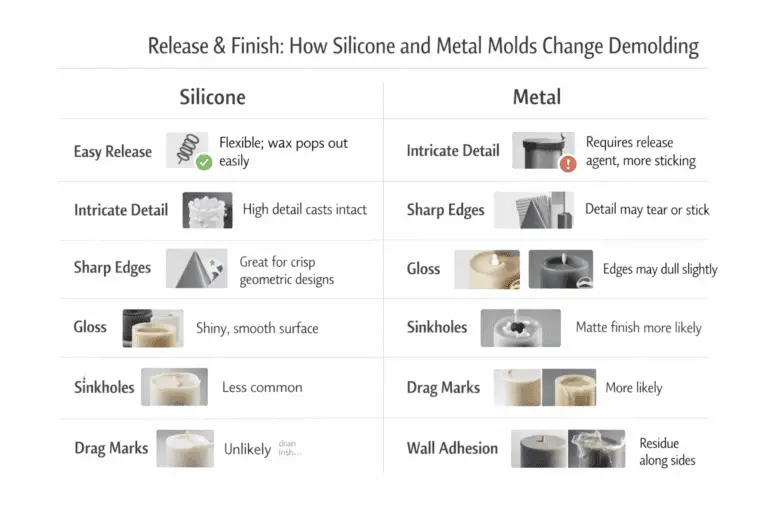
Candle mold release spray helps only when a compatible candle mold grips wax after normal cooling, and it must be applied as a thin, wiped layer. Candle mold release spray is a candle-mold surface...
Rapeseed Wax for Candles: Pros, Cons, Wicks, and Temperatures
Rapeseed wax for candles is a candle-grade plant-based wax or blend that can suit containers, melts, and selected formats when supplier guidance and burn tests support the design. On this page,...
Wood Wick Booster vs Single-Ply: Which to Choose for Stronger Throw?
Choose a booster wood wick when the candle needs more heat or melt-pool support; choose single-ply when it already burns cleanly, then test both in the same candle system. A wood wick is the...