Candle making is usually safe during pregnancy when heat exposure is controlled, the space is well ventilated, and strong fragrance or smoke does not trigger nausea, headache, or breathing discomfort.
Most concerns come from fragrance strength, spilled hot wax, and working too long in a closed room. Plain wax by itself is usually not the main issue. The bigger concern is how scent, smoke, and heat affect your body on that day. A safer session keeps air moving, limits added fragrance, and stops at the first sign of dizziness, nausea, or irritation.
What Parts Need the Most Caution When Making Candles?
The most concerning parts of candle making during pregnancy are concentrated fragrance oils, strong essential oil blends, smoke or soot from burn testing, and hot wax handled in a poorly ventilated room.
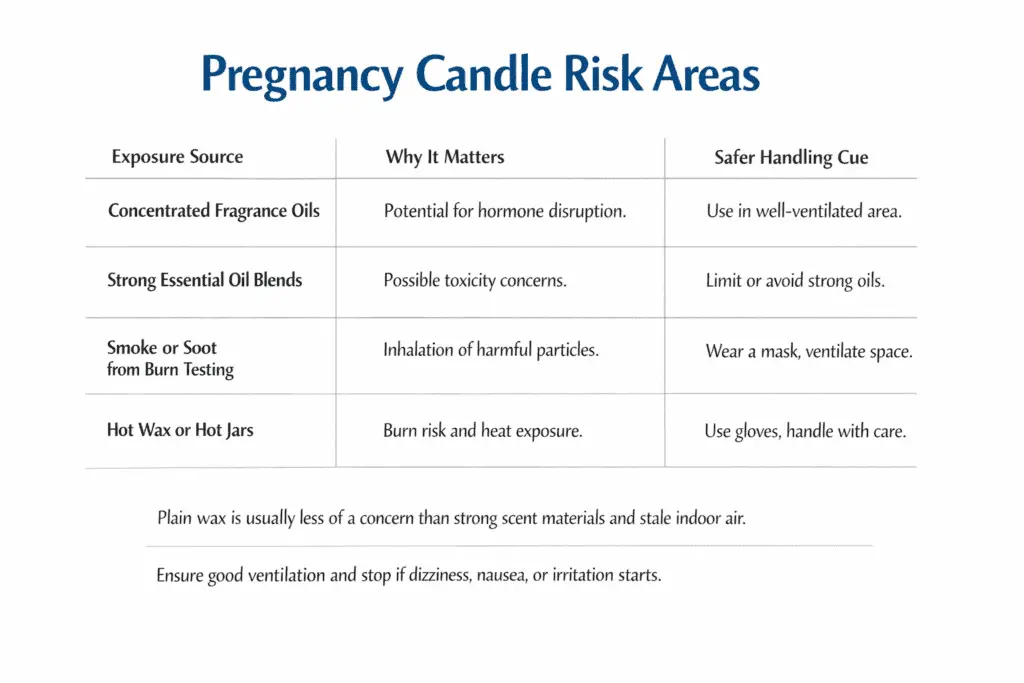
Plain wax is usually less of a problem than strong scent materials and stale indoor air. Pregnancy can make smell sensitivity much stronger, so what feels manageable at one time may feel overwhelming later. Most questions about candle safety during pregnancy come down to scent strength, skin contact, and how long you stay around heated materials.
Concentrated fragrance oils deserve the most caution because they are the part most likely to feel overwhelming quickly. They should be treated as controlled inputs, not something to guess by smell alone.
Essential oils are not automatically safer just because they are natural. A heavily scented candle made with essential oils can still feel too strong, especially during the first trimester or on days when nausea is already active. If you are unsure about a specific oil or blend, check the supplier safety information and ask your doctor or midwife instead of assuming it is fine because it is plant-based.
Smoke and soot matter most during burn testing. If a candle smokes, mushrooms at the wick, or leaves soot, stop the test. Burning candles can affect indoor air quality, and that matters more during pregnancy if you are already sensitive to smell or breathing irritation.
Hot wax, hot jars, and fragrance spills are injury risks rather than a special pregnancy toxin category, but they still matter. Burns and slips are avoidable, and pregnancy is not the time to push through a messy or uncomfortable setup.
What Is Usually Safe, and What Should You Avoid?
What is usually safe during pregnancy is a short, well-ventilated candle session with moderate heat and low scent. What you should avoid is smoke, overheating, direct skin contact with fragrance, and any odor that starts making you feel unwell.
For most people, the lower-risk version of candle making is small-batch, easy to ventilate, and easy to stop. The goal is not to force a long session. The goal is to keep heat, scent, and indoor air exposure low enough that the process stays comfortable.
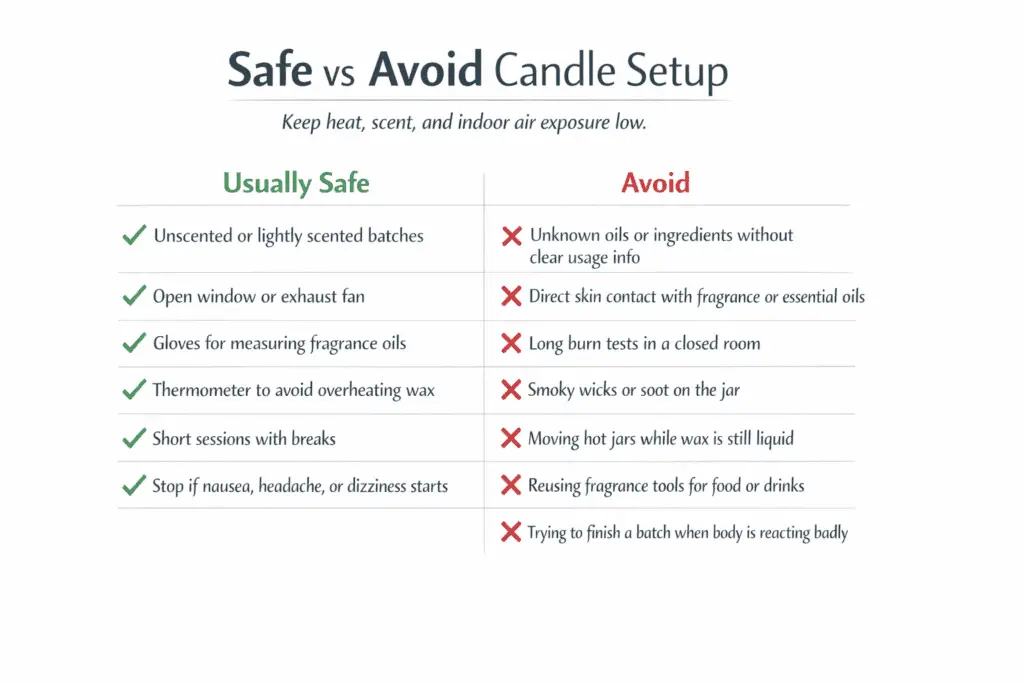
A practical low-risk setup usually includes:
- unscented or lightly scented batches
- an open window or working exhaust fan
- gloves for measuring fragrance oils
- a thermometer to avoid overheating wax
- short sessions with breaks
- stopping as soon as nausea, headache, dizziness, or irritation starts
What to avoid:
- unknown oils or ingredients without clear usage information
- direct skin contact with fragrance or essential oils
- long burn tests in a closed room
- smoky wicks or soot on the jar
- moving hot jars while wax is still liquid
- reusing fragrance containers, pitchers, or measuring tools for food or drinks after they have touched candle materials
- trying to finish a batch when your body is already reacting badly
If you want to reduce risk even more, keep the project simple. Light fragrance, clean materials, and short sessions usually work better than heavily scented candles made in a closed kitchen or small room.
How Can You Lower Risk While Making Candles During Pregnancy?
Lower risk comes from reducing strong scent exposure, limiting smoke, controlling heat, and ending the session as soon as your body tells you the room or materials are too much.
The safest setup is usually a short session with fresh air, a stable melting temperature, and the lightest fragrance load that still works for your project. Keep windows open or use ventilation, avoid handling concentrated oils with bare hands, and use materials from suppliers that provide clear safety and usage information.
A simple burn test should be brief and supervised. If the candle starts smoking, sooting, or making the room feel heavy, stop the test right away. Trimming the wick properly also matters because an overlong wick can create a larger flame, more soot, and more heat than you want in a small indoor space.
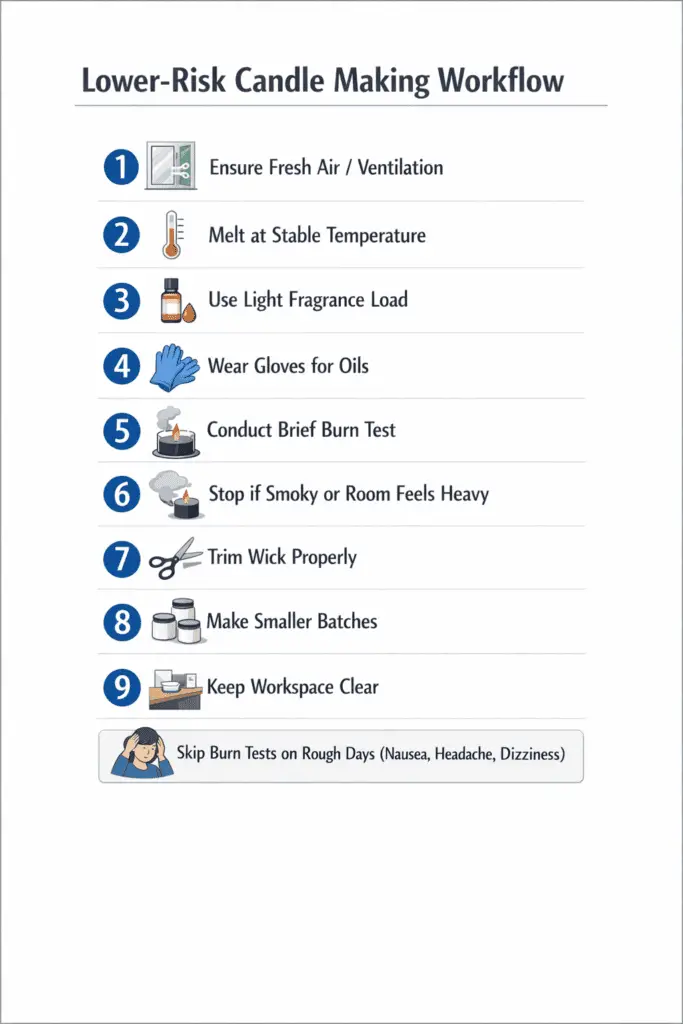
Useful habits include:
- making smaller batches instead of long sessions
- using unscented or lightly scented formulas when smell sensitivity is high
- wearing gloves when measuring fragrance
- keeping your workspace clear so you are not carrying hot wax through a cramped area
- skipping burn tests on days when nausea, headache, or dizziness are already active
Pregnancy is not the time to experiment with stronger fragrance loads just to see what happens. Keep the session predictable, calm, and easy to walk away from.
When Should You Stop and Ask Your Doctor or Midwife?
Stop and ask your doctor or midwife when candle making repeatedly triggers dizziness, faintness, breathlessness, headache, vomiting, or any symptom that does not settle quickly after you leave the room.
What starts as a scent sensitivity issue becomes a medical question when symptoms keep returning or feel stronger than a normal dislike of strong smells. This matters even more if you already have asthma, migraines, severe morning sickness, or breathing sensitivity.
Get medical advice sooner if:
- you cannot keep food or fluids down
- you feel weak or faint when standing
- strong smells trigger vomiting again and again
- breathing irritation does not go away after fresh air
- headaches become severe or keep returning after candle sessions
- you are worried about a specific fragrance oil or essential oil and cannot confirm how it should be handled during pregnancy
A simple rule works here. If stopping the candle session and getting fresh air solves the problem, it was probably an exposure issue. If symptoms keep returning, feel intense, or affect eating, drinking, breathing, or standing, it needs medical input.
Common Questions About Candle Making During Pregnancy
Is plain wax the main problem?
Usually not. For most people, plain wax is less concerning than concentrated fragrance oils, essential oils, smoke, or poor ventilation.
Are scented candles toxic during pregnancy?
Not automatically, but strong scent exposure can be harder to tolerate during pregnancy. The real issue is often fragrance strength, room conditions, and how your body reacts.
Are essential oils safer than fragrance oils?
Not always. Natural does not automatically mean gentler. Strong essential oil blends can still be overwhelming, especially when heated.
Is making candles different from burning them?
Yes. During making, the main exposure usually comes from handling fragrance and standing near heated materials. During use, the main exposure comes from the candle burning in the room.
Is a short hobby session different from making candles every day?
Yes. A short hobby session is usually easier to ventilate, supervise, and stop as soon as symptoms start. Repeated daily production can create more ongoing scent, smoke, and indoor-air exposure, so the safest approach during pregnancy is usually smaller, simpler sessions.
What is the safest option if I am very smell-sensitive?
The most cautious option is to make unscented candles or very lightly scented ones in a well-ventilated space and keep the session short.
Bottom Line
Candle making is usually low risk during pregnancy when you keep fragrance light, use good ventilation, avoid smoke, and stop immediately if strong smells or heat start bothering you.
The biggest issue is usually not the wax itself. It is the combination of concentrated scent, indoor air, and symptom sensitivity on that day. The safest routine is simple: use fresh air, measure carefully, avoid direct skin contact with fragrance, and keep the process easy to stop at any moment.
If anything feels off, trust the symptom rather than the recipe. A hobby batch can wait. Repeated nausea, headaches, dizziness, breathing irritation, or vomiting after scent exposure is a good reason to stop and check with your doctor or midwife.