
Making one candle usually costs about $3 to $7.50, depending on wax, fragrance, container, packaging, labor, and whether you buy supplies in small packs or bulk.
Candle cost depends on what goes into the jar and how you buy it. A simple homemade candle can stay near the low end, while stronger fragrance, branded packaging, and paid labor push the total higher fast. For most makers, the real math starts with wax, wick, container, fragrance, label, and shipping, then moves to overhead and profit. Once those pieces are separated, it becomes much easier to price a candle for hobby use or for sale.
How Much Does It Cost to Make a Candle?
A typical 8-ounce container candle often costs about $3 to $7.50 to make before selling fees, labor, and wider business overhead.
For many home makers, the material cost for one candle lands somewhere in the middle of that range, then moves up or down based on jar quality, fragrance strength, and how supplies are purchased. A plain candle bought in bulk can cost far less per unit than a small batch candle with premium wax, a branded box, and a stronger scent load.
Your candle pricing strategy starts with the real cost of one finished candle, not the price you hope to charge later. In simple terms, the total usually includes wax, wick, fragrance, container, label, lid or dust cover, packaging, and a small allowance for spills, failed test pours, or relabeling. For a hobby batch, those line items can feel minor on their own, but together they decide whether the candle is cheap, average, or expensive to make. That is also why two candles with the same size can have very different production costs.
A useful way to think about the number is COGS, or cost of goods sold. COGS focuses on what it takes to produce one saleable unit, so it strips the process down to the per-candle math. People searching how to start a candle business at home usually find out quickly that wax is only the starting point, because jars, scent, packaging, and testing losses often change the final number more than expected. Once each line item is written down, the guesswork drops and the retail price becomes easier to justify.
Many makers also use a candle pricing calculator to turn per-unit cost into a workable selling price. That matters because a candle that costs $4.20 to make is not automatically profitable at $8 if the sale also carries fees, breakage risk, and replacement costs. The safest approach is to treat the per-candle cost as a floor, then build the selling price above it with room for overhead and profit.
Variable Expenditure
Variable expenditure is the part of candle cost that changes every time you make, pack, or sell another candle.
In candle making, variable expenditure usually includes wax, wick, fragrance, dye, jar or tin, warning label, box, tissue, inserts, and shipping materials. These costs rise or fall with each unit, which makes them the most important numbers to track when you want a realistic cost per candle.
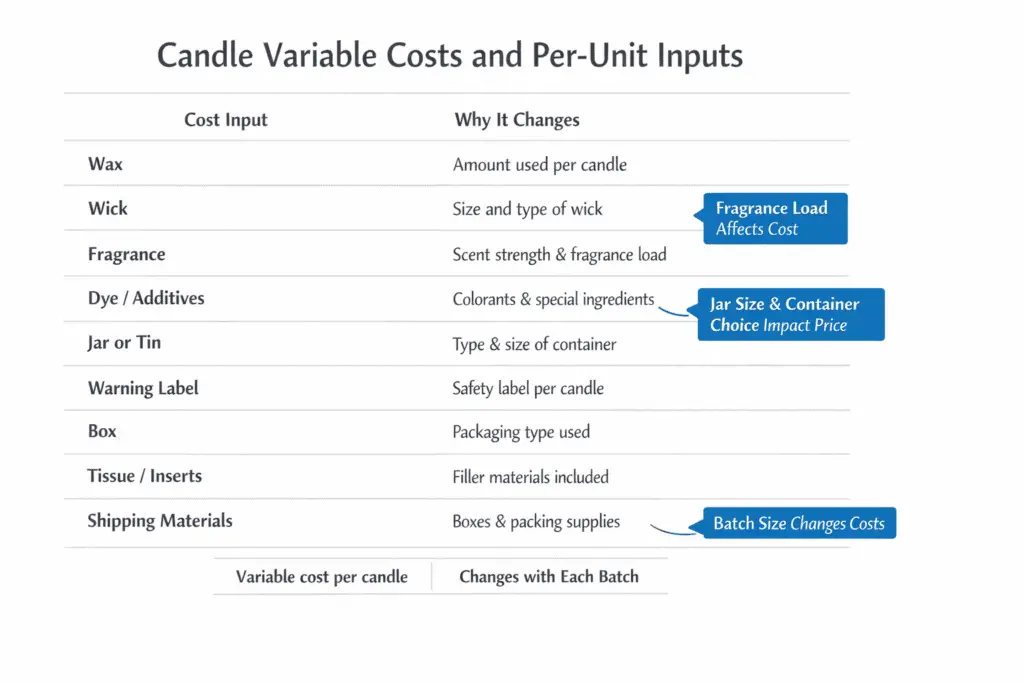
A candle wax calculator helps because wax weight changes with jar size, fill level, and batch count. Even a small difference in wax per jar becomes noticeable when you make six, twelve, or twenty-four candles at once. The same thing happens with wick choice, since larger jars, different wax blends, or a switch from cotton to wood can change the unit cost. Containers are another major variable, especially when you move from plain jars to heavier glass, ceramic, or branded tins.
Fragrance is often the most unpredictable part of the formula after the container. A fragrance load calculator makes that easier to see because moving from a lighter scent load to a stronger one can add a visible amount to every candle in the batch. Dye, additives, and dust covers may seem minor, but they still belong in the total because repeated small costs can quietly narrow your margin.
Once the candle is ready to leave your workspace, packaging candles for safe shipping becomes part of variable expenditure too. Boxes, padding, tape, labels, and breakage allowance are not optional when you sell online. That means the true variable cost is not just what goes into the wax pool, but also what protects the candle until it reaches the buyer in one piece.
Fixed Expenditure
Fixed expenditure covers the business costs that stay mostly the same whether you make a few candles or a full batch.
These costs do not attach neatly to one jar, but they still belong in your pricing. Your candle business startup costs can include a melting pot, thermometer, scale, pouring pitchers, storage bins, work tables, label printer, and testing supplies that last beyond one batch. Many makers also carry small business overhead expenses such as website fees, bookkeeping software, craft fair materials, photography props, electricity, and workspace rent or shared household costs. Even when those costs do not move with every candle poured, they still need to be recovered over time.
That is why fixed expenditure should be spread across the number of saleable candles you expect to make over a month or quarter. A melter bought once may not feel expensive when viewed alone, but it becomes part of the business cost the moment it supports production. The same logic applies to branding tools, safety equipment, and record keeping. Ignoring those items makes the candle seem cheaper to produce than it really is.
Legal and administrative setup can also sit inside fixed expenditure. Before you sell candles from home legally, you may need to think about local registration, insurance, testing records, warning labels, and tax handling based on where you operate. Those requirements differ by location, but the broader point stays the same, fixed costs do not disappear just because they are paid less often. They still shape the minimum price your candle business needs in order to stay sustainable.
Could You Make Profit Making Candles?
Yes, you can make profit making candles, but only when your selling price covers materials, overhead, wasted batches, fees, and the time it takes to produce a candle consistently.
Profit usually comes from controlling costs before chasing volume. A strong candle business profit margin depends on more than cheap wax, because margin can disappear through broken jars, over-fragranced test batches, shipping damage, discounts, and underpriced labor. Many makers believe a candle is profitable because the raw material cost looks low, then realize later that packaging, platform fees, and replacement orders have eaten most of the gain. The cleaner your numbers are, the easier it is to see whether a candle is truly earning money.
That is where how to price handmade candles becomes a practical business question rather than a creative one. A workable price has to cover direct materials first, then absorb fixed costs over time, then leave room for profit after mistakes and slow-moving inventory. If you skip one of those layers, the candle may still sell, but the business will struggle to grow in a predictable way. Profit improves when the recipe is repeatable, the jar size is standardized, and supply buying becomes more efficient.
Many people succeed at selling candles for profit because candles are relatively small to batch, easy to customize, and suitable for gift, home, and seasonal demand. Even so, the profitable sellers are usually the ones who test less wastefully, buy more deliberately, and price with discipline instead of emotion. A candle business can work well, but profit is built through consistent costing and careful pricing, not through guesswork.
How Do You Calculate the Cost of Making Candles?
To calculate candle cost, add materials, labor, packaging, waste, and overhead, then divide by the number of saleable candles.
A practical way to think about how to calculate candle COGS, materials, labor, and overhead is to start with everything that touches one finished candle. That usually means wax, wick, fragrance, dye, jar or tin, lid, warning label, box, inserts, tape, and a small waste allowance for spills, frosting, test pours, or broken containers. After that, add direct labor if you pay yourself or a helper for pouring, labeling, packing, and order handling. Then add a share of fixed expenses such as equipment, software, insurance, or workspace costs.
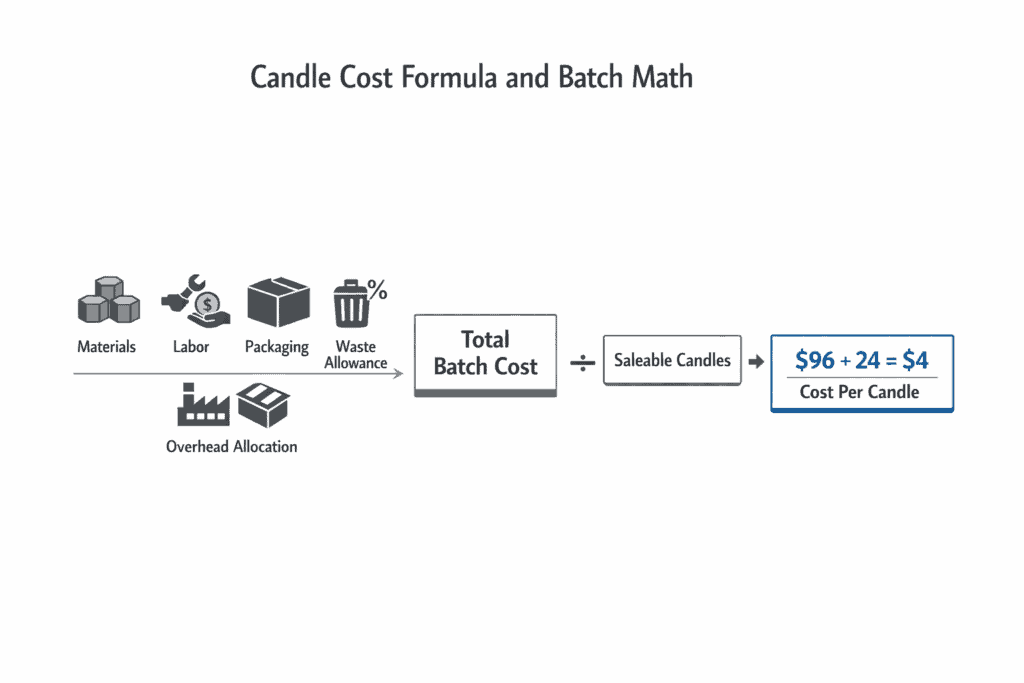
The core candle pricing formula is simple: total batch cost divided by the number of saleable candles. If a batch costs $96 in materials, labor, and allocated overhead, and 24 candles are good enough to sell, the cost per candle is $4. If two jars fail testing or break, the same batch cost gets divided across fewer sellable units, which raises the real cost per candle. That is why failed batches and damaged containers should never be ignored in the math.
Many makers track these numbers in a candle cost calculator spreadsheet because one change can affect the whole result. A different jar size, a stronger fragrance load, or a more expensive label can raise cost fast even when the candle still looks similar on the shelf. Once the spreadsheet is set up, it becomes easier to see where the money goes and where margin starts to shrink.
What Is the Average Price of a Candle?
A typical candle often sells for about $15 to $30 at retail, though budget candles can be lower and premium candles can be much higher.
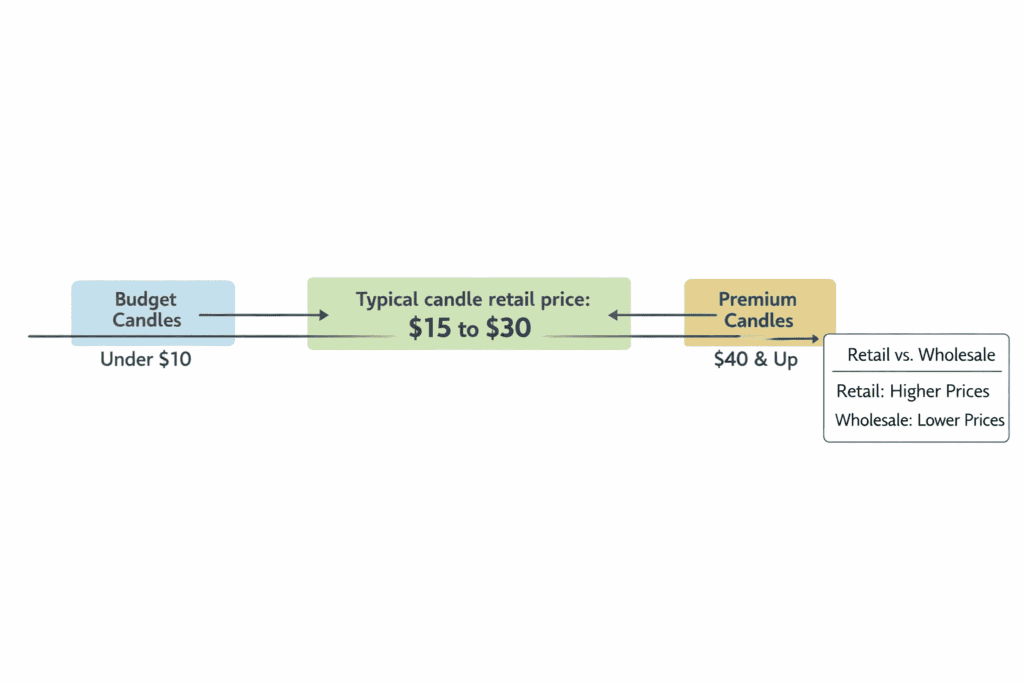
Average price depends on size, wax type, scent strength, packaging, and where the candle is sold. A plain mass-market jar may land near the low end, while a handmade candle with stronger fragrance, a heavier vessel, and branded packaging usually sits in the middle or upper part of the range. Luxury candles can move far beyond that because buyers are paying for presentation, brand position, and vessel quality as much as the wax itself.
A candle pricing calculator helps separate average selling price from average production cost. Many makers discover that a candle which feels expensive at first glance may only be fairly priced once packaging, labor, fees, and breakage risk are included. For a common handmade container candle, the retail number often lands somewhere in the mid-teens to low thirties because that range leaves room for both cost recovery and profit. The exact average shifts by market, but the gap between low-cost and premium candles is usually driven by brand, packaging, and sales channel.
The difference between retail and wholesale matters here because average price changes when you sell direct versus in bulk. Retail prices are higher because one candle has to carry more margin on its own, while wholesale prices drop because the buyer takes more units at once. The same idea shows up when you price candles for craft fairs, since booth fees, travel, display materials, and bundle offers can push the practical selling price above what you might charge online.
Is It Cheaper to Make Your Own Scented Candles?
Making your own scented candles can be cheaper per candle, but the first few batches often cost more than people expect.
The answer depends on whether you are comparing one test batch or a repeatable setup. If you buy a small amount of wax, fragrance, jars, and tools just to make two or three candles, the cost per candle can end up higher than store-bought options. Once you already have the tools and begin to make your own scented candles at home in larger batches, the cost per candle usually drops.
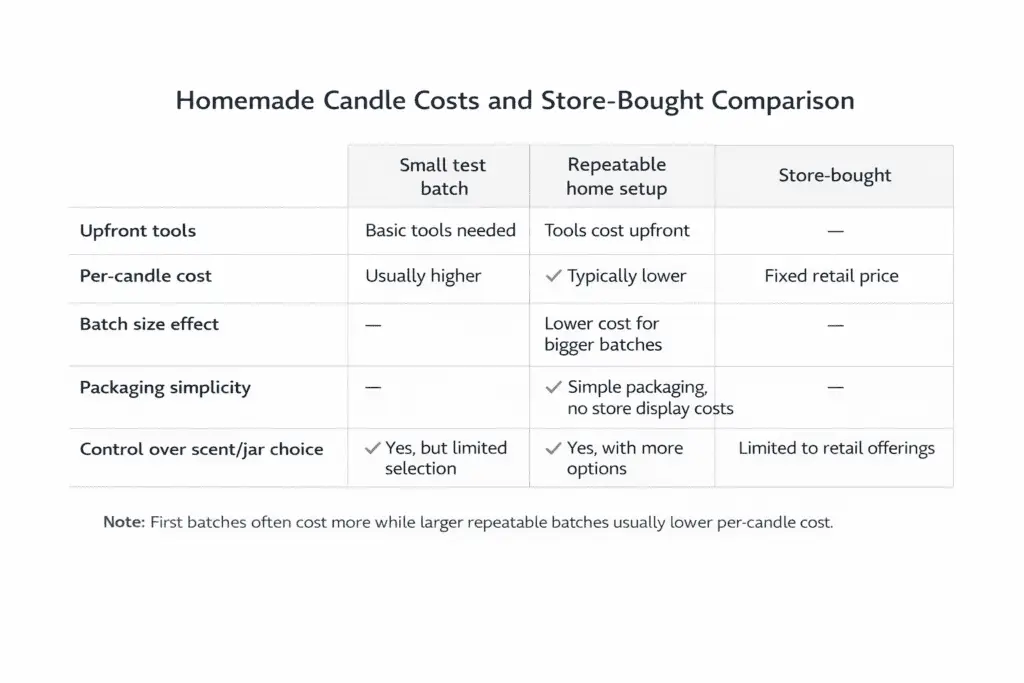
A simple homemade candle cost vs. store-bought comparison helps make that clear. A homemade candle may cost less when you reuse tools, buy jars and wax in larger quantities, and keep packaging simple. A store candle may still be cheaper when it is factory made, lightly scented, and sold in high volume through big retailers. The gap often becomes wider when you want premium scents or a specific jar style, because making it yourself gives you more control over what you pay for and what you leave out.
For beginners, the lowest-cost path is usually a plain recipe with a stable wax, a common jar size, and a moderate scent load. That is why many makers start by finding the best wax and fragrance combination for beginners instead of buying many supplies at once. The goal is not just to make one cheap candle, but to build a repeatable recipe that gives you a clear cost per unit without constant waste.
Endnotes
The real cost of a candle becomes clear when each part of the process is priced on paper instead of guessed from memory.
A solid candle business pricing guide always starts with direct materials, then adds labor, packaging, waste, and fixed costs. That approach matters because a candle can look cheap to make until failed test pours, shipping supplies, and overhead are counted. Once all of those parts are visible, pricing becomes less emotional and far more consistent.
It also helps to calculate cost per candle before selling rather than after a few orders come in. Doing the math early makes it easier to spot which jars, fragrance levels, or packaging choices are shrinking your margin. It also helps you see when a lower-cost candle can still feel attractive to the buyer without cutting too deeply into profit.
Over time, most makers improve candle profit without raising price by reducing waste, simplifying packaging, standardizing vessel sizes, and buying the right supplies in better quantities. A candle business does not usually become stronger through one dramatic change. It becomes stronger when the numbers are checked often and small cost leaks are fixed before they turn into habits.