Jun 27, 2026
Glossy vs Matte Candle Finishes: Wax, Pouring, Cooling, and Surface Techniques
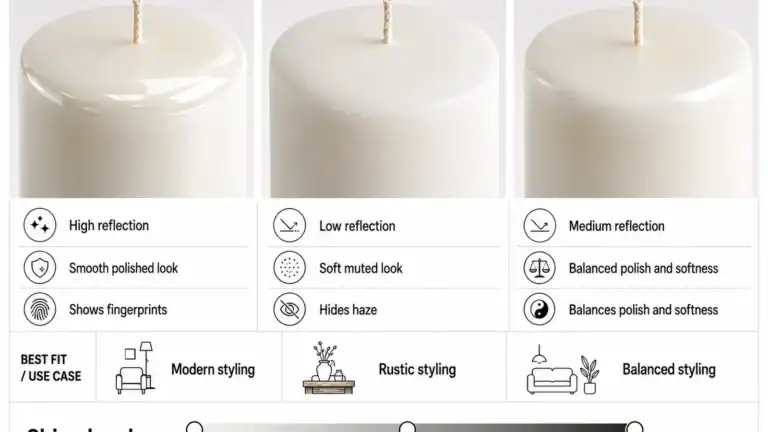
A candle surface finish is the visible outer appearance of set wax, especially its shine level, smoothness, texture, and defect visibility after…
Read guide
Control melting, additive, fragrance, pouring, cooling and cure conditions for repeatable candle batches.
A candle surface finish is the visible outer appearance of set wax, especially its shine level, smoothness, texture, and defect visibility after…
Read guide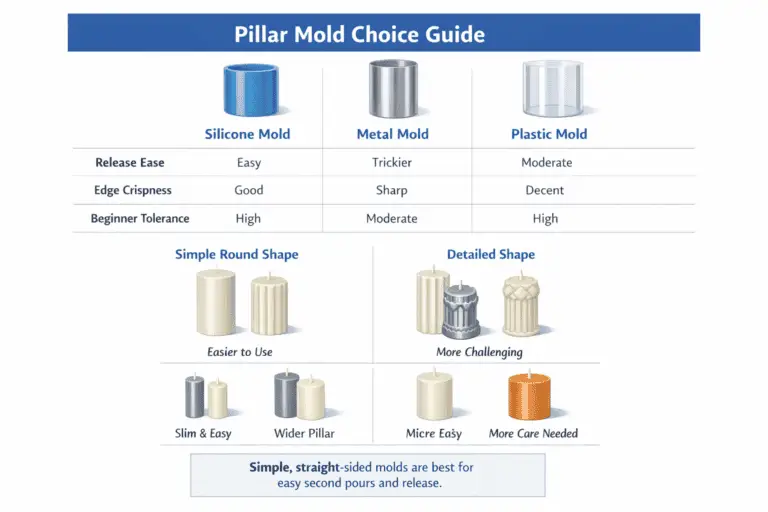
Make molded pillar candles by using a simple mold, leaving room for normal shrinkage, correcting any hidden sinkhole with one controlled second…
Read guide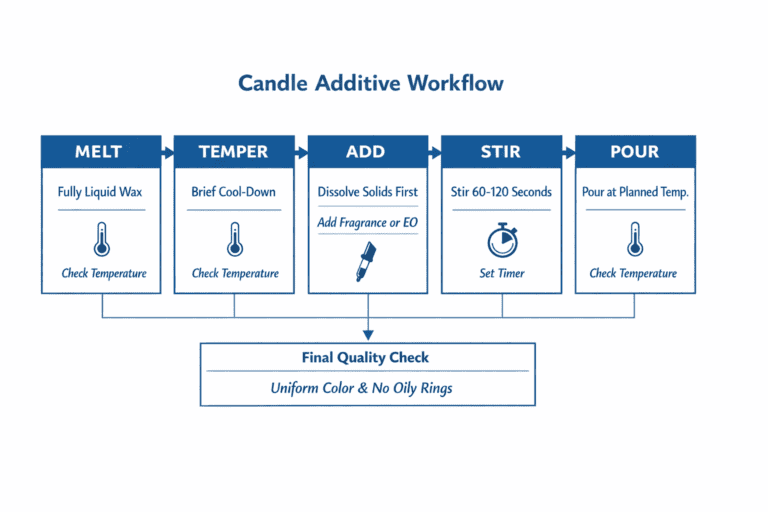
Mix candle additives by melting wax, cooling to the right add-in temperature, weighing doses, stirring for 60 to 120 seconds, and pouring…
Read guide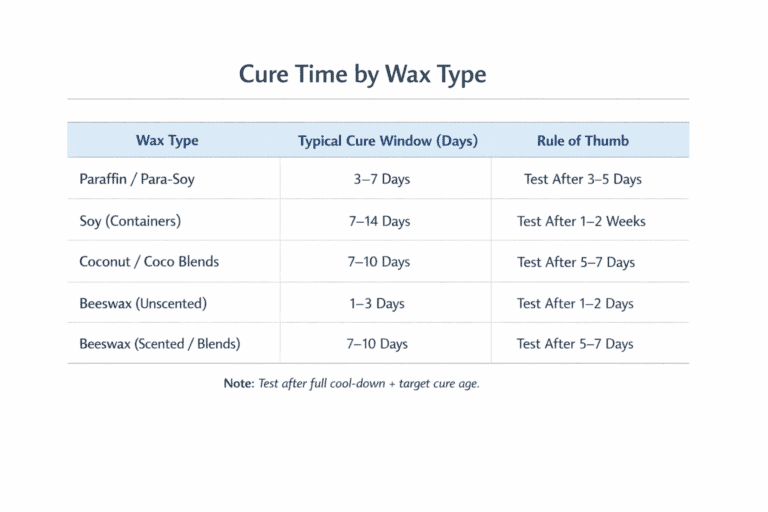
For most scented candles, expect 3–14 days of curing: about 7–14 days for soy and coconut blends, 3–5 days for paraffin, 3–7…
Read guide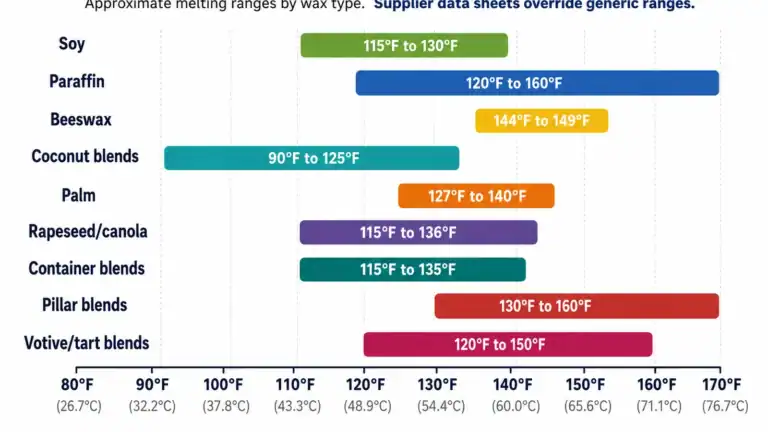
Candle wax does not melt at one universal temperature. Common candle-making waxes usually soften or melt from about 90°F to 185°F (32°C…
Read guide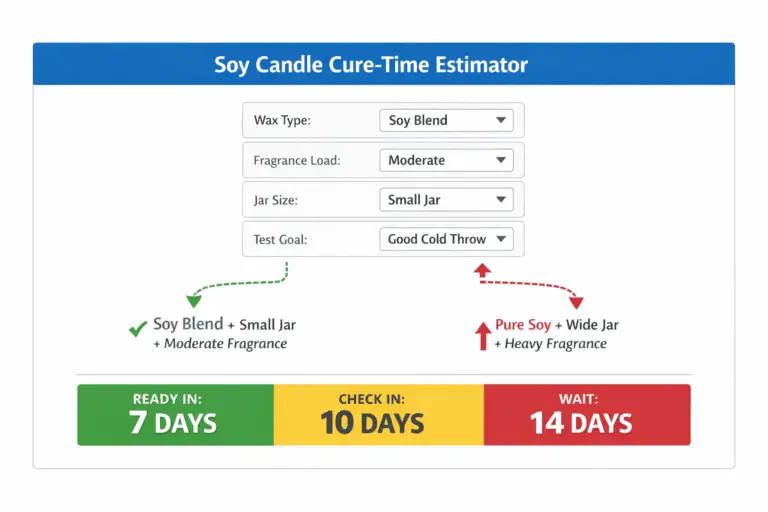
Supplier guidance varies by wax and recipe, but soy candles usually need 7 to 14 days of cure time before the first…
Read guide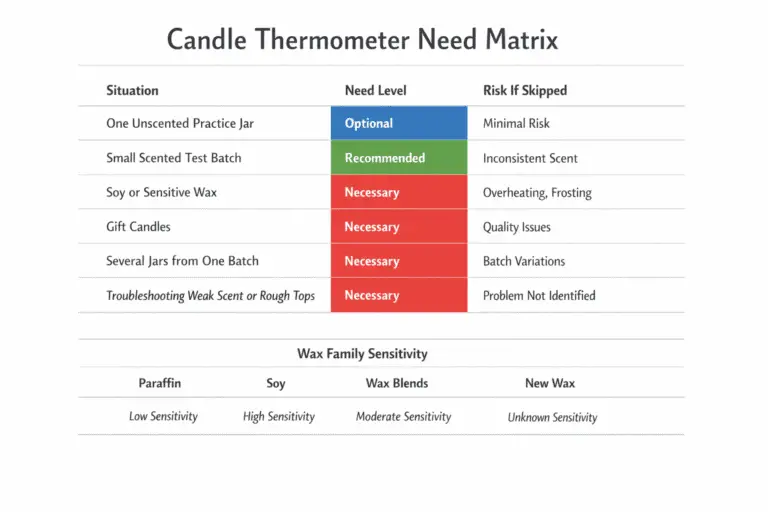
You do not need a thermometer for every candle, but it becomes the practical default once fragrance timing, finish quality, or repeatable…
Read guide